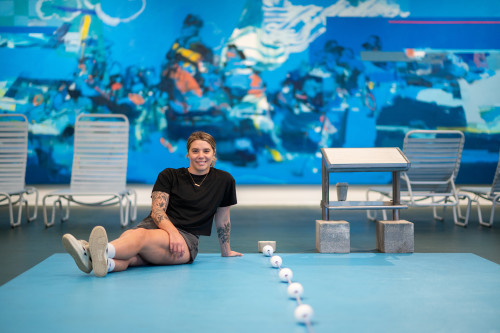
At MICA, education is not a transaction. It’s a relationship that unfolds through mentorship, creative risk, and the shared work of asking better questions. Across generations, faculty and students have shaped one another in ways that reach far beyond studios and classrooms, forming lives of impact, inquiry, and purpose.
Three stories — spanning decades — offer a window into how that exchange works.
Ruth Toulson:
Learning as a Form of Making
Professor, Studio and Humanistic Studies; Assistant Dean for Research
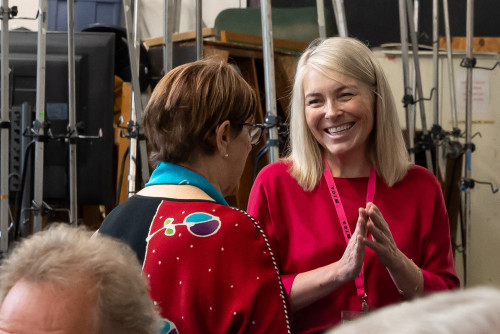
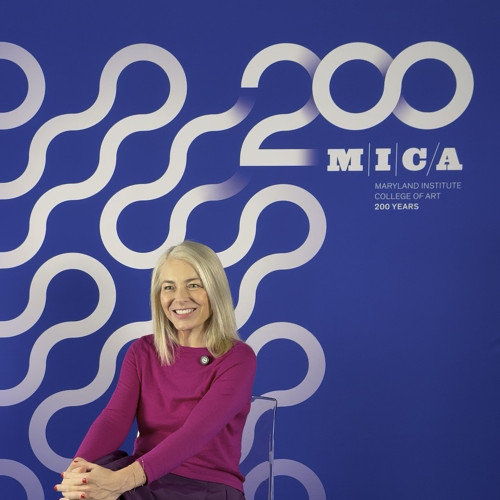
When Ruth Toulson interviewed for a faculty position at MICA in 2015, she arrived curious but uncertain. Teaching anthropology to art students, she thought, might be interesting. By the end of the day, she knew it was something more.
“I’d been at so many institutions where students were fixated on grades or credentials,” she says. “Here, I saw a community that treated learning as a form of making. That difference was powerful.”
Toulson had taught at Ivy League universities, liberal arts colleges, and large public institutions. But at MICA, she encountered students eager to grapple with the hardest questions—about death, power, memory, and culture—and translate those questions into form. In her classes, theory doesn’t remain abstract. Students turn readings into graphic novels, research into studio work, and anthropology into senior theses that blur the boundaries between scholarship and art.
What distinguishes the experience, Toulson insists, is not just how she teaches—but how students respond.
“They aren’t afraid to try things out, to fail, to be inventive,” she says. “They treat writing an essay the way they treat learning to throw a pot—curious, experimental, and fearless.”
That fearlessness shapes her as much as it shapes them. Each cohort pushes her scholarship, her pedagogy, and her understanding of what an art school can be.
Bill Gaskins ’95 (Photography MFA):
From Student to Architect of Possibility
Founding Director, Photography + Media & Society MFA
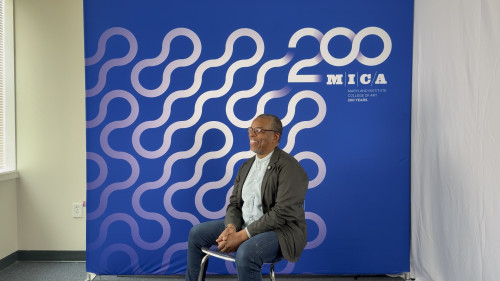
Thirty years after earning his MFA at MICA, Bill Gaskins returned—not as a visitor, but as the founding director of a graduate program he once wished had existed.
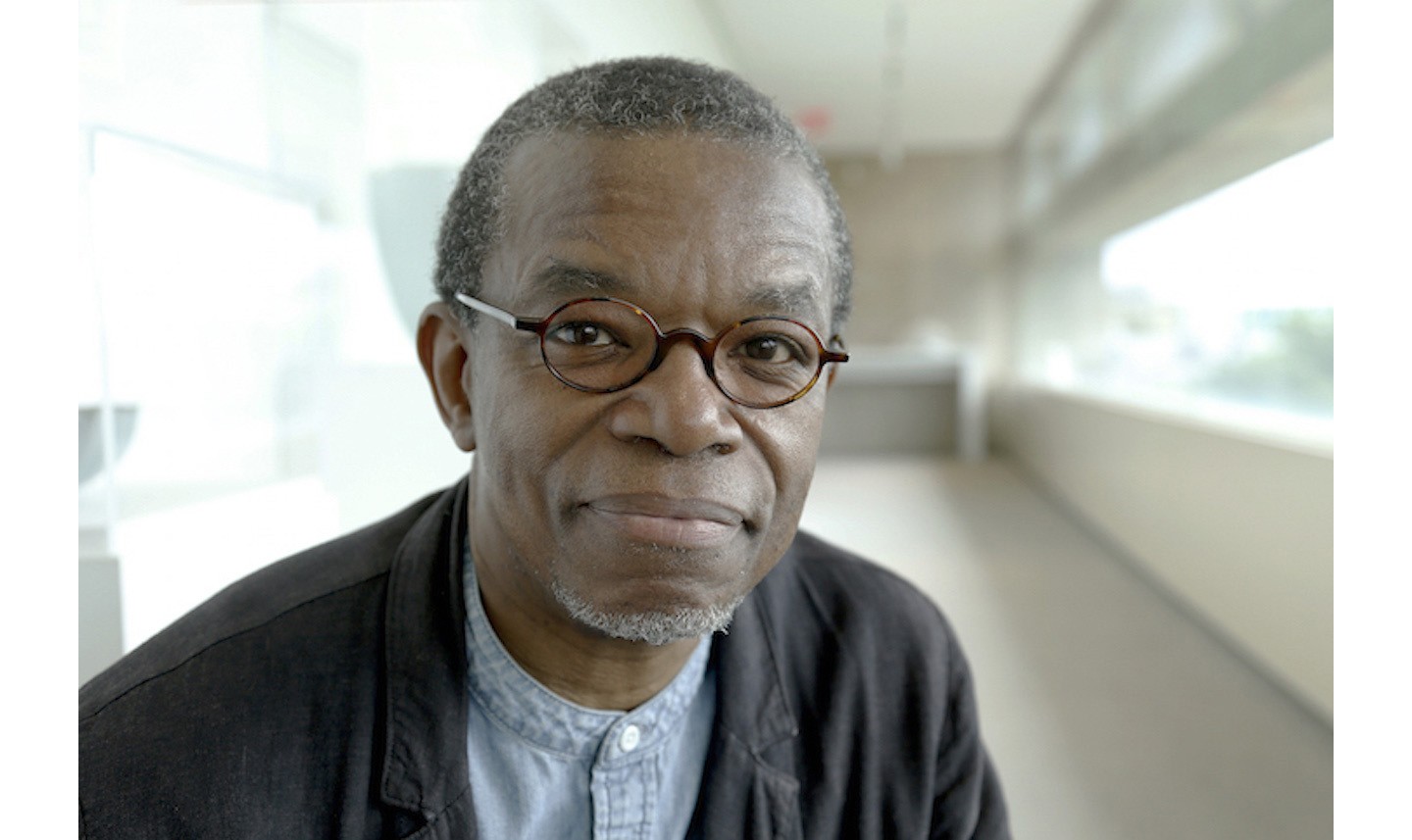 As a student in the mid-1990s, Gaskins’ thesis, Good and Bad Hair, examined race, beauty, and cultural mythology through photography and text. Encouraged by mentors who treated photography as inherently interdisciplinary, he learned early that knowing more than one medium — and more than one discipline — expanded what art could do in the world.
“MICA taught me that photography isn’t just about images,” he says. “It’s about history, sociology, lived experience, everything you bring into the frame.”
That lesson became the foundation of his life’s work. After years of teaching elsewhere, Gaskins returned to MICA to design the Photography + Media & Society MFA, a program built on a demanding premise: artists don’t serve tools—tools serve ideas. Students begin not with cameras, but with urgent questions, research, and writing. Images come later, carrying depth, ethics, and consequence.
Now, Gaskins mentors students whose lives are being reshaped by the same kind of belief once extended to him. “MICA changed my life,” he says. “Now I get to help others change theirs.”
In that cycle — student to mentor, mentor to institution — the MICA ethos renews itself.
Oletha DeVane ’76
Finding a Voice, Carrying It Forward
Alumna, Painting BFA
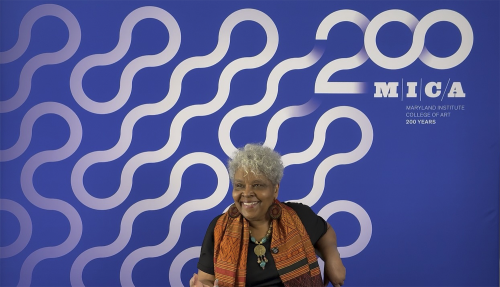
For Oletha DeVane, arriving at MICA in the early 1970s meant stepping into a space filled with possibility and uncertainty. One of only a handful of students of color on campus, she entered quietly, yet observant and eager to learn what the space could hold.
What made the difference, she recalls, was faculty mentorship that crossed boundaries.
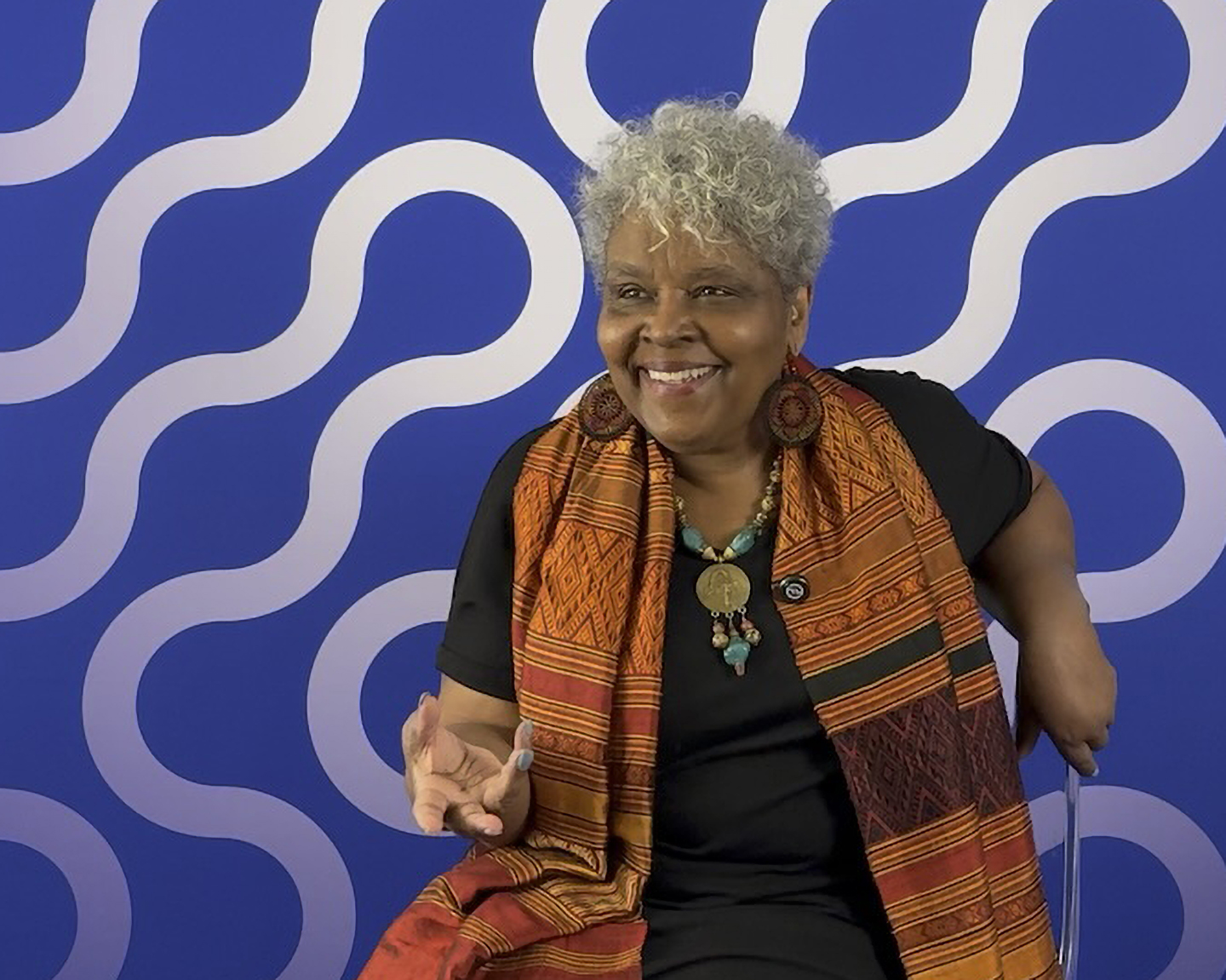 “For the most part, the faculty here really took students under their wing,” she says. Though she majored in painting, she was encouraged to explore poetry, writing, and conceptual thinking, an openness that allowed her to see herself not as a painter alone, but as a visual artist whose work could span media and meaning.
That mentorship shaped a career defined by depth and courage. DeVane’s work — painting, installation, public art — grapples with history, spirituality, and social justice, including memorials that confront Maryland’s history of racial violence. The habit of asking difficult questions, she says, was formed at MICA.
“There were always questions being asked, and there weren’t easy answers. You had to find them on your own—and that was lovely.”
Now an artist, educator, and mentor herself, DeVane carries forward the same ethic. “We’re here to serve each other,” she says. “And the arts are a vehicle for understanding the social complexities of our society.”
A Shared Thread Across Generations
These three stories of faculty, alum-turned-faculty, and alumni shaped by mentorship reveal a common truth: at MICA, learning happens in relationships.
Faculty mentors don’t simply impart knowledge; they create conditions for discovery. Students don’t just absorb lessons; they reshape the questions, the classrooms, and the institution itself. Over time, those exchanges ripple outward into careers, communities, and creative lives that carry MICA’s influence far beyond campus.
As MICA enters its third century, that pattern endures. Mentorship remains not a program or a milestone, but a method—a way of teaching, learning, and imagining together.
At MICA, education is centered on encouragement. An entire community committed to helping students achieve their creative ambition. And that changes everything.