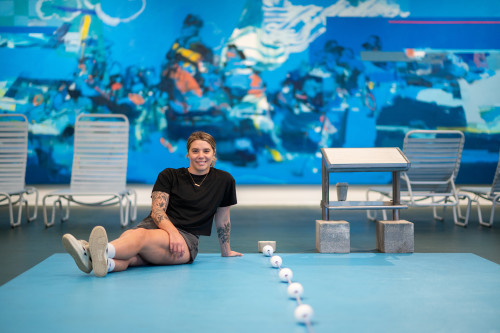
Listening is central to Derrick Adams’ way of working, paying attention to what is unfolding, to what matters, and to what deserves care. It’s a way of moving through the world that shapes his work as an artist, educator, and curator, and one that feels instantly familiar to anyone who has spent time at MICA.
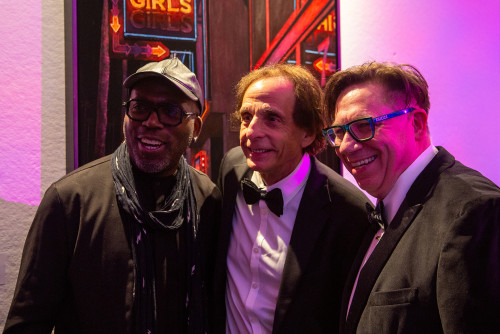
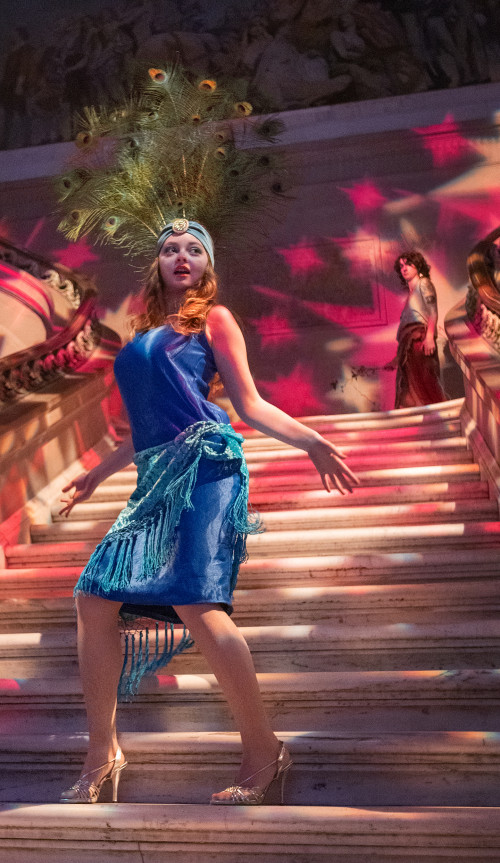
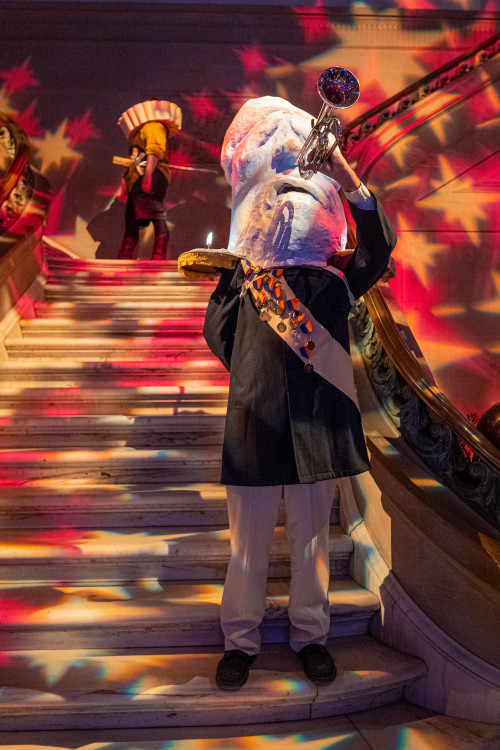
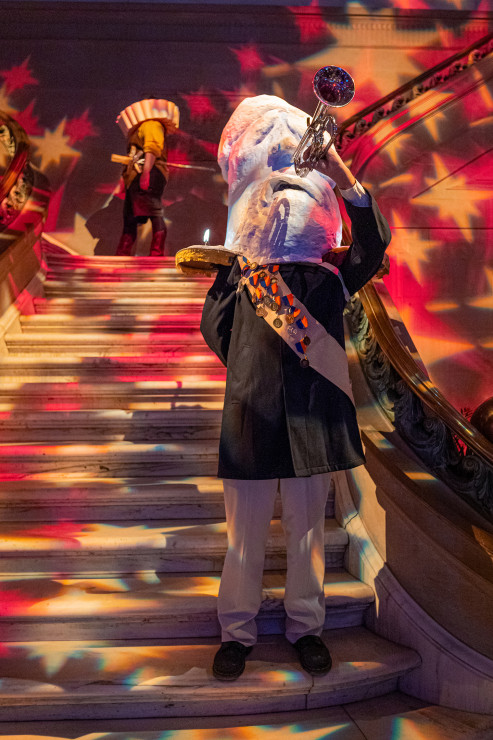
Born and raised in Baltimore, Adams left the city in 1993 to attend Pratt Institute, eventually building a national and international career as a visual artist, educator, curator, and cultural connector. He now lives in Brooklyn, teaches at Brooklyn College, exhibits widely, and is preparing a 20-year survey of his work at ICA Boston. Yet Baltimore — and MICA — remain gravitational. He took classes at MICA. He taught foundational courses there. He received an honorary doctorate. And for MICA’s 200th anniversary, he has curated a major exhibition for the Fête of Lights, inviting artists working with illumination, electricity, and conceptual forms of brightness to help mark the moment.
It’s fitting. Adams understands light not as spectacle, but as inquiry, something that reveals, complicates, and refuses to flatten experience. That sensibility has long aligned with MICA’s role in Baltimore: an anchor institution in a city that resists easy narratives.
Close Proximity
Adams’ relationship with MICA did not begin with enrollment paperwork or orientation. It began through proximity, through people, conversations, studios, and shared space. Even when he left Baltimore, he never felt disconnected from the school.
“I always felt like MICA was there,” he says, “because it’s the art school anchored in the city.”
That distinction matters. In Baltimore, MICA is not simply one option among many; it is a cultural fulcrum. Students circulate through the city. Faculty are embedded in local practice. Exhibitions, conversations, and critiques spill outward into neighborhoods. For Adams, who grew up already connected to Baltimore’s creative community, leaving was about expansion and social challenge, not about escaping. New York offered scale and friction, while MICA remained a constant reference point.
That anchoring quality of being deeply of a place while connected to the world beyond it is one of the school’s quiet signatures.
Focused on Detail
What makes MICA different, Adams argues, begins with rigor, not in the abstract, but in the material sense. “MICA focuses on detail,” he says. “On learning how to make things. How to formalize ideas.”
In an era when speed, branding, and market visibility can dominate artistic ambition, MICA insists on refinement. Foundational skills are not treated as limitations, but as tools for freedom. Students are asked to slow down, to pay attention to process, to understand their own working habits before the world imposes expectations on them.
As Adams describes it, the city plays a big role in shaping that difference. Baltimore isn’t an art-market city, and it isn’t crowded with galleries or constant professional pressure. Those differences, he says, create breathing room, space to experiment, take risks, and let imperfect ideas develop without immediately worrying about how they’ll be received or sold. MICA students, Adams observes, are often drawn to this balance: urban but not overwhelming, rigorous but not transactional. The result is a different kind of thinker, one shaped as much by environment as by curriculum.
A Sense of Responsibility
For Adams, that difference shaped not only his approach in the classroom but his sense of responsibility. While teaching at MICA, he was drawn to foundational and thesis courses, where emerging artists begin to see themselves not simply as students, but as practitioners. His emphasis was never tied to a single medium; it was rooted in conversation.
No one tells you when to go to the studio, he reminds students. No one tells you when to clean your brushes or when to stop sanding. Those decisions — mundane, unglamorous — are where artistic lives are actually built. MICA’s emphasis on refinement and self-structure mirrors the reality of sustaining a practice, something Adams has experienced firsthand.
That same ethos informs Adams’ work beyond the classroom. Through his nonprofit, Charm City Cultural Cultivation, he has built a residency and programming platform in Baltimore designed to offer something he felt was missing when he was younger: a lifeline. A way for artists to stay rooted in Baltimore while remaining visible, supported, and connected beyond the city.
It is not accidental that Adams sees Baltimore as parallel to places like New Orleans, cities with deep cultural histories, complex identities, and immense creative potential that do not always translate into external investment. His work, like MICA’s mission, is about translation without erasure: pointing a mirror to Baltimore rather than speaking over it.
A Refusal to Chase Replication
As MICA enters its third century, Adams believes the school’s greatest strength lies in its refusal to chase replication. What cannot be duplicated, he argues, is origin: motivation, imagination, the imperfect human spark behind the work.
MICA’s task, he says, is not to compete with technology but to out-imagine it. To continue fostering experimentation. To affirm that imperfection can be a form of precision. That authenticity is not about purity, but about attention to knowing why you are creating what you are making.
In this way, the Fête of Lights becomes more than a celebration. It becomes a metaphor. Light, in Adams’ curatorial vision, is not decorative. It illuminates process, history, and possibility. It reflects the way MICA has functioned since its founding: as a steady source of clarity in a city and a field that resists easy answers.
“What makes MICA different?” Adams might answer simply: it listens. To its city. To its students. To the long arc of creative lives.
Two centuries in, that difference still matters. And if Adams’ work is any indication, it will continue to echo — bright, complex, and unmistakably its own.