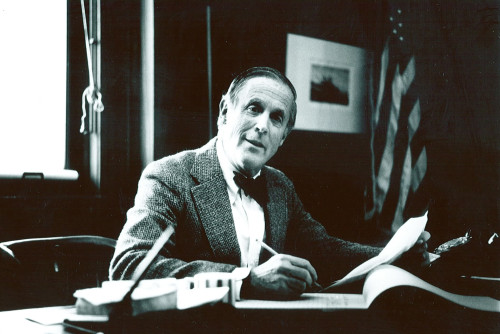
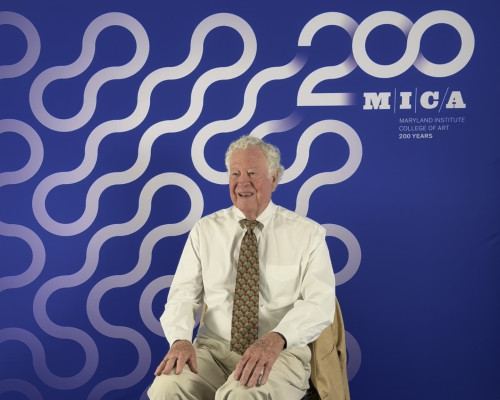
Many people know Eugene W. “Bud” Leake through the residence hall that bears his name, yet his influence on MICA reaches far deeper. As both an artist and institutional leader, Leake played a defining role in shaping the school’s direction during a pivotal moment in its history.
Before MICA: Formation of an Artist and Leader
Long before his presidency at MICA, Leake built a life shaped by artistic study, public service, and teaching. He first studied at Yale and continued his training at the Art Students League in New York, gaining early professional experience through mural work connected to the New York World’s Fair.
During World War II, Leake served in the United States Navy, eventually commanding a landing ship in the Pacific. After the war, he returned to academic life and taught at the University of Louisville before completing a Bachelor of Fine Arts at Yale in 1960.
These combined experiences — as artist, military officer, and educator — prepared Leake to take on institutional leadership. When he arrived in Maryland in 1961, he brought not only artistic vision but also discipline, resilience, and a deep belief in the role of art within education and society.
An Artist Grounded in the Landscape
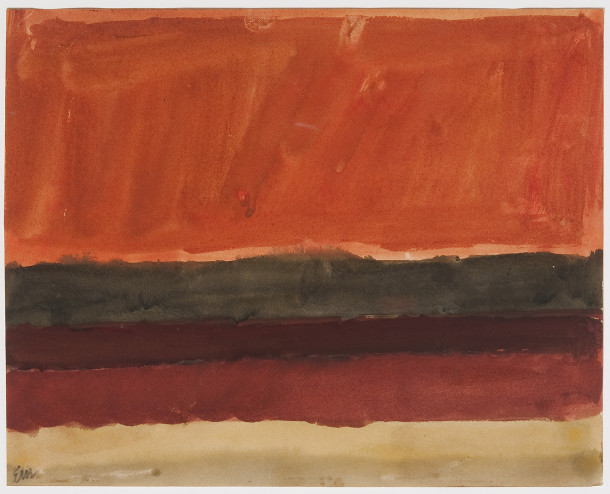
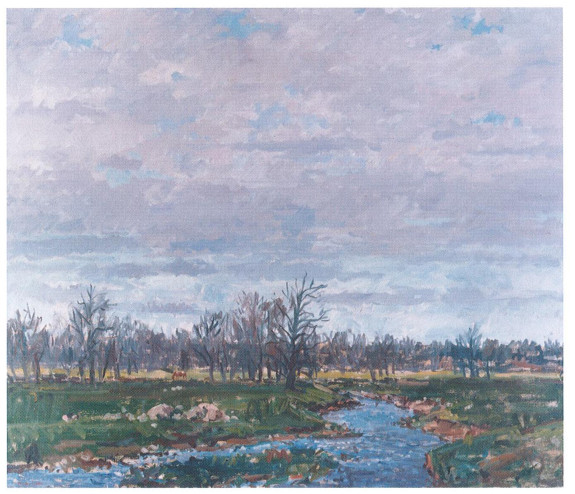
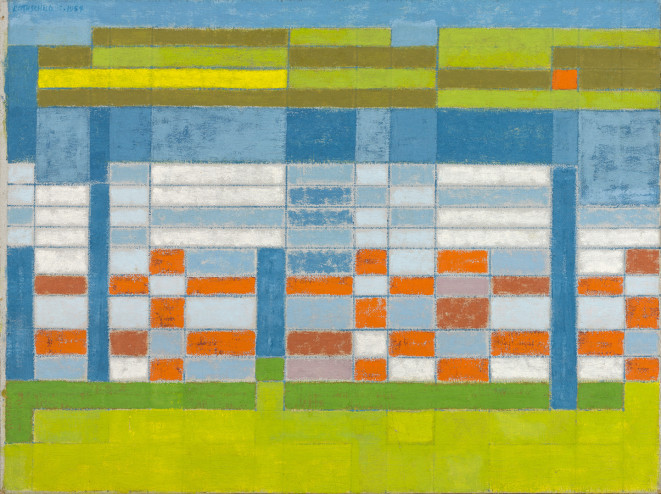
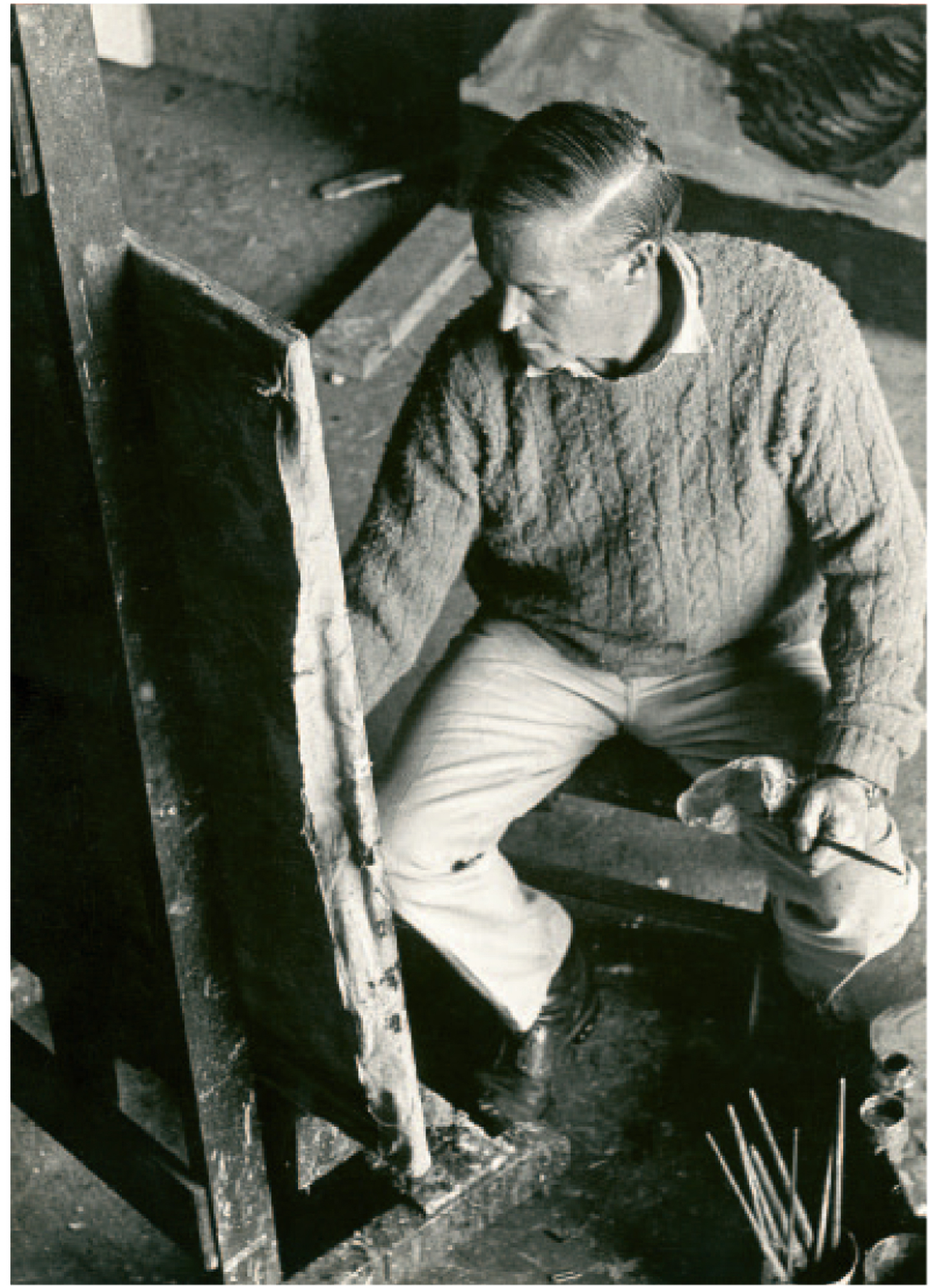 Leake was a landscape painter whose work reflected a sustained attention to place, atmosphere, and seasonal change. Rather than following shifting artistic movements of the twentieth century, he remained committed to observing and interpreting the natural world. This steady focus gave his paintings a strong sense of environment and lived experience.
Revitalizing the Maryland Institute
When Leake arrived in Maryland in 1961, he stepped into leadership at a moment of real institutional strain: aging facilities, limited studio space, and uncertain direction. Over the next thirteen years, he guided a comprehensive renewal that reshaped both the campus and the college’s academic standing.
Central to this transformation was his hands-on leadership in expanding physical space for artists. Leake directed the acquisition and restoration of the former Mount Royal Station, turning a vacant rail terminal into vital instructional and studio space. He also oversaw the purchase and adaptation of the nearby Dolphin building, further increasing room for creative work and supporting the growth of specialized programs.
Alongside these developments, his presidency was marked by:
- Recruiting accomplished and forward-thinking faculty across painting, sculpture, and printmaking
- Strengthening liberal arts and art history within the curriculum
- Significantly increasing student enrollment
- Securing full accreditation and advancing the Institute’s status as a respected college of art and design
Through these combined efforts—spatial, academic, and cultural—Leake helped move the Maryland Institute from a struggling training academy to a nationally recognized center for creative education.
Building Lasting Academic Foundations
Among Leake’s most enduring achievements was the creation of two graduate programs that remain central to MICA’s identity: The LeRoy E. Hoffberger School of Painting and The Mount Royal School of Art. These programs reinforced the importance of rigorous studio practice while expanding opportunities for advanced artistic study.
Devotion to Art Beyond Administration
Even while leading the college, Leake continued to paint and develop his own artistic practice. In 1974, he stepped down from the presidency to dedicate himself fully to painting, sustaining an active creative life for decades afterward.
An Enduring Presence on Campus
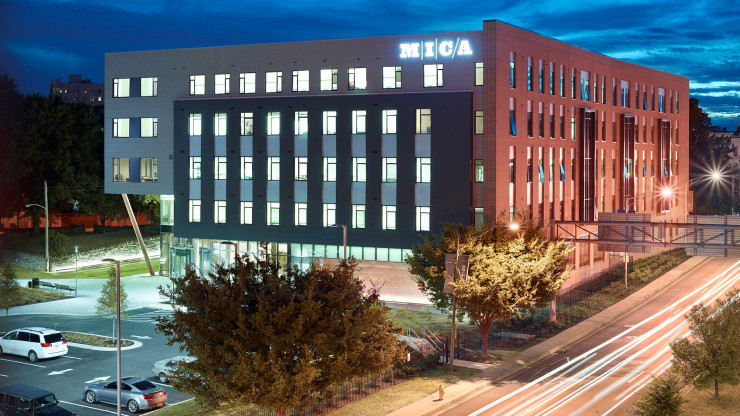
Leake’s legacy continues to shape MICA’s community and environment. The residence hall named in his honor stands as a visible reminder of the vision, leadership, and artistic commitment that helped define the modern institution.
Lasting Impact
Eugene W. “Bud” Leake championed the idea that art is central to education and human understanding. His work as a painter, teacher, and president established foundations that continue to support generations of artists and designers. Today, his influence remains embedded in MICA’s programs, campus, and creative spirit.