First-Generation Journeys
At MICA, first-generation college students have long brought their unique experiences, determination, and creativity to our community.
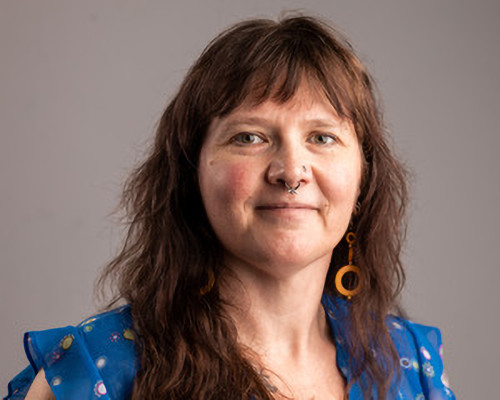
Frankie Martin, Ed.D.; Retired Staff, MICA’s first Diversity Officer
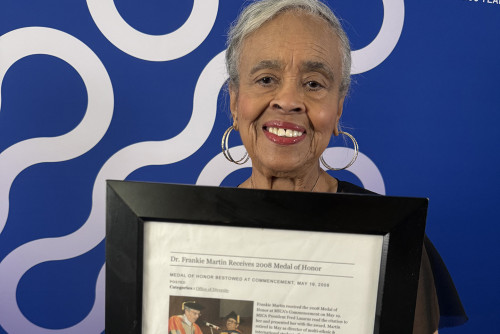
When Dr. Frankie E. Martin talks about the moment she first walked onto MICA’s campus in 1993, she starts not with a program or a policy, but with a feeling. “Students were telling me they didn’t feel comfortable,” she remembers. “They were talented and ambitious, but the environment didn’t always reflect them.” A Louisiana native—the Pelican State stamped into her cadence and warmth—Martin came to MICA as a mentoring specialist on a U.S. Department of Education grant with a clear charge: find out why students of color, particularly African American students, were leaving before completing their degrees.
Her answer began with listening and then building. From her first assessment flowed a mentoring network that paired incoming African American students with upper-class peers and, when helpful, faculty mentors who could assist them in navigating critiques, studios, the city, and the subtle codes of campus life. Retention improved. Confidence grew. Doors opened. And MICA, in turn, expanded the role it asked Martin to play.
By 1998, she had been appointed director of multi-ethnic affairs and, soon after, assumed responsibility for international students, including the complex lattice of visa support and cross-cultural advising. If the early 1990s were about hearing what students needed, the late 1990s were about turning that knowledge into durable infrastructure: rituals, programs, and communities that would endure.
Martin’s route to higher education leadership never detoured from art; it was shaped by it. A studio sensibility—iterative, collaborative, hands-on—runs through her story. Arriving at MICA, she approached student success like a studio problem: analyze the brief, prototype a human solution, test, refine, repeat. The mentoring network was the prototype; the office of multi-ethnic affairs became the lab where prototypes multiplied. Her office, students recall, was an always-open studio of another kind: a place to be heard between classes, to puzzle through critiques that landed wrong, to figure out how to bridge a professor’s Eurocentric frame with a student’s own cultural lens.
This is where Martin’s biography meets MICA’s. The College has long prized the autonomy of artists and designers and the conviction that the best ideas come from the ground up. Martin fit that ethic perfectly. She didn’t import a prefabricated model. She asked students what they were making of MICA, then built with them.
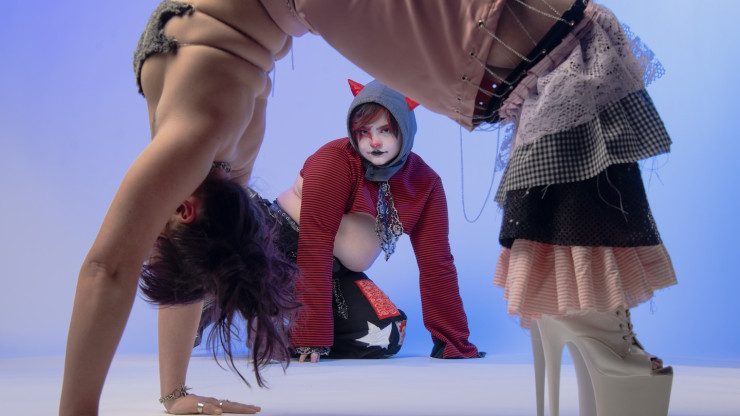
If you want to see the “MICA is like no other” ethos moving through a crowd, you go to the Annual Benefit Fashion Show. Its origin story is pure MICA: students stopped by Martin’s office to say, simply, “We want to show our work. How?” As advisor to the Black Student Union, she helped them imagine a showcase for wearable art that could belong to students, not just feature them. From the beginning, the creative directors were students. The casting, the choreography, the production design, all student-led. Faculty and staff might advise, but the show’s engine has always been the student body.
That difference matters. At many institutions, students are invited to contribute to traditions that predate them; at MICA, students invent the traditions and then hand them down. Thirty-one years later, with a 32nd on the horizon, the fashion show is both a fundraiser and a proving ground. It’s a public rehearsal on how to lead, collaborate, and convey something ambitious. Its proceeds fuel scholarships, including the Dr. Frankie Martin Grant, which meets real needs—art supplies, travel, and emergencies—that can decide whether an artist keeps creating.
Martin is quick to point out that the magic is not just the runway. It’s the transfer of ownership. “When students direct something, their creativity really shines,” she says. “It’s their baby.” That is MICA’s difference: a student-driven culture that treats creativity as community work.
For three decades, the Annual Benefit Fashion Show has highlighted student creativity in the realms of wearable art. Here’s a look back at collections and photoshoots from past shows.
Programs are one way to measure impact; changed lives are another. As liaison between students and faculty/administration, Martin translated across cultures and disciplines. Students would come to her with concerns about feeling unseen in critiques or syllabi that framed art history and practice through a narrow lens. She would sit with them, name what they were experiencing, and then take the conversation upstream, meeting with faculty to suggest readings, perspectives, and approaches that could broaden the classroom’s frame. Not to shame, but to expand. “You may want to read a bit more on Black or Korean or Latin American culture,” she would say, drawing on insights she gained while advising those student communities as well.
That work—patient, specific, relational—quietly shifted MICA’s culture. A campus that better acknowledged the histories and aesthetics of its whole student body became a campus where more students could see themselves belonging. Retention rose. Student leaders bloomed. The mentoring network became a generational handoff: today’s mentee as tomorrow’s mentor.
Martin’s own world widened, too. Advising Korean and Latin American students added textures to her understanding of foodways, traditions, family structures, and artistic lineages. She speaks of being invited into kitchens and celebrations, of learning to translate not just between languages but between assumptions. In that sense, the impact ran both ways: students found an advocate; Martin gained a fuller map of the diverse community she served.
The institution noticed. At the 2008 commencement, MICA awarded her the Medal of Honor, its highest recognition. Martin keeps the medal close, not as a capstone but as a reminder that listening builds legacies.
“It signaled that I had done a good job,” she says, “helping students get where they needed to go, and broadening perspectives across the community.”
Bicentennials are both a celebration and a mirror. They ask: what should endure? For Martin, the answer is clear. Let student leadership remain the engine. Keep the mentoring hand on every shoulder. Protect a culture of listening that refuses stereotypes, replaces snap judgments with questions, and ensures each student’s history counts as knowledge.
As MICA turns 200, Martin offers a deceptively simple charge to the next century of students: “Always have a listening ear. Don’t be judgmental. Don’t put people into categories before you get to know them.” In a college of makers, listening is the most generative art; it builds a world where everyone’s work can matter.
And that, perhaps, is MICA’s enduring difference: an artist’s college where the culture is also a studio—student-led, community-made, and always under construction—so the next generation can step in, pick up the tools, and keep creating the future together.

Join the festivities as MICA honors its 200-year history, recognizes its present success, and looks forward to a bright future. Throughout 2026, the College will be sharing community stories and announcing one-of-a-kind events on campus, in Baltimore, and beyond.