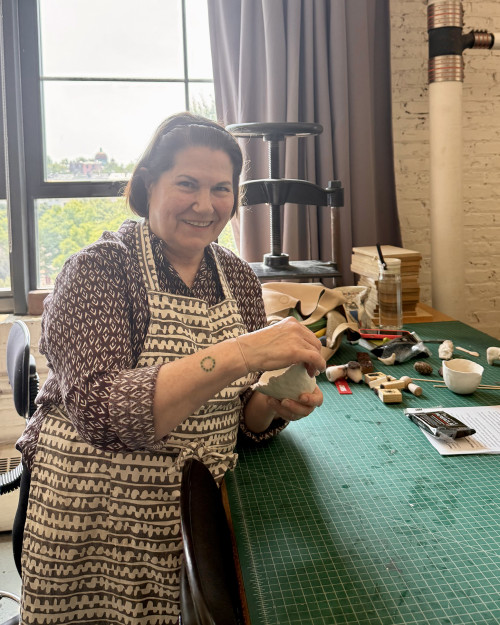
First-Generation Journeys
At MICA, first-generation college students have long brought their unique experiences, determination, and creativity to our community.
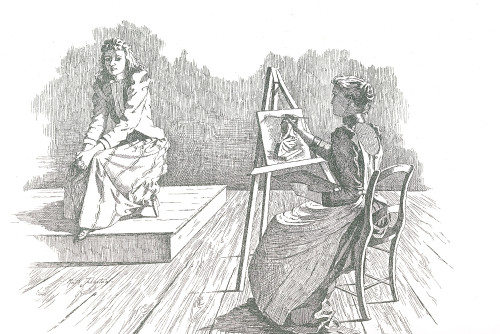
The launch of the Female School of Design in 1854 was more than a programmatic addition; it was a declaration of belief that women belonged in studios, workshops, classrooms, and industries shaping the future.
During International Women’s History Month, we honor the courage of those early students and advocates who insisted that creativity and education were not confined by gender. Their breakthrough expanded opportunity, strengthened the Institute, and helped establish a tradition of inclusive artistic excellence that continues to define MICA today.
Their legacy lives on in every student who enters our studios ready to create, innovate, and lead.
In 1854, at a time when many believed a woman’s “appropriate sphere” was limited to the domestic circle, the Maryland Institute made a revolutionary decision: it established a Female School of Design.
This bold step positioned MICA among the earliest institutions in the nation to provide women with professional art training grounded not in ornament or imitation, but in principle, practice, and purpose.
Advocates including Board members John H. B. Latrobe Minifie and Fielding Lucas Smith, along with chemist Campbell Morfit, argued passionately that educating women was not only appropriate; it was essential. Morfit famously quoted Philadelphia physician Benjamin Rush:
“Whatever you may do for your sons, neglect not to educate your daughters.”
He believed women were “the fountains, the very sources of virtue,” and that when paired with education, their influence could be transformative.
Despite hesitation — concerns about cost, disruption, and even the presence of women in the same building as men — the advocates persisted. In June 1854, the “Female Department” opened with 15 students. By the end of its first year, enrollment had grown to 70.
Under the leadership of Julia A. Spear, recruited from the Franklin Institute, the program rejected the “superficial and imitative” drawing courses typically offered to women. Instead, Spear designed a curriculum rooted in the principles of art and their practical application.
The program was the first at the Institute devoted exclusively to the fine and applied arts, including:
Students began with foundational training, drawing from plaster models and studying light and shade, before advancing to illustration and textile design skills that prepared them for employment in printing, fabric, and wallpaper industries.
The curriculum was divided into two tracks: Industrial Class (morning sessions) for women pursuing careers and Fine Arts Class (afternoons) for amateurs and professionals.
Tuition for the year was $6.50, comparable to the men’s night school, making professional training accessible.
Within the first year, students were already selling original designs to local manufacturers. Proceeds were shared between the student and the school, creating an early model of paid experiential learning, what we might now call an internship.
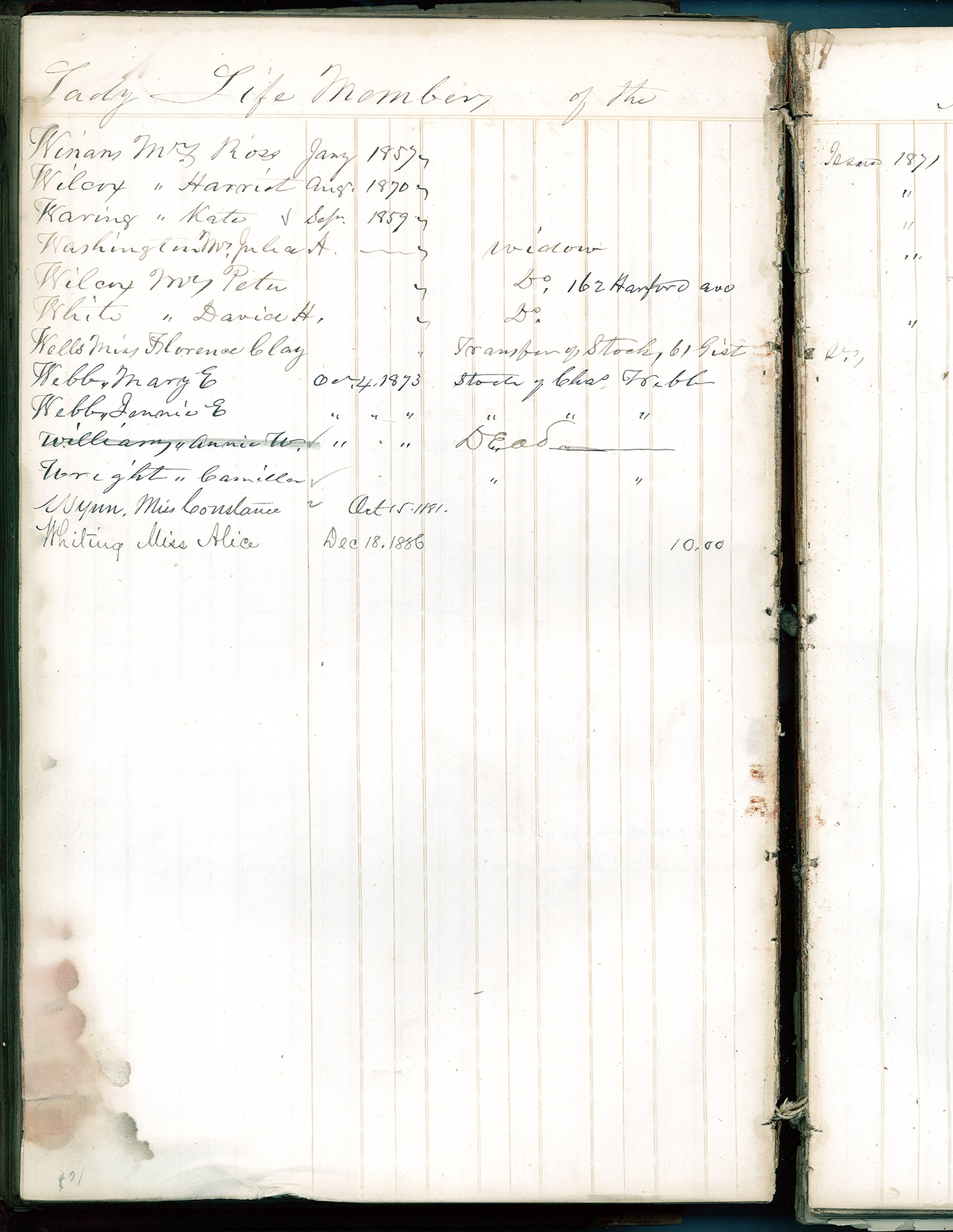
By 1859, enrollment had grown to 124 students. When the need for instructors increased, Mary Monica Maguire, who succeeded Spear, established the Institute’s first Teacher’s Class, preparing women to become drawing instructors themselves.
The Female School of Design did not simply educate artists; it cultivated educators, professionals, and creative leaders at a time when few institutions imagined women in such roles.
A seven-woman visiting committee raised a $1,000 endowment from women in the community, clear evidence of collective investment in expanding opportunity. The press praised the school for elevating public taste and opening “a new wider range for female employment.”
At the time, the Maryland Institute was the only secular institution in the state directing its energies to the benefit of men and women alike.
The establishment of the Female School of Design was not an isolated gesture. It grew from a broader culture of visibility and participation.
Beginning in 1848, the Institute’s annual exhibitions where displays of vibrant showcases of industrial and artistic achievement, which attracted thousands of exhibitors and tens of thousands of visitors. Women played a significant role in these fairs. In some years, women submitted between one-quarter and two-thirds of all goods entered for competition.
The New York Times described the exhibitions as a rare showcase for the “products of the fair fingers of Baltimore ladies.”
Women’s strong presence in both fine and domestic arts helped lay the groundwork for formalized professional training. Their work was visible, competitive, and commercially viable. The Female School of Design formalized and expanded that opportunity.

Join the festivities as MICA honors its 200-year history, recognizes its present success, and looks forward to a bright future. Throughout 2026, the College will be sharing community stories and announcing one-of-a-kind events on campus, in Baltimore, and beyond.