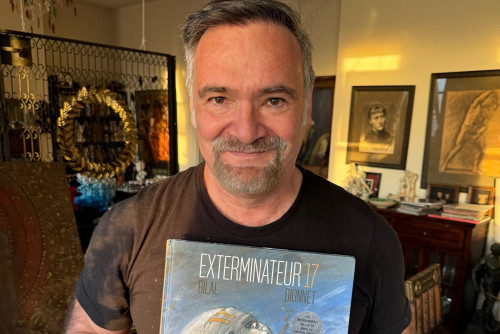
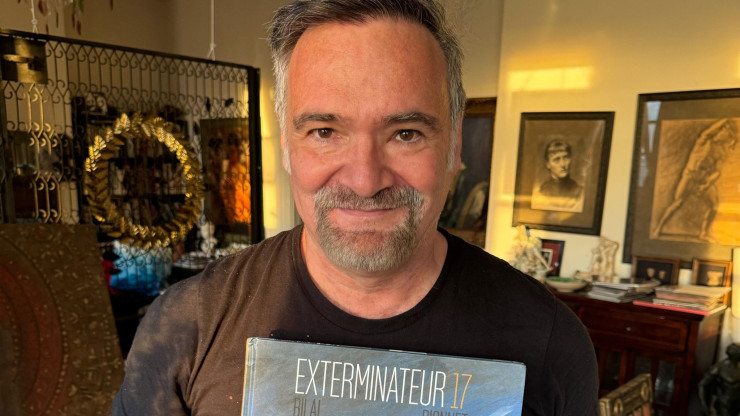
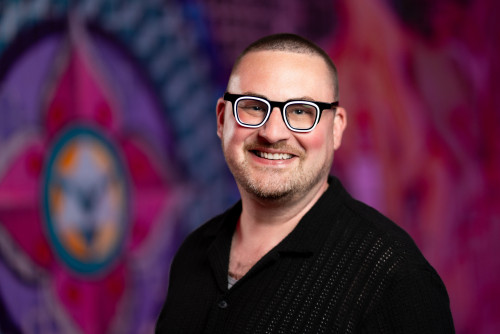
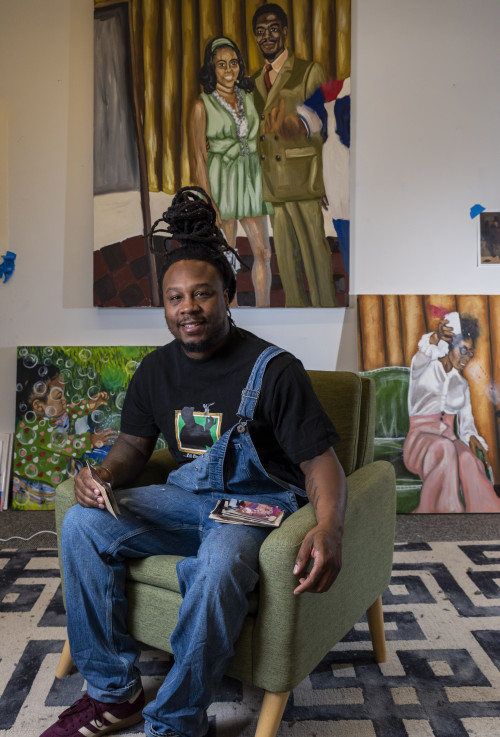
When José Villarrubia arrived at MICA in 1981, he already carried a lifetime of visual education with him.
Villarrubia grew up in Madrid in a home where art was part of the family environment. His father ran an advertising agency. His mother, who had worked in a ceramics studio before marriage, painted, made art with her children, and eventually became a professional photographer. Villarrubia remembers visiting the Prado Museum as a child, absorbing the masterpieces on the walls and the idea that art could be a language, a history, and a way of seeing.
“I felt like I had an advantage,” he says. “I grew up in Madrid, which is such a strong city for the arts, and I came from a family where art was very important.”
That foundation would carry him across disciplines and continents. Today, Villarrubia is internationally known as a Harvey Award-winning colorist, illustrator, editor, photographer, art restorer, and educator. His credits span Marvel, DC Comics, Dark Horse, Image Comics, and major collaborations with Alan Moore, Paul Pope, Richard Corben, Jeff Lemire, Anthony Bourdain, and others. His fine art photography has been exhibited internationally in more than 100 exhibitions and is included in collections such as the Baltimore Museum of Art and the Inter-American Development Bank.
But before all that, he was a young artist trying to find the right place to learn.
Feeling Familiar
Villarrubia had been admitted to Complutense University in Madrid, a prestigious and difficult program to enter. But the timing was complicated. Spain was emerging from the dictatorship of Francisco Franco, and the country was in a period of upheaval. His classes were crowded, with dozens of students, and he found it nearly impossible to connect with professors.
“I never got to meet the professors,” he says. “I thought it was a waste of my time.”
Baltimore, however, was already familiar. Villarrubia had first visited the city at 13 through an exchange program. With his parents’ support, he moved to Maryland and enrolled at the Maryland Institute College of Art. He became a General Fine Arts major, a path that allowed him to move between departments and explore painting, printmaking, and other forms of making.
“I took classes in many different departments, and that really served me well in ways I didn’t realize at the time,” he says.
After earning his BFA, Villarrubia went on to complete an MFA in painting. His early professional years were spent as a painter, creating gallery work and portraits. But he soon transitioned into fine art photography, gaining representation in Baltimore and New York and spending about a decade focused on photographic work.
Even then, painting remained present.
“My photographic work was very much informed by my painting and by painting history,” he says.
That ability to move between media eventually led him into comics, though not in the way he first imagined. Villarrubia had loved comics since childhood. In Spain, he says, comics were part of everyday culture. He grew up reading translated superhero stories, then later gravitated toward science fiction, horror, and other genres. His dream was to make comics himself.
Instead, he entered the field as a colorist.
Comic Relief
Around that time, the gallery scene was shifting, and a friend invited him to work in comics. Because Villarrubia could paint, the logic seemed simple: he could paint the line art. He had not considered coloring professionally before, but the invitation opened a door.
“I loved comics, and I started doing that,” he says. “That was more than 30 years ago.”
Since then, Villarrubia has become one of the most respected colorists in American comics. His work has appeared in titles including Promethea, Batman: Year 100, Sweet Tooth, The Other History of the DC Universe, America, Deadman: Dark Mansion of Forbidden Love, Unknown Soldier, CAGE, Conan, Starr, and many others. He has been nominated twice for the Eisner Award, a prestigious award recognizing excellence in comic books. His most recent nomination is this year, 2026.
He has also won the Harvey Award for Best Colorist, received the Carlos Giménez Award for Best Spanish Colorist, and contributed to projects recognized by the Glyph Comics Awards and GLAAD Media Awards.
More than decoration
For Villarrubia, color is at the heart of storytelling.
“Comics can be perfectly fine in black and white,” he says. “But when you add color, it can do three things.”
First, he notes, color identifies the natural appearance of things. Second, it establishes light: morning, afternoon, evening, interior, exterior. Third, and perhaps most importantly, Villarrubia believes color adds emotional atmosphere.
“It can explain the mood of the scene,” he says. “If something is violent or romantic or mysterious or magical, that’s an extra layer that color can do.”
That sensitivity has shaped some of his most notable collaborations. With Alan Moore, whom Villarrubia had admired for years, he worked on projects including Promethea, Voice of the Fire and The Mirror of Love, a book-length illustrated poem exploring LGBTQ+ history and love. Villarrubia describes Moore not only as a genius but also as warm, loving, and completely without pretension.
With Paul Pope, Villarrubia collaborated on Batman: Year 100, which won the Eisner Award for Best Limited Series. Pope, he says, brought a different energy: glamorous, dynamic, “like a rock star.” With Richard Corben, one of Villarrubia’s childhood idols, the relationship was marked by humility and devotion to craft. Even in his 70s, Corben attended life drawing sessions.
“He told me, ‘Nobody is too good at drawing the figure,’” Villarrubia recalls. “That stayed with me.”
Representation has also been central to Villarrubia’s work. As a Spanish-American artist who identifies as gay, he came of age during the AIDS epidemic and saw the urgency of art that could speak to identity, loss, politics, and survival. His fine art photography often carried a political charge, including works with homoerotic imagery and themes related to youth, beauty, death, and AIDS. His photograph, Danse Macabre, became one of his best-known works.
In comics, where commercial pressures can limit expression, Villarrubia still found ways to contribute to projects that expanded representation. He colored the first five issues of America, featuring Marvel’s first Latina LGBTQ+ superhero, created by a Hispanic team that included writer Gabby Rivera and Villarrubia. The series was nominated for a GLAAD Award. He also worked on Deadman: Dark Mansion of Forbidden Love, which featured the first nonbinary African American character in a DC Comics publication and was also nominated for a GLAAD Award.
“As an immigrant, as somebody who is Spanish, as somebody who is gay, those things have been really important to me,” he says.
Villarrubia’s editorial work has likewise created space for complex stories. His first edited series, Infidel, became a major success. Written by Pornsak Pichetshote and illustrated by MICA alumnus Aaron Campbell, the horror comic explores racism, Islamophobia, xenophobia, and misogyny through a supernatural lens. Villarrubia also served as colorist. The series received wide acclaim, appeared on NPR’s list of favorite horror stories and is slated for film adaptation.
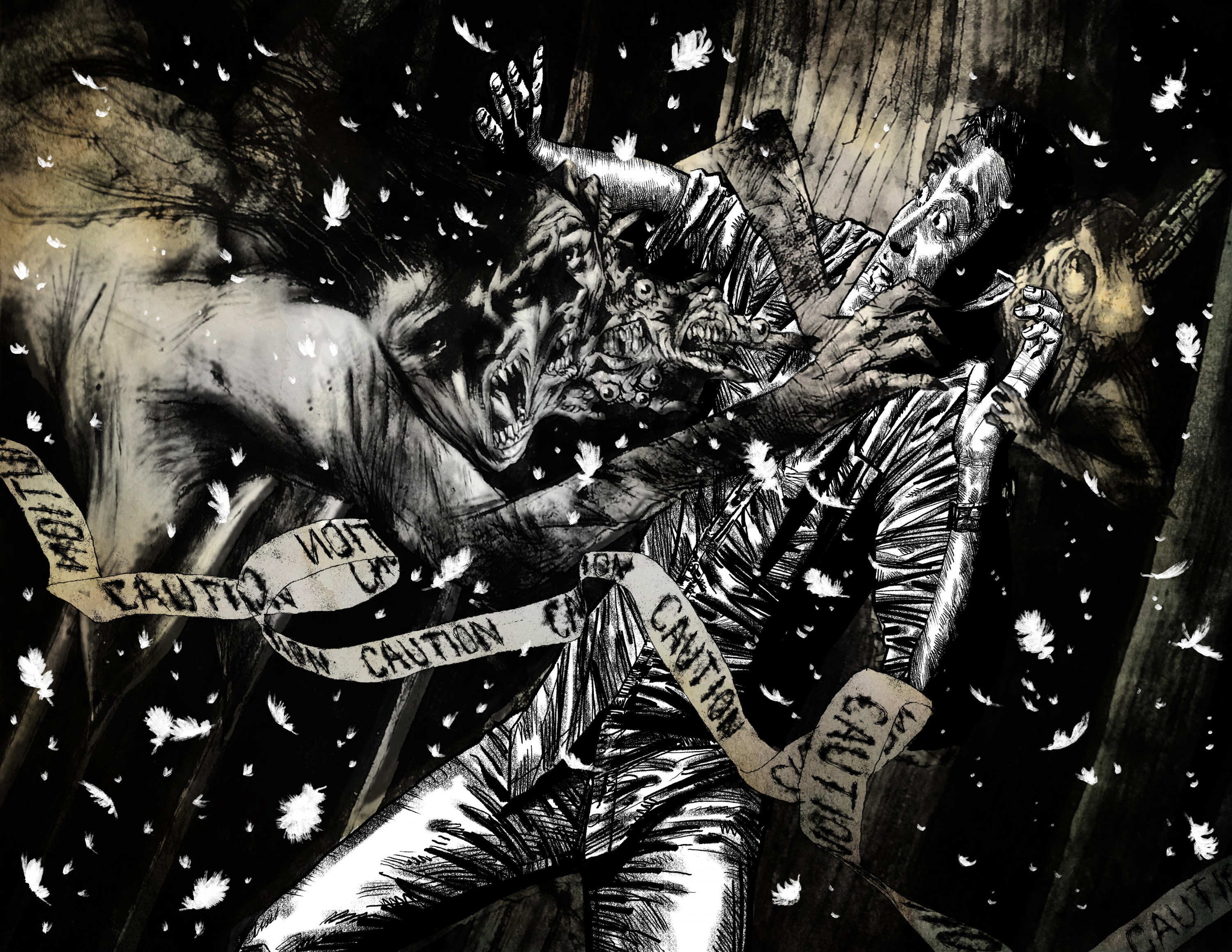
One of Aaron Campbell's illustrations in "Infidel," for which Villarrubia served as editor and colorist.
For Villarrubia, the project was deeply tied to friendship and mentorship. Campbell had studied illustration at MICA, and Villarrubia knew his work well.
“I thought he would be fantastic for Infidel,” Villarrubia says. “I thought it would be a chance for his work to really shine.”
That relationship between professional practice and teaching has defined much of Villarrubia’s life at MICA. He joined the Illustration Department faculty in 1997, chaired the department from 2010 to 2015, and has coordinated the Sequential Art minor since 2015. He sees no clean separation between his creative work and his work in the classroom.
“It’s completely integrated,” he says. “My professional work feeds into my teaching, and my students inspire me constantly.”
Students introduce him to new artists, new animation, new comics, and new ways of thinking. In turn, he brings his professional experience back to them. The exchange, he says, is mutual and alive.
“Teaching is an amazing occupation, especially at MICA,” he says. “Artwork gets produced on a weekly basis. You’re talking about it, looking at it. It’s terrific to feel like you’re doing something constructive and positive. More art is better for everybody.”
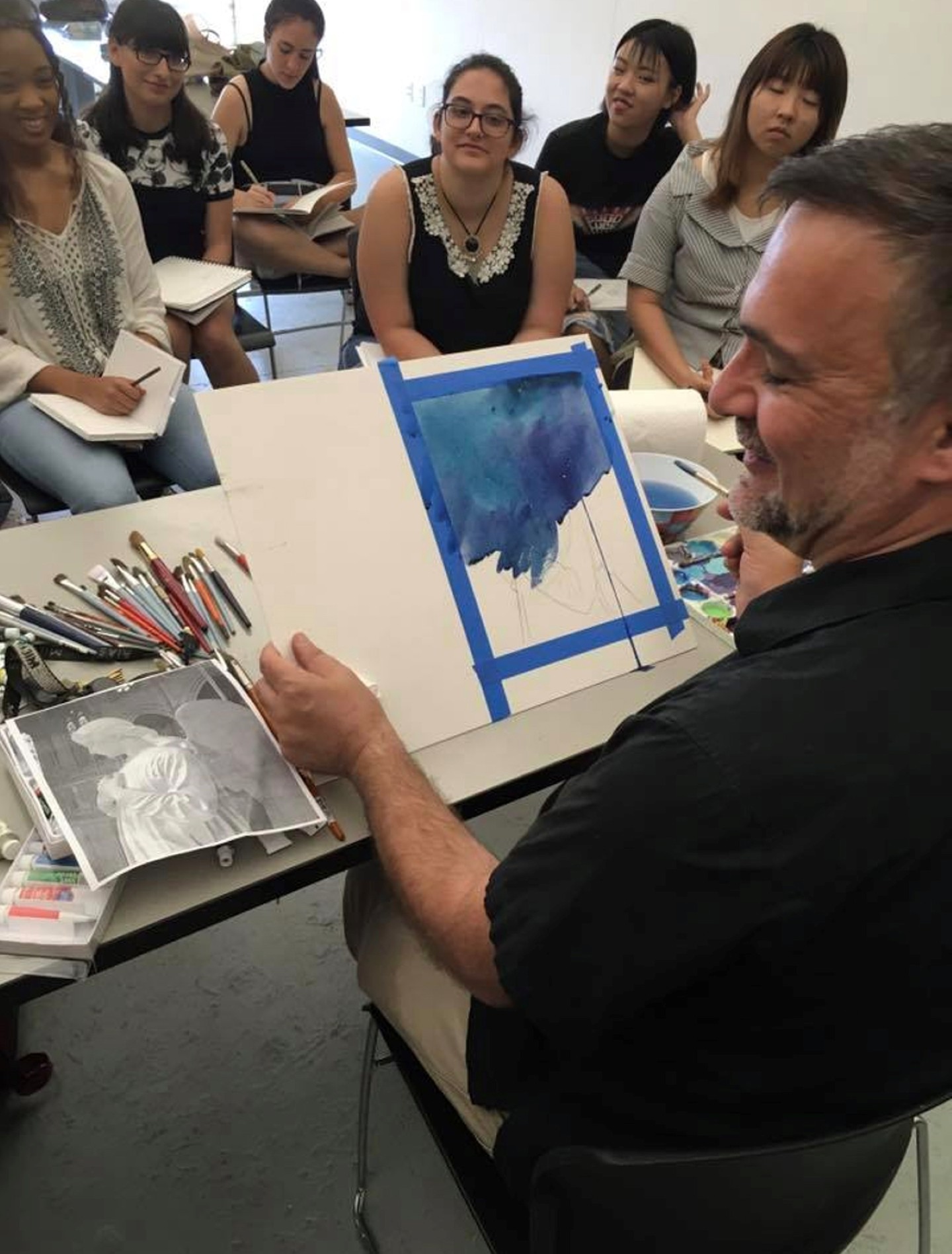
Villarrubia with students during a demonstration.
Bringing artwork back to life
In recent years, Villarrubia has also turned toward restoration, a practice that joins his love of comics with his deep interest in art history. He became increasingly concerned that modern reprints of classic comics often looked wrong: glossy paper, oversaturated colors, a loss of the muted quality produced by old newsprint. Original colorists, he explains, made careful choices knowing how colors would print on inexpensive paper.
To restore that experience, Villarrubia began studying, writing, and advocating. During the pandemic, he wrote extensively online about the color history of comics, attracting readers, fans, and industry professionals. Eventually, publishers came calling. He restored the original colors for Absolute Swamp Thing, featuring the classic work of Len Wein, Bernie Wrightson, and Nestor Redondo, and now serves as project art director and art restorer for Dark Horse’s Richard Corben Library.
“I feel like I’m a bit of an archaeologist,” he says.
The work is also a form of justice. Many early comics colorists, often women, were overlooked in their time. Restoring the colors means restoring their artistry.
The spirit of openness
From Madrid to Baltimore, from painting to photography to comics, from classroom critiques to archival restoration, Villarrubia’s career has never followed a single line. It has moved through images, stories, histories, and communities. Through it all, he has remained committed to the power of art to illuminate experience and to the next generation of artists learning to do the same.
Comics, he says, have become far more inclusive than when he first entered the field. Once dominated by superhero stories aimed largely at boys, the medium now embraces manga, memoir, webcomics, independent publishing, and global influences and creators from many backgrounds.
“Comics culture is very welcoming,” Villarrubia says. “It embraces people from all backgrounds. That’s one of the things I love most about it.”
For Villarrubia, that spirit of openness is not separate from his teaching, his restoration work, or his art. It is the thread connecting them all: a belief that stories deserve to be seen fully, in their richest and truest colors.