Reimagining the Systems

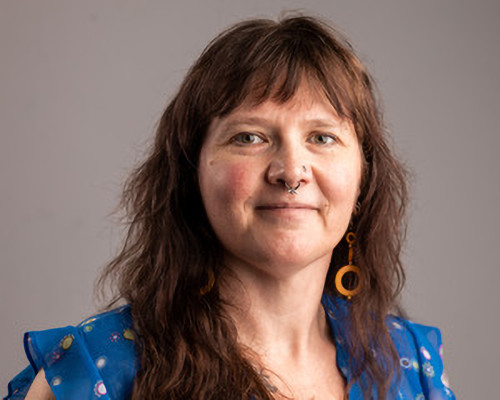
Anthropology, performance, humor, and institutional critique converge in the work of MICA faculty member Maia Chao.

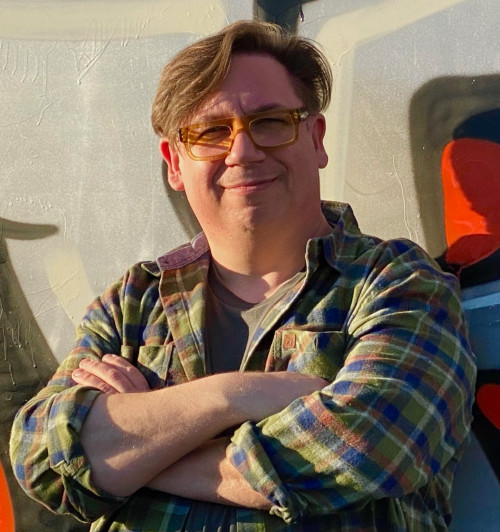
Maia Chao, Faculty

Maia Chao, Faculty

For artist and educator Maia Chao, art rarely begins with grand spectacle. More often, it starts with a question so ordinary it almost disappears into the background of daily life: Why does the artwork in doctors’ offices look the way it does? What makes a museum feel welcoming or alienating? Why do we collectively agree that some objects, gestures, or experiences hold more value than others?

These small observations become the foundation for a body of work that is intellectually rigorous, socially engaged, and unexpectedly playful. Working across performance, video, sculpture, and public practice, Chao investigates the systems, both formal and informal, that shape how people interact with institutions, labor, language, and one another. Her projects draw from anthropology, psychology, linguistics, and collaborative research, often transforming everyday experiences into sharp reflections on power, value, and participation.

Now a full-time faculty member in Interdisciplinary Sculpture at MICA, Chao is gaining increasing national recognition for work that merges critical inquiry with humor, accessibility, and human connection. Recently named a United States Artist Fellow for 2026, she is also preparing a new performance commission for the 2026 Whitney Biennial, an achievement that marks a major milestone in an already dynamic career.

Yet despite the growing visibility, Chao remains deeply invested in the same ideas that first drew her to anthropology as an undergraduate at Brown University: observing how people construct meaning together and examining the invisible social scripts that shape everyday life.

“I was fascinated by people, cultures, and the systems we build to relate to one another,” Chao says. “Anthropology gave me a framework for studying how people construct power, authority, and value.”

Looking back, she sees traces of her current practice even in childhood. She recalls creating an imaginary store in her family’s basement complete with pricing systems, paperwork, and elaborate rules for transactions.

“I treated everyday exchanges like rituals,” she says. “That was probably the precursor to my artistic practice.”

Humor, Absurdity, and Institutional Critique

That fascination with systems, especially the ones people accept without question, continues to define her work today.

Chao’s projects often blur the line between institutional critique and absurdist humor. In Hesitation Particles (2016), she interviewed native speakers of 31 languages to collect examples of filler words like “um” and “uh,” transforming moments of pause and uncertainty into an atmospheric sound composition. In A Picture of Health (2022), she borrowed paintings from doctors’ offices across Philadelphia and exhibited them in Vox Populi Gallery while temporarily replacing the originals with monochromatic canvases. The project reframed overlooked waiting-room artwork as worthy of sustained contemplation and raised questions about where art “belongs.”

Another major collaborative project, Look at Art. Get Paid., invited individuals who rarely visit museums to serve as paid guest critics at the RISD Museum. Developed with artist Josephine Devanbu, the multi-year initiative challenged assumptions about museum audiences and authority while directly influencing institutional decisions around signage, collections, and accessibility.

“We’re constantly co-creating meaning and reinforcing systems of value together,” Chao says. “If people stop collectively subscribing to what is considered valuable or powerful, those systems collapse.”

That tension between participation and power and the often invisible labor required to maintain systems runs throughout her work. In The Performance of Making Art (2021), Chao openly documented the economic realities behind artistic production, including education costs, transportation, and funding structures. Rather than hiding those conditions, she foregrounded them as part of the artwork itself.

“I believe the conditions under which something is made become part of its meaning,” she explains. “If work emerges from exploitative conditions, that shapes its politics.”

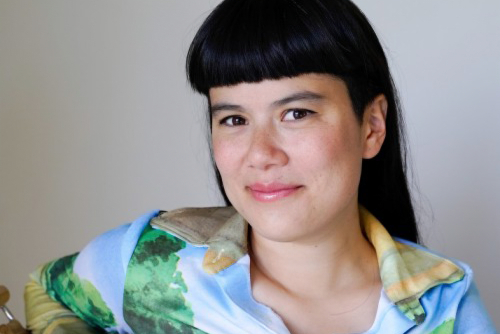
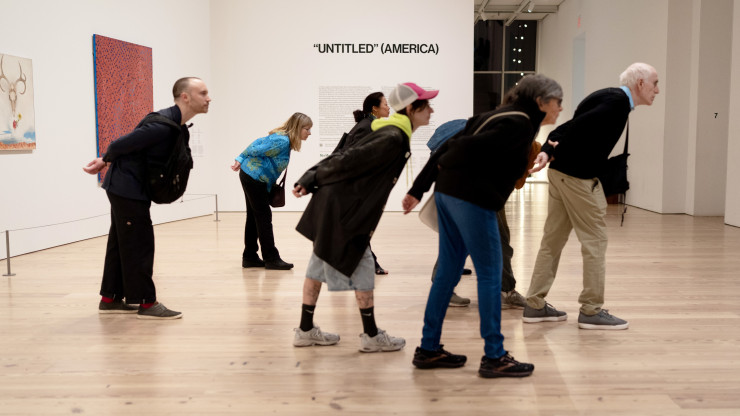
Pictured above: Being Moved (2026). Image courtest of the artist. Photo credit: Amelia Golden

Performance as Social Observation

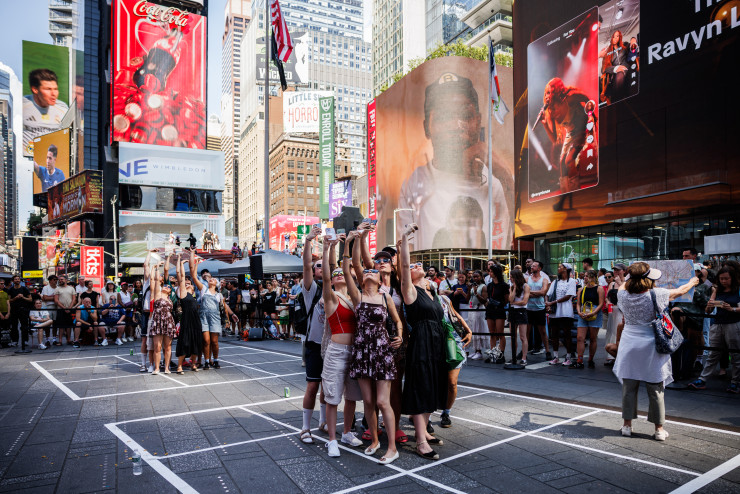
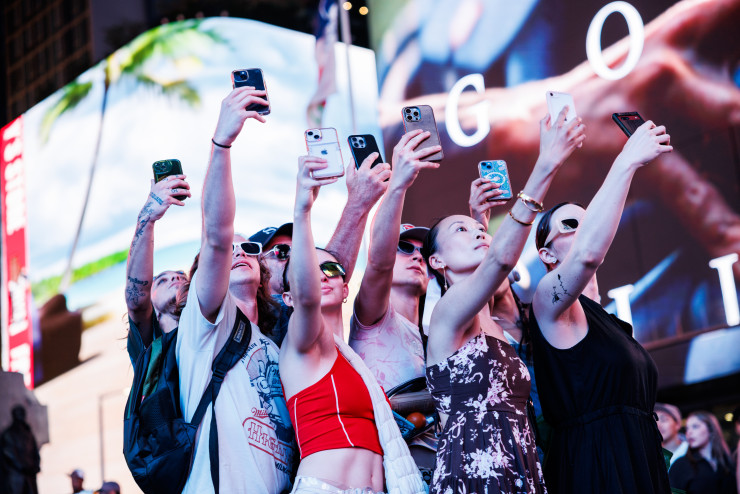
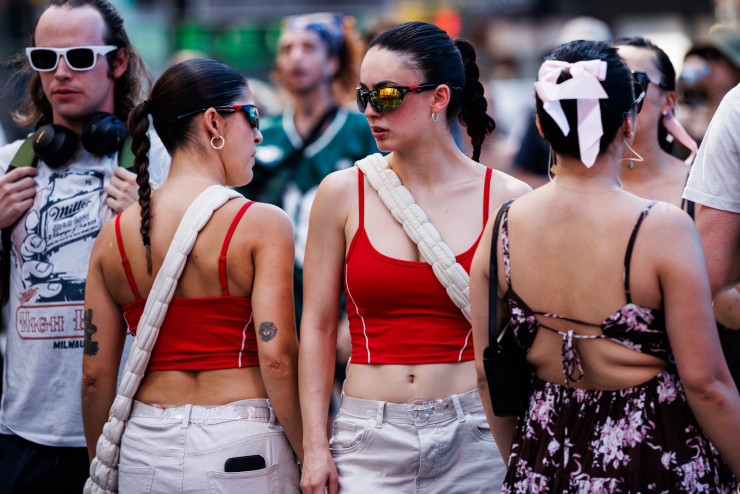
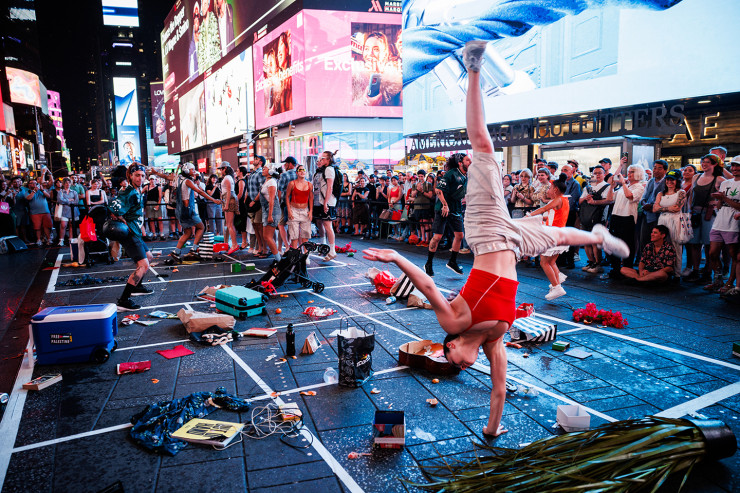
Her recent project American Idle (2025), commissioned by Times Square Arts, expanded those concerns into public performance. The hour-long piece featured performers repeating small, uncanny gestures inspired by tourists and crowd-simulation software: fanning themselves with shirts, taking selfies, eating snacks, lingering aimlessly beneath glowing advertisements. Each performer was mirrored by a doppelgänger dressed identically, heightening the surreal atmosphere.

What interested Chao most, however, was not only the choreography itself but the reactions unfolding around it.

“People stumbled onto the performance unexpectedly and reacted in wildly different ways,” she says. “Children pointed out the ‘twins.’ Tourists tried to figure out whether it was real or staged. Some people wanted to join in.”

That accessibility is intentional. Chao resists the idea that contemporary art should require insider knowledge to be meaningful.

“I care deeply that audiences don’t need specialized art language to engage with the work,” she says. “Different people should be able to create different meanings from it.”

Observation is central to her process. Whether shadowing sanitation workers in Times Square, speaking with healthcare providers, or studying museum bureaucracy, Chao approaches research with openness and curiosity. She is especially interested in what society tends to overlook: maintenance labor, filler imagery, gestures, pauses, and forms of “low art” dismissed as culturally insignificant.

“Art exists everywhere,” she says. “Not just inside museums or institutions.”

American Idle
American Idle (2025). Image courtesy of the artist. Photo credit: Maria Baranova. + Enlarge
American Idle
American Idle (2025). Image courtesy of the artist. Photo credit: Maria Baranova. + Enlarge
American Idle
American Idle (2025). Image courtesy of the artist. Photo credit: Maria Baranova. + Enlarge
American Idle

American Idle

Artist
Maia Chao, faculty
Date
2025
Medium
live public performance
Dimensions
48:56
Credit

Photo credit: Maria Baranova. Image courtesy of the artist.

American Idle

American Idle

Artist
Maia Chao, faculty
Date
2025
Medium
live public performance
Dimensions
48:56
Credit

Photo credit: Maria Baranova. Image courtesy of the artist.

American Idle

American Idle

Artist
Maia Chao, faculty
Date
2025
Medium
live public performance
Dimensions
48:56
Credit

Photo credit: Maria Baranova. Image courtesy of the artist.

American Idle

Artist
Maia Chao, faculty
Date
2025
Medium
live public performance
Dimensions
48:56
Credit

Photo credit: Maria Baranova. Image courtesy of the artist.

1 of 4

A Home at MICA

Her anthropological mindset also shapes how she thinks about medium. Rather than beginning with a predetermined form, she allows each project to dictate its own structure.

“The idea determines the form,” she explains. “I try to listen to the context and let the work tell me what it wants to be.”

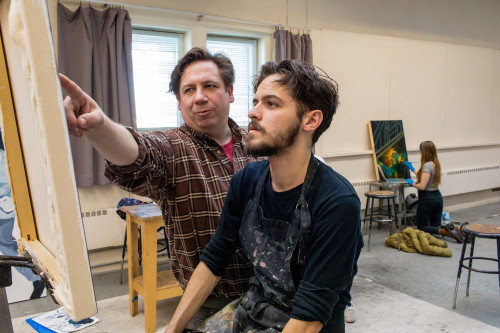
That interdisciplinary flexibility makes Interdisciplinary Sculpture at MICA a natural fit. Chao first arrived at the college around 2020 or 2021, teaching in the First-Year Experience program while also working in film, video, and photography. Since then, she has found a creative home within sculpture, particularly a department that embraces experimentation across disciplines.

At MICA, teaching is not separate from her artistic practice but deeply intertwined with it.

“I don’t see teaching as simply transferring knowledge from teacher to student,” she says. “The most rewarding teaching experiences feel reciprocal and collaborative.”

She is especially attentive to the emotional dimensions of art-making: vulnerability, uncertainty, isolation, and self-doubt. Rather than focusing solely on technical mastery, Chao encourages students to cultivate curiosity, critical thinking, and self-awareness.

“Technical tools are always changing,” she says. “But the ability to ask meaningful questions and think critically about the implications of the work you’re making remains essential.”

Collaboration, Curiosity, and the Whitney Biennial

Collaboration also plays a major role in her teaching and studio practice alike. Chao values the friction that emerges when people from different disciplines, backgrounds, and perspectives work together.

“Collaboration places me in a beginner’s mindset,” she says. “It forces me to learn from others and co-create meaning in ways I could never arrive at alone.”

That openness to uncertainty feels especially relevant as Chao prepares new work for the Whitney Biennial, one of the most prominent exhibitions in contemporary American art. Her upcoming commission will involve a wandering live museum performance shaped by recorded conversations with friends navigating the museum space. The project emphasizes the physical and emotional realities of being inside cultural institutions: needing to rest, finding a bathroom, feeling hungry, or trying to orient oneself in unfamiliar environments.

At the same time, Chao remains thoughtful about the contradictions of participating in major art institutions.

“Art institutions are deeply entangled with systems of wealth and power,” she says. “That reality makes participation complicated. I’m trying to hold those contradictions honestly.”

Even so, she describes being surrounded by the work of other artists in the Biennial as profoundly inspiring.

Making Space for Reflection

For students and emerging artists navigating an increasingly uncertain cultural moment, Chao returns again to curiosity and connection. Recently, she has been reading The Wild Edge of Sorrow by Francis Weller, a book centered on grief, renewal, and collective healing.

“I think many people are carrying immense grief right now,” she says. “My advice would simply be to remain curious, stay connected to others, and continue making work honestly, even in uncertainty.”

That curious, collaborative, observant, and deeply humane spirit runs throughout Chao’s work and teaching. By examining the systems people inhabit every day, she invites audiences not only to see those structures more clearly, but also to imagine how they might be reshaped.


MICA's Bicentennial: Celebrating Two Centuries

Join the festivities as MICA honors its 200-year history, recognizes its present success, and looks forward to a bright future. Throughout 2026, the College will be sharing community stories and announcing one-of-a-kind events on campus, in Baltimore, and beyond.

LEARN MORE


Related MICA Bicentennial

Search for anything and everything at MICA: