Thank You Week: Philanthropists
As we enter this season of gratitude and giving thanks, we’re reminded that the greatest impact of an education often extends far beyond the…
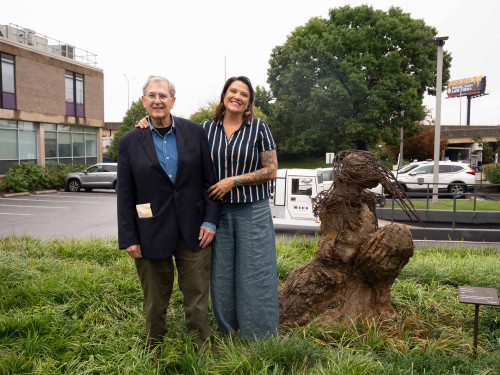
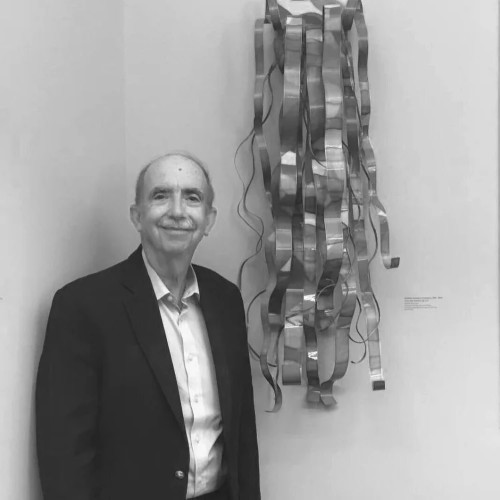
Gary Gillespie Israel, Director of the Dorothy M. Gillespie Foundation
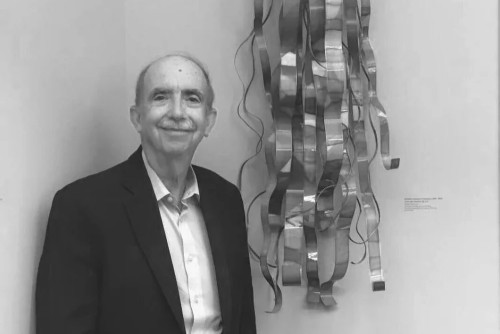
When Gary Gillespie Israel speaks about MICA, his voice carries the warmth of family history, one that began in 1938, when his mother, Dorothy M. Gillespie, left her small hometown of Roanoke, Virginia, and boarded a train bound for Baltimore. To her parents, Baltimore was “Sin City,” a place scandalous enough that when Dorothy later announced she was moving to New York City, the shock had already been softened. That first leap, from the Blue Ridge Mountains to MICA, would become the defining move of a life marked by courage, reinvention, and generosity.
Today, as Director of the Dorothy M. Gillespie Foundation, Israel sees that decision as the spark that shaped not only his mother’s career, but also the arc of his family’s story and the lives of countless artists that her legacy continues to inspire.
Gillespie arrived at MICA at a time when many young women studying art ultimately returned home to become teachers. That was the practical path. But Gillespie, who declared at age five that she would be an artist, had something else in mind.
“MICA gave her confidence,” Israel says. “She understood that others might go back to their towns, become art teachers, settle into predictable lives. She wasn’t going to do that. She was going to New York.”
That confidence stayed with her long after she left MICA in 1941. And she never left MICA behind. Decades later, she advised then-president Fred Lazarus, offering perspective and insight from her life as a working artist. When Israel made his first visit to campus after her passing, Lazarus was the first person he met. “He told me my mother had been important to his career,” Israel recalls. “That really stayed with me.”
Her connection to MICA became a throughline in their family story, one that Israel has continued through the foundation and the scholarship created in her name.
Gillespie’s life after MICA reads like a series of daring reinventions. After marrying a clarinetist ten years her senior, an unconventional choice for a young woman artist in the 1940s, she helped run a series of nightclubs in New York City, Greenwich Village, Miami, and Peru, all while raising two children and sustaining her artistic practice.
“She had this extraordinary life,” Israel says. “Not just as an artist, but as a mother, a wife, a nightclub hostess. And all of that stemmed from the confidence she gained at MICA, meeting artists, being part of something bigger.”
Gillespie was unafraid to cross disciplines or leave behind what no longer served her. In the 1960s, she began making “environments” — immersive, sensory works that invited touch, movement, and sound — years before participatory art became a mainstay of contemporary practice. She shifted to sculpture in the mid-1970s. She rejected commercial pressures, refusing to let galleries dictate her direction. She insisted on her own vision.
Even in her earliest drawings from 1939, there exists a young woman beginning to work beyond the expected boundaries of her time.
Gillespie’s impact extended far beyond her studio. As a Woodrow Wilson Teaching Fellow, she traveled the country, visiting small schools, giving talks, and mentoring young artists. She painted portraits of emerging artists, many unknown, because she believed in capturing their existence and honoring their creative lives. She donated her work widely to hospitals, universities, and public spaces.
“Her generosity was unbelievable,” Israel notes. “She spent as much time outside the studio as in it. She cared deeply about supporting other artists, especially women.”
Her commitment to public art also prefigured today’s movement to dissolve the boundaries between gallery art and civic spaces. “She believed everyone should have access to art, which needs to be seen. If you can’t get into a gallery or museum, murals and public installations are vital,” Israel says.
She also believed that women artists should never compromise their identities. In 1946, she kept her maiden name, an early feminist act. She advised young artists to maintain independence: have a studio, earn your own money, show your work.
Gillespie’s connection to former MICA presidents, to the students and scholars who continue engaging with her work, suggests a school invested not only in producing artists, but in sustaining artistic communities across generations.
“MICA shaped her,” he says. “And now her story shapes how others see MICA.”
Israel hopes MICA continues fostering the qualities that transformed his mother’s life: risk-taking, generosity, interdisciplinarity, and confidence. He believes his mother’s legacy is not measured in market value or celebrity, but in the artists she mentored, the women she inspired, and the students who see her early sketches and think, “I can take risks, too.”

Join the festivities as MICA honors its 200-year history, recognizes its present success, and looks forward to a bright future. Throughout 2026, the College will be sharing community stories and announcing one-of-a-kind events on campus, in Baltimore, and beyond.