Thank You Week: Philanthropists
As we enter this season of gratitude and giving thanks, we’re reminded that the greatest impact of an education often extends far beyond the…
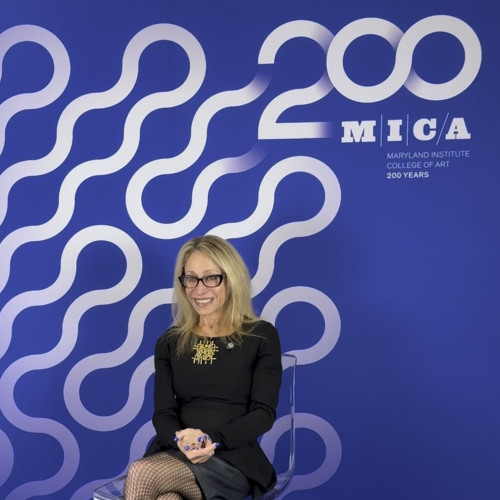
Martha Macks-Kahn, Creator of the GOYA Opportunity Award at MICA (Internship Fellowship)
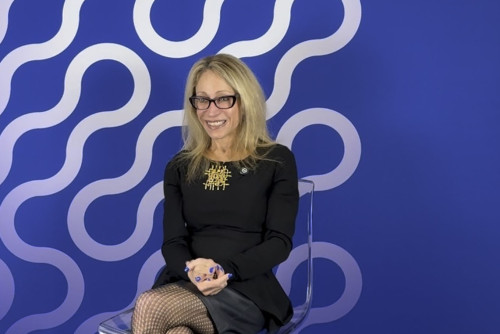
When Martha Macks-Kahn talks about MICA, she doesn’t speak as a donor, a gallery owner, or even as an alumna in the traditional sense. She speaks as someone whose creative life is threaded so tightly through the school that it feels less like an institution and more like a long-standing member of her family. “MICA has always been part of my life in Baltimore,” she says. “It’s changed, grown, struggled, reinvented, and it’s still a gem.”
Macks-Kahn’s relationship with MICA began in the late 1960s to the early 1970s, when she was a Baltimore high school student taking night classes on Mount Royal. She enrolled in interior design, but that didn’t last long. In her very first drawing class, she realized her path was shifting.
“I decided I was not going to be an interior designer; I wanted to be an artist,” she says. “That moment changed everything.”
The MICA Macks-Kahn remembers in the 1970s was a different world: smaller, scrappier, and deeply rooted in Fine Arts. The campus was open, informal, and less secure than today, a detail her father noticed more than she did. “He worried about me driving downtown at night,” she laughs. “But I felt safe. I knew I was exactly where I needed to be.”
After those early studio courses, she left Baltimore to study at the Pennsylvania Academy of the Fine Arts, eventually earning a graduate degree in art history and painting, then teaching printmaking and art history at UMBC. But Baltimore — and MICA — never strayed far away from her.
By 1980, she was back in the city, working as a printmaker and painter. MICA gave her access to its print studios in exchange for assisting students, a small gesture that reflected something she still sees as uniquely MICA: an instinct for reciprocity over gatekeeping.
“That was the difference,” she says. “MICA wasn’t just a place to study; it was a place where artists shared space, equipment, conversations. You didn’t have to be enrolled to be part of the community.”
Many of her close friends were MICA faculty. They critiqued together, exhibited together, and built the Baltimore arts scene in ways that blurred the lines between classroom, studio, and city. When she opened her own print studio, Goya Girl Press (later Goya Contemporary Gallery), MICA was deeply woven into its story. She published prints by faculty. Visiting artists exhibiting at the BMA were sent her way: “Go see Martha.” And they did.
Before long, internationally recognized artists like Christian Marclay were printing editions in her Mill Centre studio, long before his name was spoken in auction houses.
“It was always a mix,” she recalls. “Baltimore artists, New York artists, young artists, established artists. No hierarchy. Just the work.”
That, too, she believes, is a MICA difference: a school that treats emerging voices and iconic figures as collaborators instead of competitors.
Decades of working with artists revealed a hard truth to Macks-Kahn: talent wasn’t enough. Without access (i.e., real, funded access), most young fine artists couldn’t afford to take the internships that would shape their careers.
“Graphic designers could get paid work. But fine artists? They were told, ‘You should be grateful for the experience.’ Meanwhile, they still had to eat.”
So about ten years ago, she did something about it.
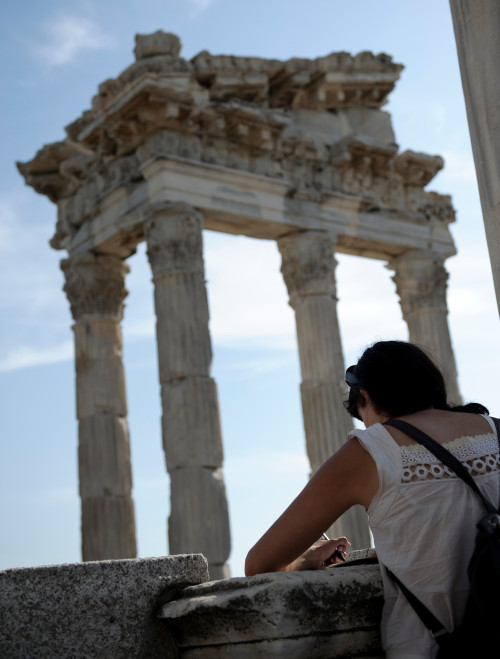
The GOYA Opportunity Award, named after Francisco Goya and rooted in his legacy of artists as social witnesses, was created to fund summer internships for MICA juniors and seniors. Not symbolic funding — real funding — enough to live in New York for eight weeks, or to travel abroad, or to work alongside master fabricators, curators, or papermakers.
The award is competitive and rigorous. Students submit a full proposal, budget, and project plan. A nationally respected curator reviews the applications and selects the recipients.
“We don’t hand out money for someone to ‘see what happens,’” she says. “These are serious students. They know what they want to do.”
One textile student worked in the Netherlands with a fabricator. A metals student apprenticed with a sculptural welder. Others have interned in museums, print studios, and contemporary art spaces where entry is normally reserved for those with financial privilege.
And the thing she loves most? The return conversations.
“Students come back changed. Sometimes they realize the career they thought they wanted isn’t the one they want at all. Sometimes they come back more certain. But every one of them comes back with clarity they wouldn’t have found without being in the world.”
Over time, she has stayed in touch with many alumni recipients. Some have become curators. Some started their own practices. Some became educators, community organizers, or cross-disciplinary artists. Many now occupy the same artistic ecosystems that once felt out of reach.
Join the festivities as MICA honors its 200-year history, recognizes its present success, and looks forward to a bright future. Throughout 2026, the College will be sharing community stories and announcing one-of-a-kind events on campus, in Baltimore, and beyond.