Thank You Week: Philanthropists
As we enter this season of gratitude and giving thanks, we’re reminded that the greatest impact of an education often extends far beyond the…
Stanley Mazaroff, Donor
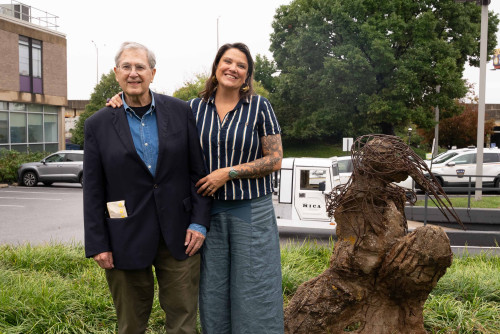
Painter, sculptor, lawyer, Peace Corps volunteer, activist, philanthropist, art collector, and author — Stanley Mazaroff has worn many hats over a remarkable lifetime. But the thread connecting his myriad pursuits is a lifelong passion for art, one that began with a childhood dream and a connection to MICA that has endured for nearly 75 years.
Growing up in Baltimore, Mazaroff remembers a childhood filled with sports and music. But his parents also wanted him to experience art. During his early elementary school years, they enrolled him in a Saturday program at MICA.
“I was probably 5 years old when the connection began,” Mazaroff recalled. “Learning to become an artist when I was a kid influenced me over the years.”
Those early lessons took hold. Mazaroff continued painting into his 20s. Although art would not become his first career, it remained a constant presence in his life. Over the decades, that childhood passion wove its way through a remarkable journey spanning civil rights, public service, law, scholarship, collecting, and philanthropy and ultimately brought him back to MICA, this time not as a young student, but as a neighbor, collector, and benefactor.
Born and raised in Baltimore, Mazaroff became interested in civil rights while in college. In 1961, as President John F. Kennedy’s newly created Peace Corps was getting underway, Mazaroff joined and was sent to the Philippines. He was among a small group selected for leadership positions there and met Kennedy during that formative period.
After two years abroad, Mazaroff returned to law school. His career later took him to Washington, where he worked on matters involving U.S. Supreme Court nominations, before he joined the Baltimore law firm in 1971. He spent three decades with the firm, becoming a senior partner and establishing a prominent career in employment law. He also taught law at the University of Maryland and wrote extensively on legal subjects, including the 745-page Maryland Employment Law.
But when Mazaroff retired from legal practice in 2001, he did something unusual for someone already at the culmination of one successful career: He went back to school. Art, the interest nurtured decades earlier in MICA’s Saturday classes, moved to the center of his life.
Mazaroff studied art history at Johns Hopkins University and developed a second career as a scholar and author. His research took him to Paris and deep into the history of Baltimore’s great art collections. That scholarship also reflected his increasingly deep involvement with Baltimore’s museums. He served on the Walters Art Museum’s Board of Trustees and as a vice president of the institution. At the same time, Mazaroff and his wife, Nancy Dorman, were building a collection of their own.
Dorman brought an equally strong commitment to public service. She had served on President Jimmy Carter’s Domestic Policy Staff at the White House and later held leadership roles with several Baltimore institutions, including the Enoch Pratt Free Library, the Baltimore Museum of Art (BMA), and the Maryland SPCA.
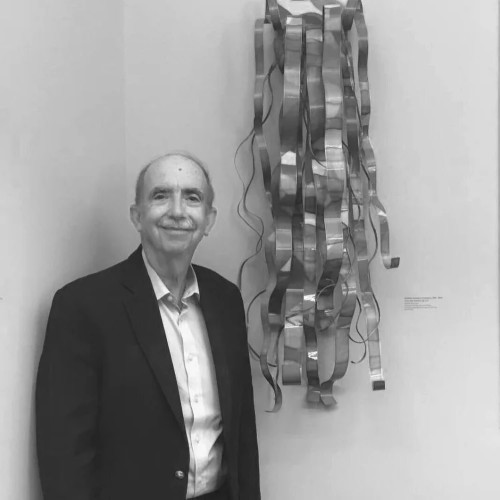
Together, Dorman and Mazaroff collected approximately 200 works of art from around the world. But collecting was never simply about living with art. Increasingly, it became about deciding where the works could have a life beyond their own home.
“I left my law firm about 20 years ago, and Nancy and I both decided we wanted to do as much as we could for the community,” Mazaroff said.
Their philanthropy has had a significant impact on the BMA. The couple donated more than 100 works to the museum and provided $5 million in support of the Nancy Dorman and Stanley Mazaroff Center for the Study of Prints, Drawings and Photographs.
Opened in December 2021, the 7,000-square-foot center dramatically expanded the museum’s ability to exhibit, study and provide public access to its collection of more than 67,000 works on paper. Its gallery and study room bring visitors into close contact with works ranging from centuries-old prints to modern and contemporary drawings and photographs.
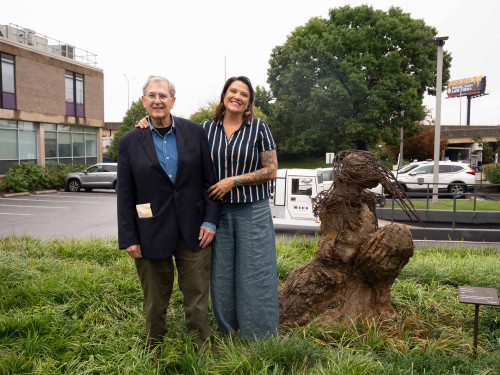
Their support extended beyond the walls of museums. After more than half a century living on Park Avenue in Baltimore’s Bolton Hill neighborhood, the couple decided to donate six outdoor sculptures by nationally and internationally recognized artists for installation in public green spaces in Bolton Hill and neighboring Madison Park. The project involved collaboration among neighborhood organizations, Baltimore city agencies, and MICA, extending the couple’s collection into the public spaces of the community they had long called home.
The couple also gave sculptures directly to MICA, works that students, faculty, staff, and neighbors may pass regularly without knowing the story of the couple behind them. For Mazaroff, those sculptures create a tangible link between the institution where he first learned to make art as a boy and the city he and Dorman spent decades working to enrich.
Their names and collection can be found elsewhere in Baltimore as well. The Enoch Pratt Free Library selected works from their collection for display, another extension of the couple’s belief that art belongs in civic life and should be encountered by broad audiences.
The trajectory is striking: Mazaroff first came to MICA to learn how to create art. Decades later, he and his wife helped place art where new generations of MICA students could encounter it as part of their everyday lives.
Dorman died in 2024, leaving Mazaroff to continue stewarding the legacy they built together. Their Park Avenue home still contains dozens of works from their collection, many of which Mazaroff says ultimately will go to the Baltimore Museum of Art.
His connection to MICA offers a fitting story for the College’s bicentennial: A child enters an art classroom and learns to paint. He grows up and pursues other callings, travels the world, practices law, advocates for civil rights, and studies history. Yet the experience of art remains with him.
Decades later, he returns, not simply as the child who once learned at MICA, but as a neighbor, scholar, collector, and donor helping make art accessible to another generation.
Mazaroff’s story suggests that the impact of an art education cannot always be measured by the profession a student chooses. Sometimes its influence unfolds across an entire lifetime.

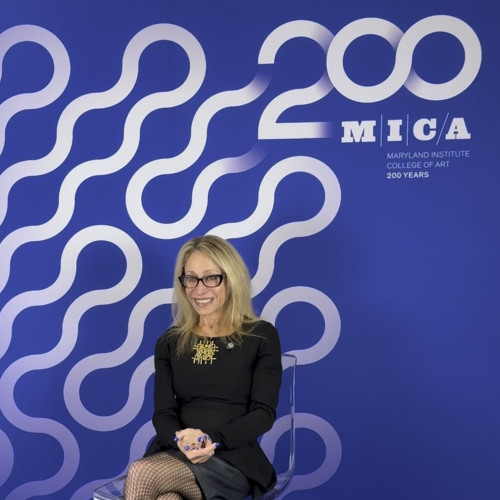
Join the festivities as MICA honors its 200-year history, recognizes its present success, and looks forward to a bright future. Throughout 2026, the College will be sharing community stories and announcing one-of-a-kind events on campus, in Baltimore, and beyond.