The Power of Mentorship: Raoul Middleman
Craig Hankin ’79 (Painting MFA) & Sam Robinson ’78 (Painting BFA)
Craig Hankin ’79 (Painting MFA), Director Emeritus, Center for Visual Arts at Johns Hopkins University, Former faculty: 1979-1987
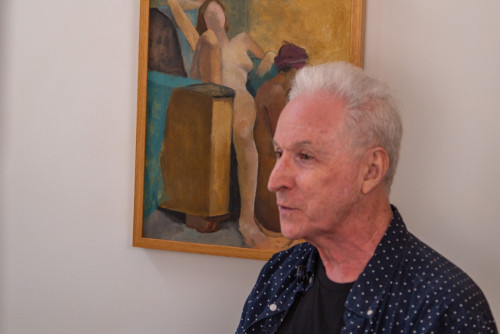
When Craig Hankin arrived at MICA in the mid-1970s, he found himself swimming against the current.
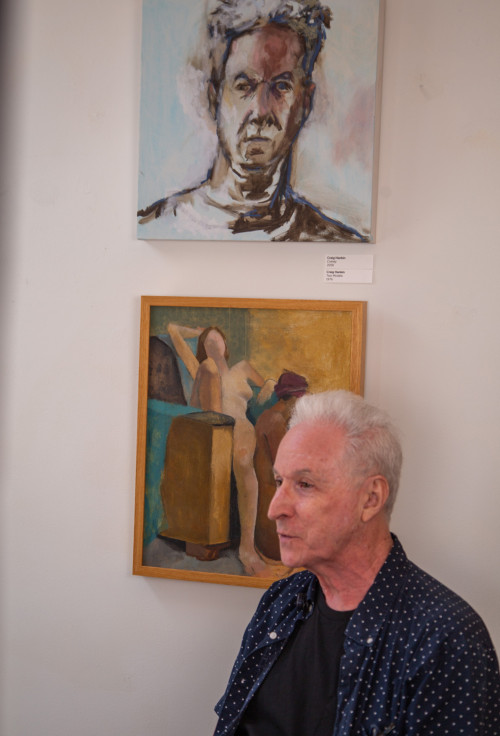
Minimalism dominated graduate studios. Geometric abstractions and conceptual approaches were in vogue, while Hankin remained committed to painting figures, landscapes, and still lifes from observation. Rather than abandoning his artistic instincts to follow prevailing trends, he quietly continued making the work he believed in. Looking back nearly five decades later, Hankin sees that decision as one of the most important lessons of his education.
“I just stuck to my guns and painted the way I wanted to paint,” he recalls. “Those of us working figuratively felt like we were largely left to our own devices. In retrospect, that probably wasn’t a bad thing. It made us more resilient and resourceful.”
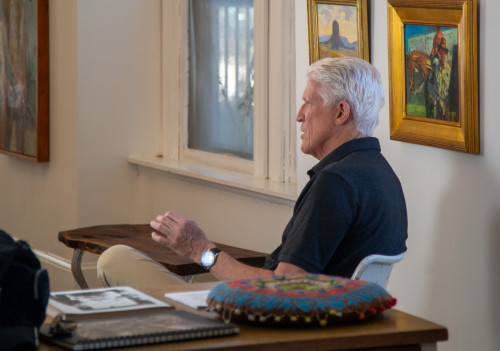
That resilience would define a remarkable career spanning nearly four decades as an artist, educator, curator, writer, and musician. As a 1979 MFA graduate in painting, Hankin went on to teach at MICA before spending 38 years building what became Johns Hopkins University’s Center for Visual Arts, helping establish studio art as an academic discipline while mentoring generations of students.
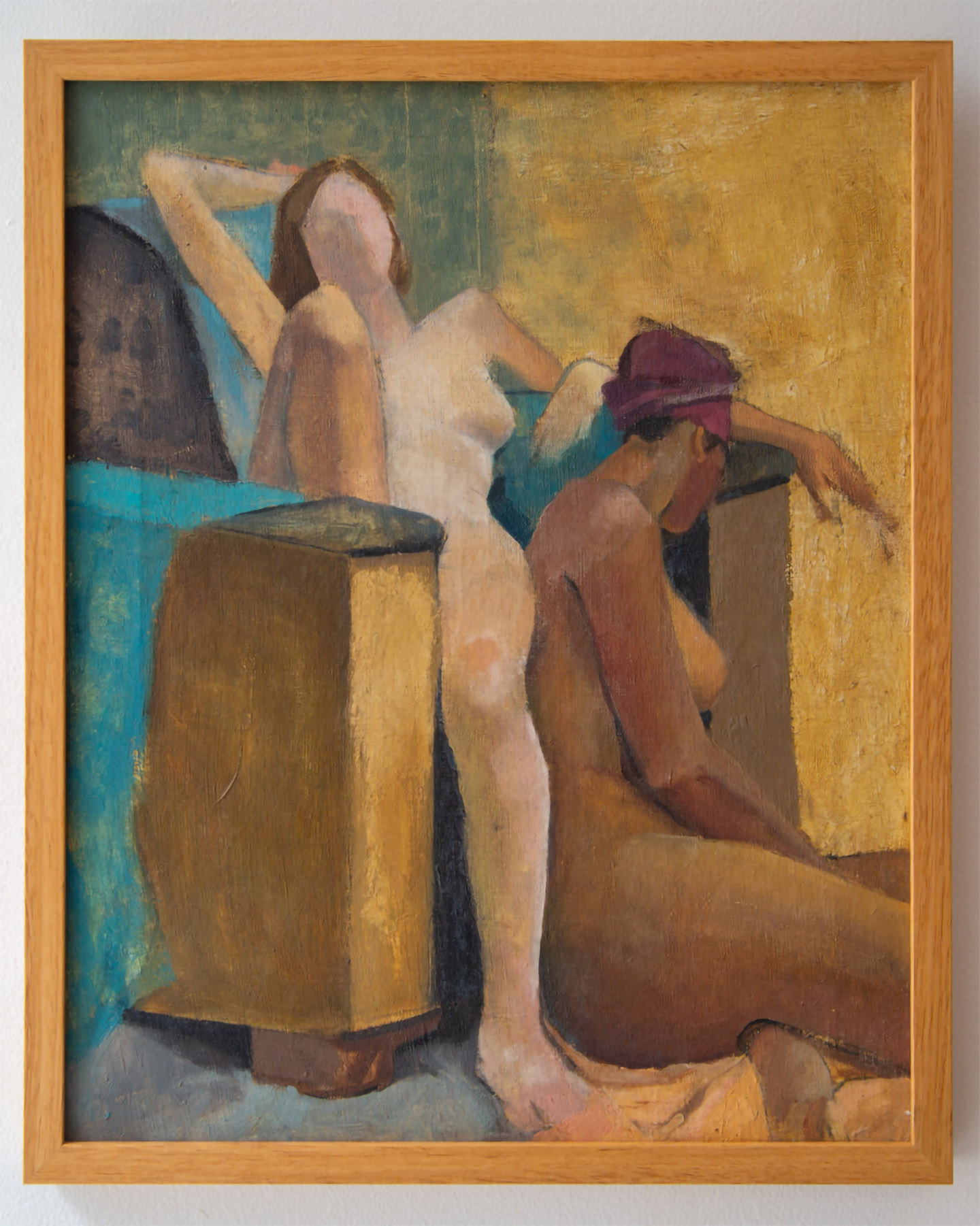
His journey toward becoming an artist began just across town at Johns Hopkins University, where he enrolled in 1972 as a pre-med student. The plan didn’t last long. After struggling through chemistry and calculus, he switched his major to art history, discovering that his fascination with art extended beyond scientific precision. Even then, studying art wasn’t enough.
“I got a little restless with the way art history was taught,” Hankin says. “I decided I really wanted to become a painter instead of an art historian or an art critic.”
After graduating early from Hopkins, he immersed himself in studio practice at MICA. With little formal studio experience, he devoted himself to drawing, painting, and printmaking before entering graduate school and earning his MFA in 1979. His years at MICA coincided with an exciting and sometimes challenging moment in contemporary art.
For students like Hankin pursuing representational painting, the atmosphere could feel isolating. While visiting artists and faculty often championed conceptual work, Hankin and a small circle of classmates continued exploring traditional observational painting. Rather than viewing that experience negatively, he now believes it strengthened his artistic identity.
“When you aren’t getting constant validation, you learn to trust your own judgment,” he says. “That independence stayed with me.” The Baltimore arts community reinforced that confidence.
Although his family moved to Silver Spring when he was 11, Hankin returned to Baltimore for college and has considered the city home ever since. Over the years, he became deeply involved in its creative community, not only as a painter but also as a co-founder of City Paper, an art critic, curator, comic-strip creator, and musician.
Yet unlike larger art centers where artists often compete for attention, Hankin says Baltimore has always fostered collaboration. That collaborative spirit shaped his teaching as much as his artwork.
“It’s a strong, supportive community,” he says. “I’ve never gotten the sense here that artists were competing against each other. It’s always felt like people genuinely wanted to help each other succeed.”
Almost immediately after completing graduate school, Hankin began teaching drawing at MICA. The following year, he accepted an invitation from renowned Maryland landscape painter and former MICA president Eugene “Bud” Leake to teach at Johns Hopkins University’s Homewood Art Workshops. The opportunity proved transformative.
What began as a collection of non-credit evening workshops gradually evolved into a full academic visual arts program. Hankin recognized that students balancing demanding academic schedules needed courses that counted toward their degrees. Converting studio courses into credit-bearing classes was a gradual process, but one that fundamentally changed visual arts education at Hopkins.
Yet, growth often required improvisation. Before Hopkins had a photography darkroom, students mailed film away each week for processing. Studio space was cramped, budgets remained tight, and the program constantly searched for room to expand. Despite those limitations, he built an increasingly vibrant department, eventually becoming director of what evolved into the Center for Visual Arts. During his tenure, the program expanded its curriculum, hired additional faculty, and ultimately relocated to significantly larger facilities. Still, he never forgot the challenges of advocating for the arts within a research university primarily known for medicine and science.
“The university loves the idea of having the arts,” he says. “The challenge has always been recognizing that the arts require investment. They don’t happen by magic.”
Rather than becoming discouraged, Hankin viewed those obstacles as opportunities to demonstrate the value of creative practice. He believes art has the power to transform not only students but entire communities.
“The arts can have a positive impact on neighborhoods that are struggling,” he says. “Even something as simple as a mural can change the way people feel about where they live.”
Throughout his career, he remained equally committed to his own artistic pursuits. His paintings, drawings and photographs have been exhibited throughout the region, while his collaborations extended into comics, music, and publishing. He was instrumental in creating the comic strip, Normal, for the Baltimore Evening Sun, published work in R. Crumb’s Weirdo comics, and produced the cult novelty recording Bruce Springstone: Live at Bedrock, a parody that achieved unexpected national success and even found its way into the Guinness Book of World Records decades later. For Hankin, creativity has never fit neatly inside a single discipline.
“I’ve never considered myself a pure painter,” he says. “I’ve always been interested in multiple ways of telling stories.”
Even after retiring from Johns Hopkins in 2018, his greatest satisfaction comes not from exhibitions or publications but from the thousands of students whose artistic journeys intersected with his own.
“I loved coming in every day to work with students,” he says. “I feel like I’ve been the beneficiary of their intelligence and talent all along.”
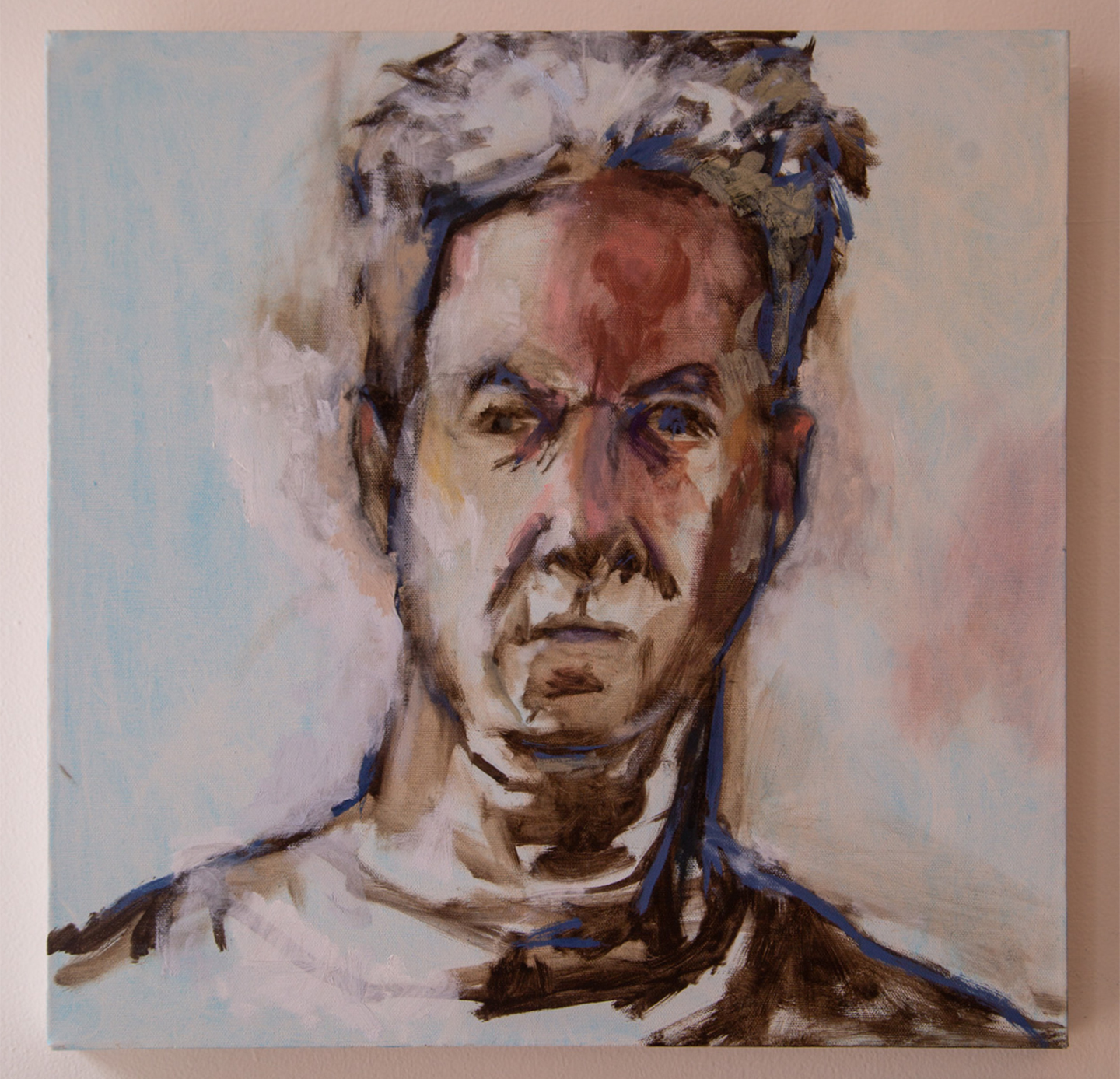
Rather than offering a rigid roadmap, Hankin encourages young artists to embrace opportunities, cultivate relationships, and make thoughtful use of today’s digital tools. He stops short of suggesting that anyone simply follow his path.
“My career was influenced by chance, good timing, and wonderful mentors,” he says. “I can’t tell someone else to do what I did because that path doesn’t really exist anymore.”
Still, one lesson has remained constant from his days at MICA to the present: Artists must trust themselves. The styles, fashions, and critical conversations will inevitably change. Careers rarely unfold exactly as planned. But authenticity, the willingness to keep making the work that matters most, endures. And for Hankin, that lesson began in a graduate studio at MICA where he quietly chose to paint the world as he saw it.

Join the festivities as MICA honors its 200-year history, recognizes its present success, and looks forward to a bright future. Throughout 2026, the College will be sharing community stories and announcing one-of-a-kind events on campus, in Baltimore, and beyond.