The Power of Mentorship: Raoul Middleman
Craig Hankin ’79 (Painting MFA) & Sam Robinson ’78 (Painting BFA)
Sam Robinson ’78 (Painting BFA)
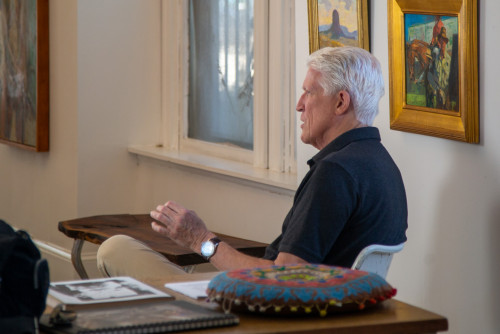
Sam Robinson wasn’t looking for a new career when he showed up at a fox hunt. Just 15 minutes from his Baltimore County studio, riders in scarlet coats gathered with restless horses and eager hounds before disappearing into Maryland’s rolling countryside. It was at that moment, he had an epiphany and something in his creative juices clicked.
“I found everything I had been looking for in one place [in Maryland’s hunt country] ,” Robinson says. “There was the landscape I loved painting, but there were also people, horses, hounds, movement, atmosphere, and this fascinating culture that I knew almost nothing about.”
That unexpected morning transformed the trajectory of Robinson’s life. Today, the 1978 MICA graduate is one of America’s leading equestrian sporting artists and the official artist of the National Steeplechase Association. His paintings celebrate the traditions of Maryland’s hunt country with energetic brushwork and luminous color, but the artistic vision that made those paintings possible began decades earlier, half a world away.
Born in New York City, Robinson spent most of his childhood in South Korea, where his parents served as Christian missionaries. While many young artists begin with crayons or watercolor sets, Robinson’s earliest artistic education came through the disciplined tradition of Korean ink painting. Working on long vertical sheets of paper with pointed brushes loaded with rich black ink, he learned a lesson that still guides his work today.
“I’ve always been interested in making the brushstroke count,” he says. “To get as much as possible into that first mark. Korean ink painting taught me that.”
That philosophy remains visible whether Robinson is painting a horse clearing a timber fence, sunlight filtering through an interior, or the quiet beauty of a Maryland landscape. His paintings suggest rather than describe, capturing movement and atmosphere through expressive marks instead of meticulous detail.
The influence of Korea, however, was only half of his artistic education. His grandmother, an accomplished sculptor who studied in Paris before setting aside her own career to support her husband’s ministry, introduced Robinson to the Western artistic tradition. She took him to museums, nurtured his fascination with Italian Renaissance painting and sculpture, and encouraged every artistic interest he pursued.
One memory remains especially vivid. As a teenager, Robinson accompanied his grandmother to New York, where family connections led to an unforgettable afternoon at the Frick Collection. They shared lunch with Helen Frick, renowned art collector and philanthropist, before touring the museum together.
“I was probably wearing a flannel shirt, ripped jeans, and had long hair,” Robinson recalls with a laugh. “But no one seemed to mind because I genuinely loved Italian painting.”
Though a circuitous journey, those experiences, combined with summer drawing and printmaking classes at MICA while visiting family in Maryland, convinced Robinson he had found his artistic spirit and the college where he belonged.
Ironically, his path to MICA almost ended before it began. Living overseas meant he had little opportunity to develop the kind of portfolio American art schools expected. But, rather than reject him, MICA encouraged him to enroll in its pre-college summer program, where he quickly proved he belonged. He officially entered MICA in 1971 but left after a single semester, following his then-girlfriend to Ohio and spending several years living what he nostalgically describes as a “back-to-the-land” existence during the 1970s. Eventually, practicality prevailed.
Returning to Baltimore, Robinson immersed himself in one of the most influential periods in MICA’s history. During the Eugene “Bud” Leakes era as president of MICA, studio practice defined campus life, and the painting department was the college’s largest program. He studied with an extraordinary group of faculty members, including longtime MICA faculty member and his mentor, Raoul Middleman, who perhaps left the deepest imprint on him both personally and professionally.
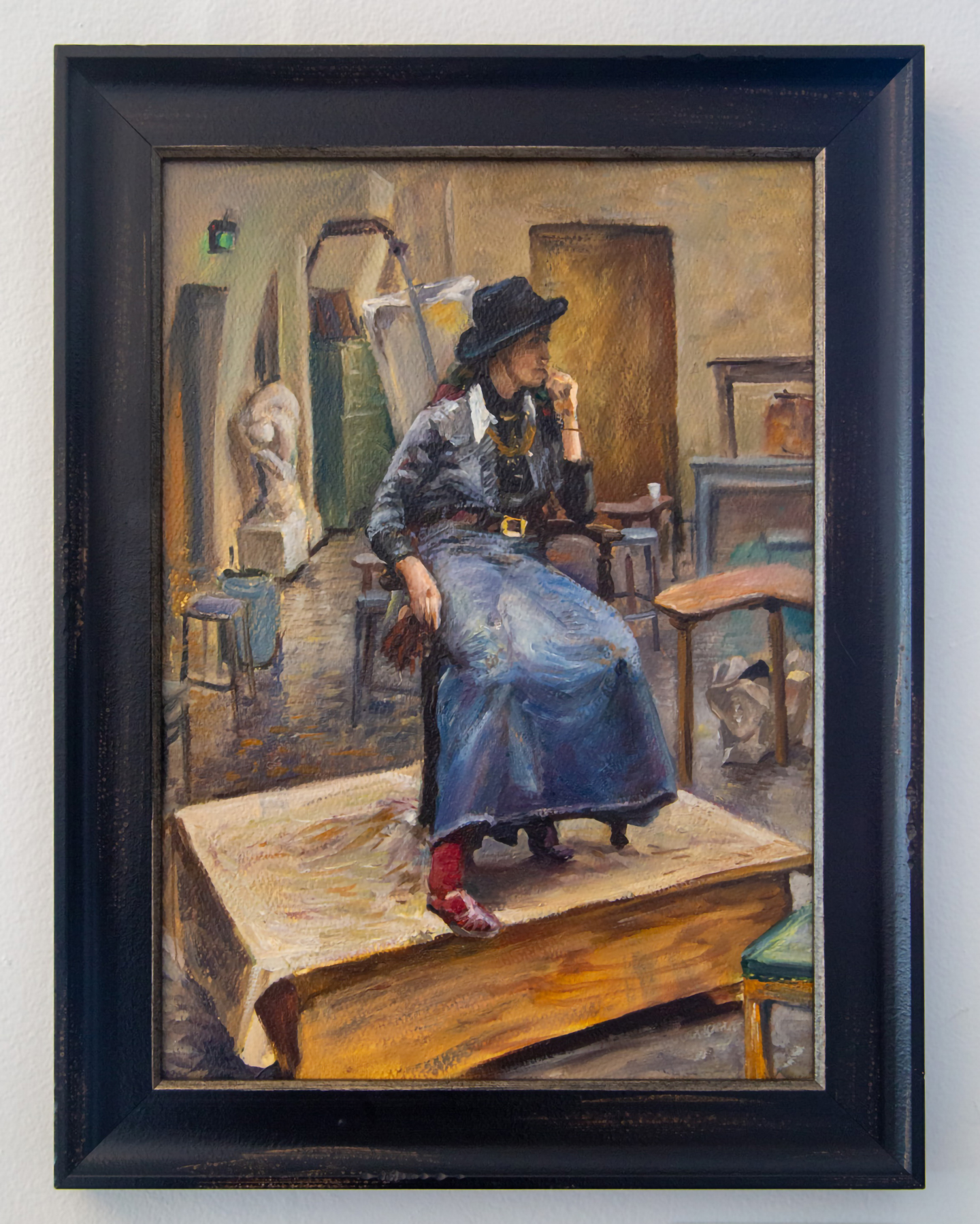
Although Robinson’s paintings have always rested on a stronger academic drawing foundation than his mentor’s, he gradually embraced Middleman’s confidence in painting directly. This “Middleman” approach values observation over calculation, trusting the first brushstroke rather than endlessly refining it.
“Today I rarely make a preliminary drawing,” Robinson says. “I simply begin painting directly on the surface.”
Some of Robinson’s favorite memories from MICA took place away from campus. Middleman frequently brought landscape painting classes to Burnside Farm, Robinson’s grandmother’s historic property in Greenspring Valley. The rolling fields, mature trees, and old buildings became outdoor classrooms for generations of students and remain subjects Robinson paints today.
Yet graduating in 1978 did not usher Robinson into an immediate career as a professional painter. Representational painting, more commonly known as figurative art, had largely fallen out of favor. Galleries showed little interest in the loose, painterly realism he admired.
Finding his spot as an artist was becoming somewhat of a mystery. Portrait commissions existed, but he had no idea how artists found clients in the years before websites and social media. Teaching never appealed to him. Instead, almost by accident, Robinson built a decorative painting company called Valley Craftsmen. The business flourished, supporting his family, putting his children through school, and allowing him to continue painting in his spare time.
For years he wondered whether he had postponed the career he truly wanted. Only after writing the final tuition check for his youngest child did Robinson begin stepping away from the business to devote himself fully to painting.
Stepping away from Valley Craftsmen gave Robinson something he had lacked for decades: the time to pursue painting on his own terms.
The fox hunt that had first captivated him proved to be more than an intriguing commission; it became the foundation of a career. Within Maryland’s hunt country, Robinson found an endless supply of subjects that combined everything he loved about painting: sweeping landscapes, expressive figures, powerful horses, changing light, and a living tradition rooted in the land.
Collectors responded almost immediately. As representational painting regained popularity, Robinson found an audience eager for work that celebrated Maryland’s equestrian culture. His reputation grew alongside the sport, eventually leading to his appointment as the official artist of the National Steeplechase Association. Today, he creates the cover artwork for American Steeplechasing and travels the East Coast circuit, painting races from Virginia to New York.
Working on location with quick-drying gouache, Robinson captures fleeting impressions before transforming them into larger studio oils. His artistic philosophy has remained remarkably consistent.
“Expression without description is my aim, to make the suggestion of any particular feature look just right without fussy detail,” he says.
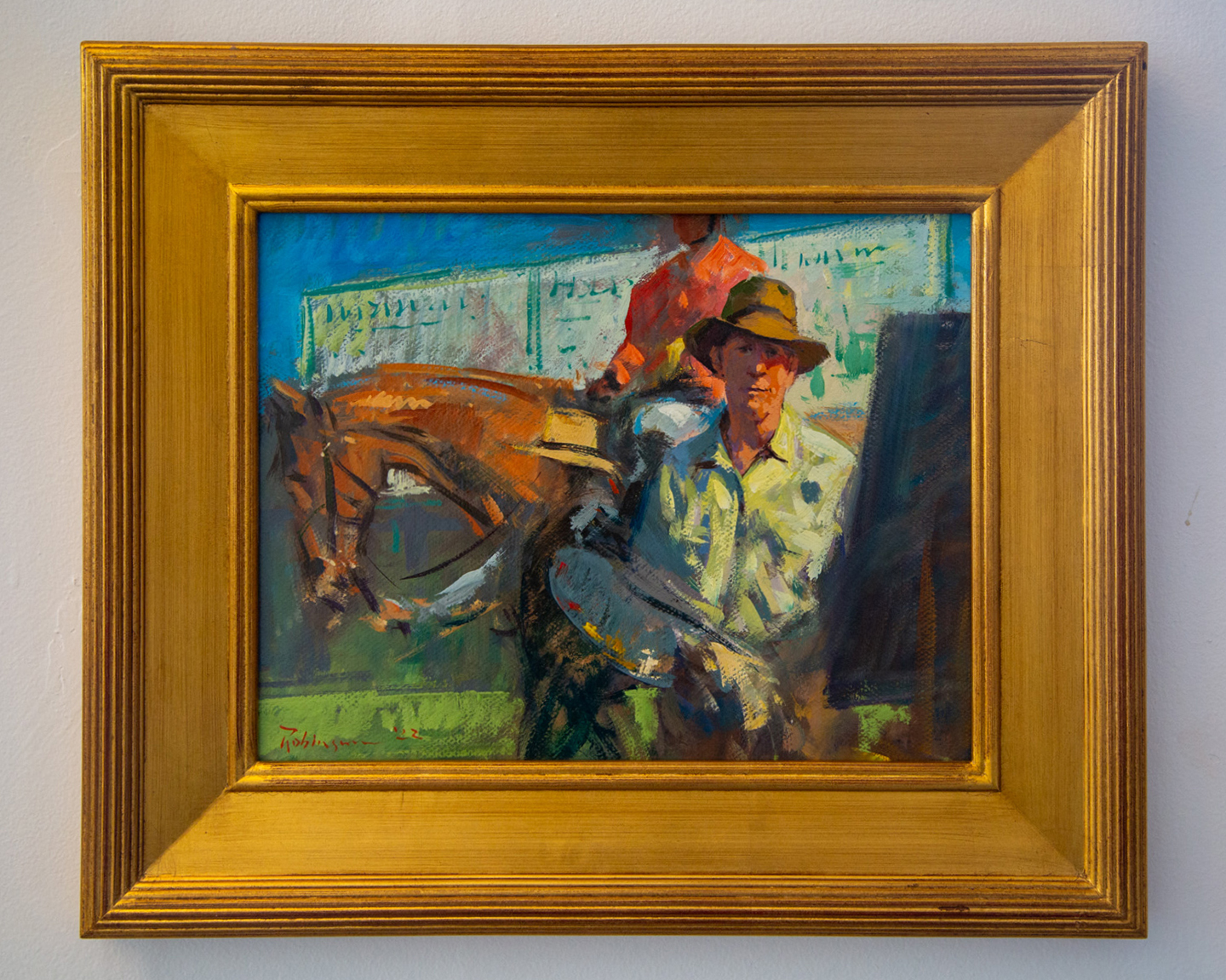
Although horses have become his signature subject, Robinson insists they are only one part of a much larger story. Not an equestrian himself, he describes his role as an “embedded journalist,” documenting the people, places, and traditions that define Maryland’s hunt country. That perspective has earned him the trust of a community committed not only to horses but also to preserving the land that sustains them.
The more time Robinson spent in that world, the more the landscape itself became central to his work. Today, these elements of landscape and culture are inseparable in Robinson’s art, with Maryland serving as both subject and setting. He paints its rolling hills, historic farms, mature hardwood forests, gardens, and quiet interiors with the same affection he brings to its riders and hounds. But over time, he realized the landscape alone could not tell a story that celebrates a way of life in which the land and the people who steward it are inextricably connected.
Looking back across nearly five decades, Robinson no longer sees detours. For an artist who once wondered whether his real career had arrived too late, the answer has become clear. The work was never delayed; it was simply waiting for the right moment, and the right brushstroke, to bring everything together.

Join the festivities as MICA honors its 200-year history, recognizes its present success, and looks forward to a bright future. Throughout 2026, the College will be sharing community stories and announcing one-of-a-kind events on campus, in Baltimore, and beyond.