An Education in Possibility
Growing up in Miami, Florida, Stark was surrounded by an abundance of visual inspiration. The city’s tropical vegetation, saturated colors, and vibrant mix of South American, Central American, and Caribbean cultures left a lasting impression.
“I think the plants, the colors, and the cultures all informed my work,” she says. “Eventually, those influences started evolving and becoming more abstract and intertwined in what I create.”
When she began considering colleges, Stark applied widely. MICA offered both an exceptional art education and something entirely unfamiliar to a young Floridian: the prospect of experiencing snow.
“I got into MICA and was really excited to come here because I had never experienced snow before,” she remembers. “It was also an amazing school.”
At MICA, Stark gravitated toward the Fibers department, drawn particularly to the program’s open-minded, conceptual approach. Although the curriculum introduced students to traditional textile techniques, her instructors encouraged the students to experiment beyond the boundaries of the discipline.
“[We were] encouraged us to think outside the box and work with whatever materials we were passionate about,” Stark says.
That philosophy extended to her Animation studies, where she was similarly encouraged to follow her interests, even when those interests stretched beyond conventional definitions of animation. Stark soon discovered that the combination of Fibers and Animation was not contradictory; it was liberating. This freedom to experiment would become foundational to her career.
“In most people’s minds, that combination might not make sense, but MICA was very encouraging,” she explains. “The attitude was, ‘Yeah, let’s mix all these weird things and see where it goes.’”
The Art of Discovery
During her junior year, Stark spent six months studying abroad in Aix-en-Provence, France, through a program connected to MICA. She lived with a French family whose members were ceramic artists, learned to cook, and immersed herself in a new environment. It was there that she purchased the inexpensive colored paper that would change the trajectory of her work.
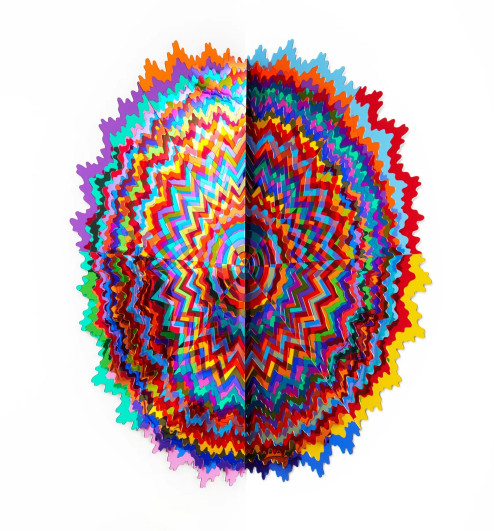
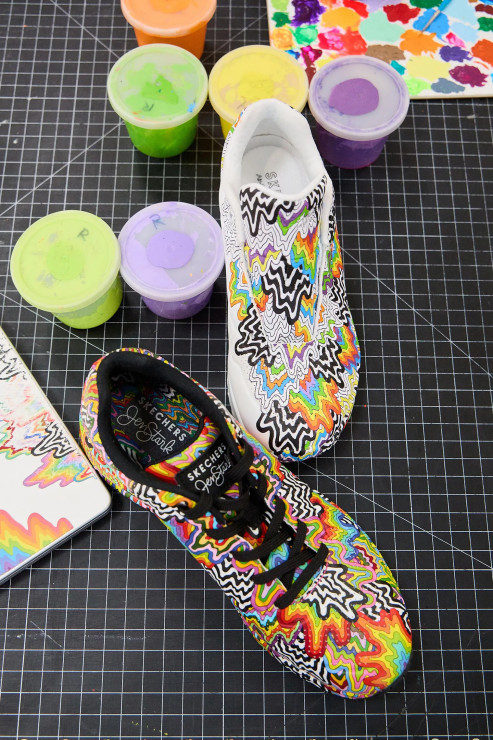
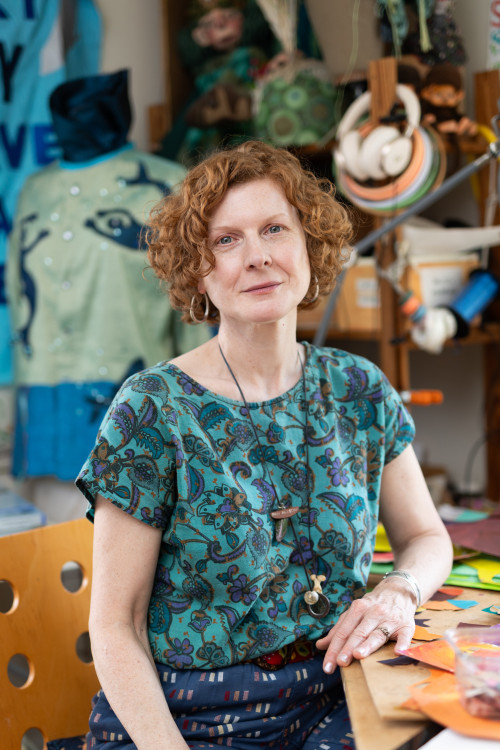
What began as an economical solution became an artistic revelation. By cutting, layering, and manipulating paper, Stark discovered a medium capable of expressing the organic movement and intricate structures that fascinated her. This creative process remains rooted in experimentation.
Although her compositions can appear mathematically precise, intuition plays an equally important role. The Fibonacci sequence and golden ratio, both found in natural structures, provide inspiration, while repetition becomes a form of meditation.
“The repetitive, meditative process is also hypnotic,” Stark explains. “It relaxes me.”
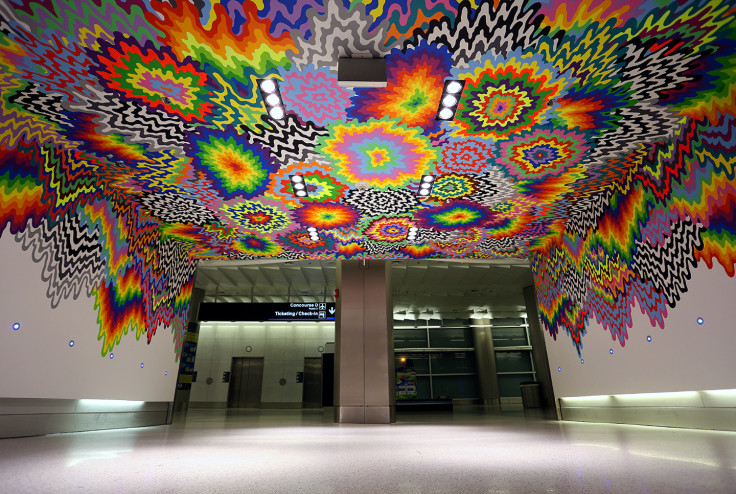
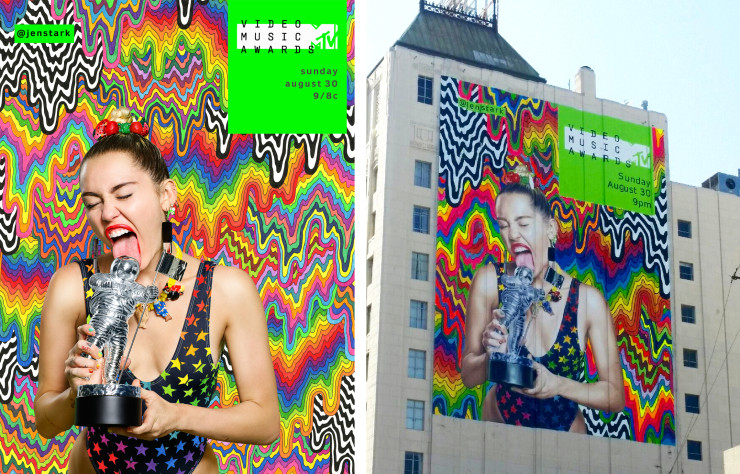
That balance between structure and spontaneity gives her work its distinctive energy. Brilliant rainbow gradients coexist with restrained grayscale palettes. Repeated forms suggest growth, movement, and infinite expansion. Even static pieces can seem animated, as though their patterns are shifting before the viewer’s eyes.
Taking the Leap
After graduating from MICA in 2005, Stark returned to Miami, uncertain of her next steps. An unexpected phone call from a friend offered what she thought was an opportunity to work on models for an anthropology museum in Philadelphia. She accepted immediately, only to discover upon arrival that the job was actually with Anthropologie, the retail company. This misunderstanding became a formative professional experience.
At approximately 22 years old, Stark traveled around the country working on store installations, spending weeks at a time in different cities. The work taught her practical lessons about discipline, independence, and professional confidence. But eventually, she recognized that she wanted to devote that energy to her own artistic vision.
“I didn’t want to keep making other people’s art,” she recalls. “I wanted to make my own.”
With some savings to support her transition, Stark quit and moved back to Miami. She began selling work directly from her studio, participating in group exhibitions, and securing solo shows. Eventually, one opportunity led to another, and the career she had imagined as an art student began to take shape.
From Artwork to Experience
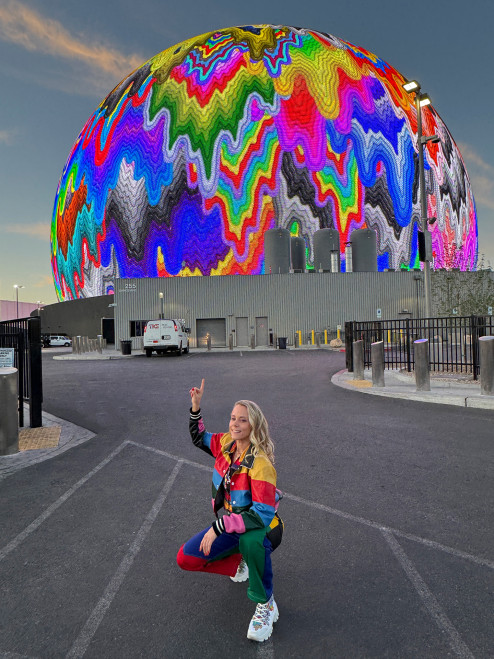
Stark’s early professional success emerged within the traditional fine art world, where her work appeared on gallery walls and pedestals. Yet over time, she began to imagine something more expansive. She knew she wanted more than hanging artwork on white walls or displaying it on pedestals.
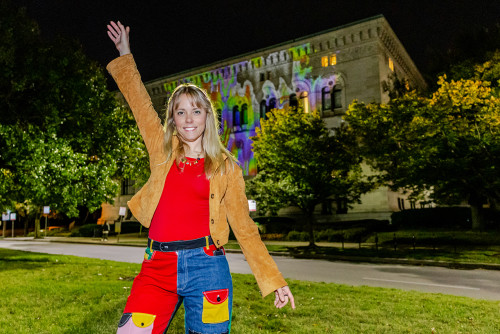
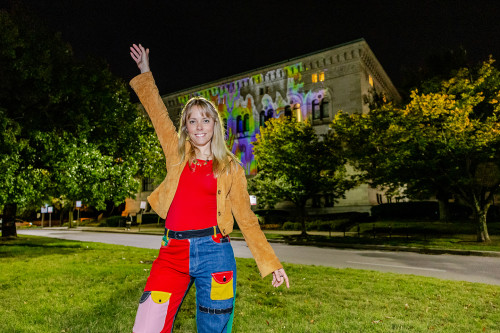
Her exploration of interactive projections opened an entirely new creative direction. Rather than simply observing an artwork, visitors could engage with it physically, touching projected imagery and influencing its movement. In some installations, the experience resembles playing a musical instrument, bringing together color, animation, sound, and human interaction.
“That really opened my eyes to the possibility of involving the viewer and allowing people to become like children again, to play and interact with the artwork,” Stark says.
Her early fascination with stop-motion animation found a new expression in these immersive environments. What once existed as movement suggested through static forms could now respond directly to the people experiencing it. For Stark, the transformation represents more than technological experimentation. It reflects a desire to make art accessible, joyful, and participatory.