Finding Home in Work

Building an artistic practice rooted in identity, storytelling, and the freedom to be fully himself.

Xin Ray Penland Obrien ’26 (General Fine Arts BFA, Printmaking minor)

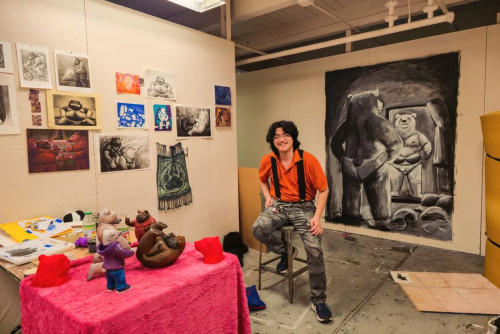
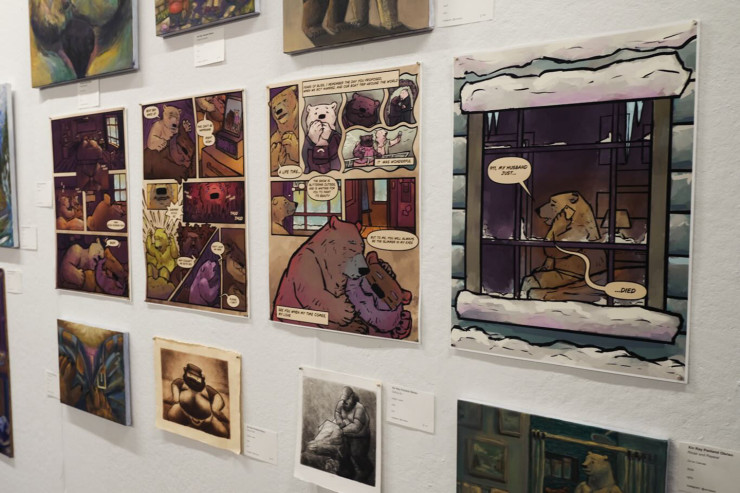
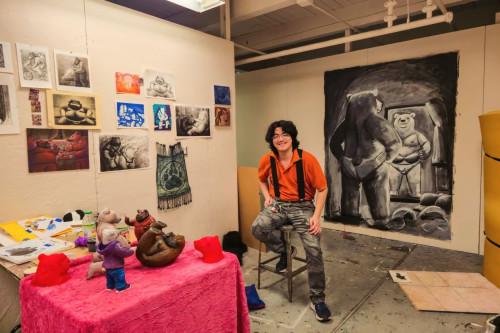
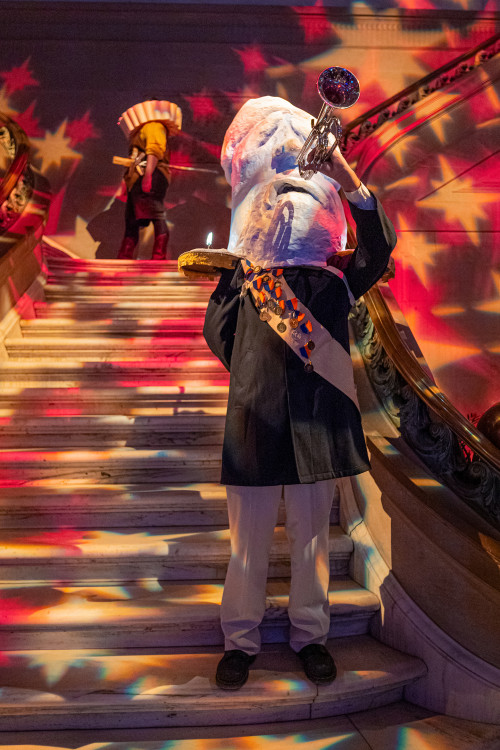
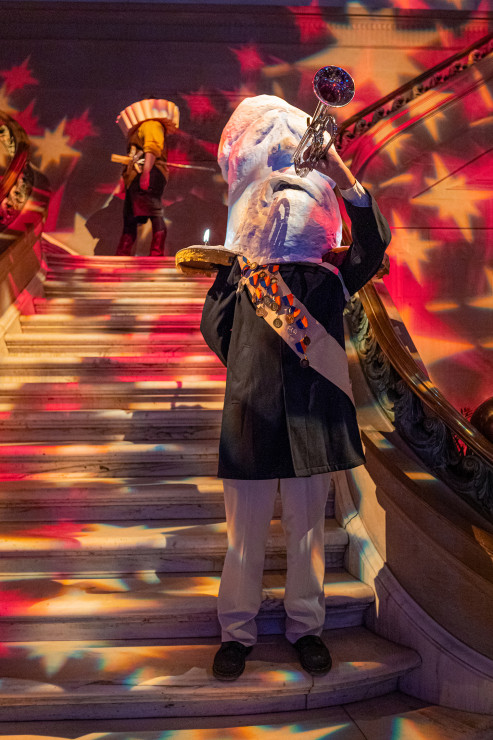
Xin Ray Penland Obrien ’26 (General Fine Arts BFA, Printmaking minor), during setup of “Bear With Us” for MICA ArtWalk 2026. Image courtesy of artist via Instagram (@xinraypo).

By the time Xin Ray Penland Obrien arrived at MICA, he already knew what it meant to begin again.

He had done it across continents. Born in China and adopted at age five, Penland Obrien spent much of his childhood moving with his family as their mother served as a U.S. diplomat. Myanmar. Italy. China. Taiwan. Indonesia. Home, for him, was never a single town or a single map pin; it was something more fluid, something carried rather than fixed.

That kind of life can teach a person to adapt. It can also sharpen the instinct to observe closely, to notice nuance, to understand that identity is rarely simple. In Penland Obrien’s case, it also helped shape an artist whose work is deeply personal yet strikingly accessible, grounded in storytelling, emotional honesty, and a growing commitment to making art that reflects queer life with tenderness, complexity, and truth.

Now a senior at MICA, Penland Obrien is expected to graduate in May 2026 with a BFA in General Fine Arts and a minor in printmaking. But his path to that moment has been anything but conventional. Before MICA, there was Montgomery College, where he earned an associate’s degree in fine arts with honors in fall 2024. For Penland Obrien, community college was not a detour; it was a foundation.

Fresh out of high school, Penland Obrien knew he was not ready to leap directly into a four-year college experience. The pressure of applications, the pace of transition, and the sheer overwhelm of that period led him to make a different choice, one that, in hindsight, proved exactly right.

At Montgomery College, he explored widely: painting, printmaking, video, textiles, film photography, drawing. He fulfilled core requirements, developed discipline, and began building the technical skills that would later support more ambitious conceptual work. Just as important, he learned how to work.

That work ethic is something he speaks about with a mix of pride and self-awareness. Recognition followed him early: a scholarship, departmental honors, publication in student journals, participation in local exhibitions, and an internship at VisArts in Rockville. But Penland Obrien does not describe those moments as validation alone. They also became reminders to show himself more compassion. The same drive that helped him succeed can also push him toward impossible standards. That self-knowledge seems to sit at the center of both his artistic growth and personal evolution.

When Penland Obrien transferred to MICA on a $22,000 scholarship, he was entering a new institution, but also a new chapter in himself. Penland Obrien had already discovered a love for printmaking at Montgomery College, especially through zinc etching and intaglio, but MICA offered something else: the freedom to connect media, meaning, and identity in fuller ways.

He initially considered majoring in painting. But the structure of that path felt too narrow for the kind of artist he was becoming. Penland Obrien wanted room for sculpture, printmaking, painting, comics, and experimentation. General Fine Arts gave him that breadth. It allowed him to move between forms while building a practice centered less on medium than on character, narrative, and emotional depth.

And that practice increasingly revolves around bears. Not mascots. Not jokes. Not decorative creatures dropped into a composition. Penland Obrien’s bear characters are emotionally layered, recurring figures through which he explores queer relationships, intimacy, tenderness, conflict, and daily life. They are anthropomorphic, but not simplistic. In some works, they are humorous, in others vulnerable, erotic, domestic, reflective, or quietly ordinary.

That ordinariness matters.

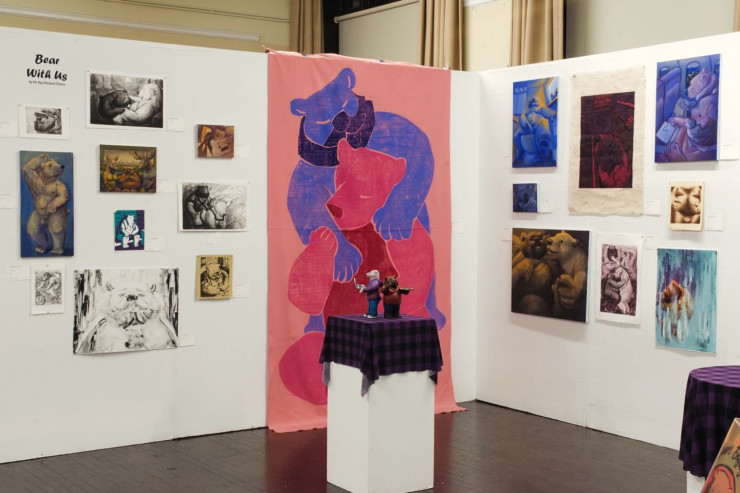
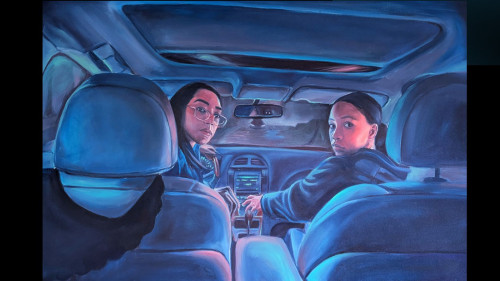
Penland Obrien’s work, "Bear With Us,” on display during MICA ArtWalk 2026. Image courtesy of the artist via Instagram (@xinraypo). + Enlarge

Bear with Us (installation view)

On display during MICA ArtWalk 2026

Artist
Xin Ray Penland Obrien ’26 (General Fine Arts BFA)
Credit

Image courtesy of the artist, via Instagram (@xinraypo).

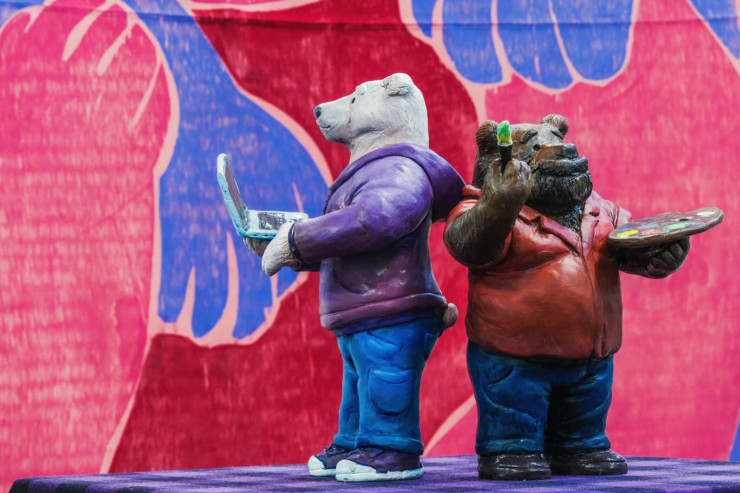
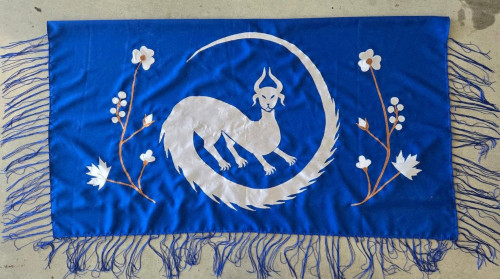
Bear with Us (detail view)

On display during MICA ArtWalk 2026

Artist
Xin Ray Penland Obrien ’26 (General Fine Arts BFA)
Credit

Image courtesy of the artist, via Instagram (@xinraypo).

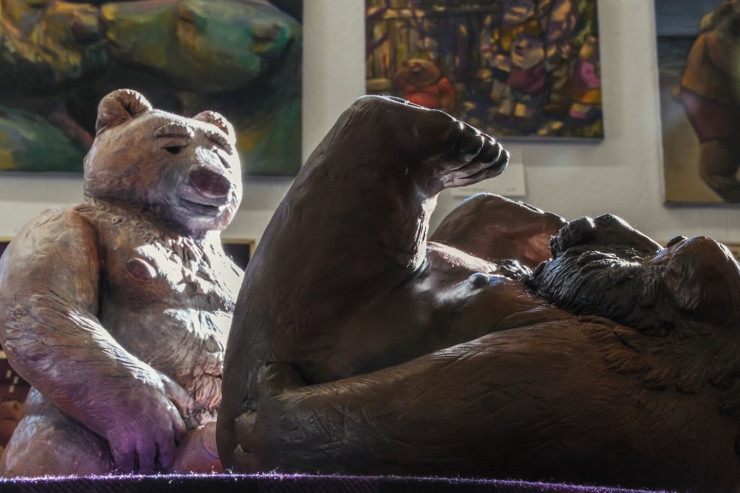
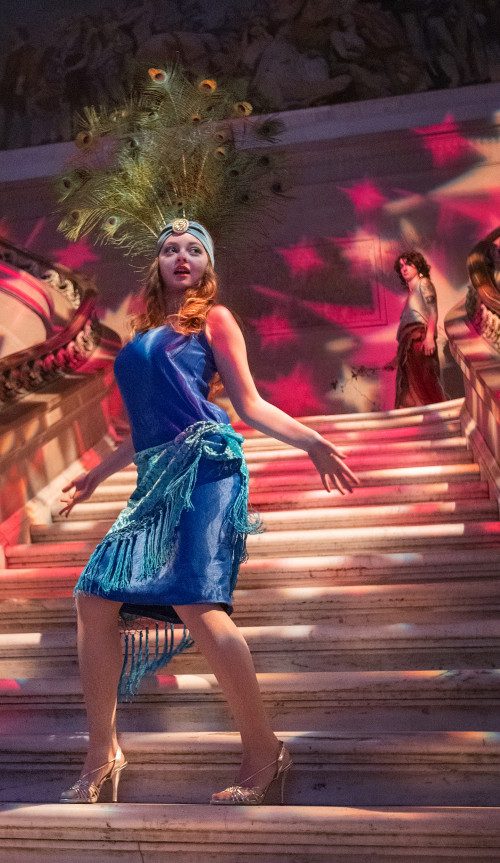
Bear with Us (detail view)

On display during MICA ArtWalk 2026

Artist
Xin Ray Penland Obrien ’26 (General Fine Arts BFA)
Credit

Image courtesy of the artist, via Instagram (@xinraypo).

Bear with Us (detail view)

On display during MICA ArtWalk 2026

Artist
Xin Ray Penland Obrien ’26 (General Fine Arts BFA)
Credit

Image courtesy of the artist, via Instagram (@xinraypo).

1 of 4

For Penland Obrien, the bears became a way of opening a door he had once been hesitant to walk through directly. Earlier in his life, he was not fully comfortable making work that addressed queerness as openly as he wanted. At MICA, in a community that encouraged personal exploration and honest risk-taking, that changed. Faculty mentors, classmates, and the culture of critique helped him realize that queer themes did not have to be hidden, softened, or translated into something safer to belong in the fine art world.

The bears also helped them solve an artistic problem. Having grown up around many cultures and perspectives, Penland Obrien says he has always tended to see people first as individuals rather than as categories. He wanted his characters to feel human without being burdened by viewers’ immediate assumptions about race, nationality, or social identity. In the bears, he found a way to create emotional specificity while holding open a wider imaginative space. Viewers encounter the characters through feeling, gesture, and relationship first.

That choice reflects the way Penland Obrien moves through the world. Asked how living internationally shaped him, he speaks less about exoticism and more about empathy. Moving every one to three years taught him to meet people as people. It also gave him a broad cultural vocabulary that still lives with him in small daily habits and deeper perspectives alike.

At MICA, those experiences have fused with coursework that pushed him beyond technique. If Montgomery College helped him build the structure, MICA intensified the reflection. Outside the classroom, his experiences in arts education and community spaces expanded that vision further. During his internship at VisArts, he observed how artists organize their practices and how arts organizations support public programming. They later brought that experience to the Montpelier Arts Center, where he worked first as a camp counselor and then as co-director. Working with children reminded them of something simple and essential: that amid all the noise about the future, people are still people, children are still children, and creativity remains a deeply human way of making sense of life.

That sense of possibility shows up in his own plans. After graduation, Penland Obrien expects to continue his summer work while exploring fairs and opportunities that align with his evolving practice. He is still asking big questions about what comes next, how an artist knows when to shift directions, and how to sustain a life in art without losing balance.

Those are not the questions of someone uncertain; they are the questions of someone paying attention.

Penland Obrien’s story is also, unmistakably, a transfer student story. It is a reminder that there is no single “correct” timeline for becoming an artist. For some students, community college is not a backup plan. It is the place where confidence is built, interests are tested, and the groundwork is laid for more daring work later on. Penland Obrien speaks warmly about that progression, and he offers advice that feels earned: reflect deeply, be honest about who you are, and do not be afraid to begin again.

That may be the clearest thread running through his story. Again and again, Penland Obrien has chosen growth over performance, exploration over certainty, and authenticity over easy approval. His work has become more personal as he has become more confident. His confidence has grown as he has allowed his work to tell the truth.

For Penland Obrien, art is not just a way of expressing identity. It is a way of discovering it, shaping it, and sharing it on his own terms. And for a student who has lived all over the world, that may be the most powerful arrival of all.


MICA's Bicentennial: Celebrating Two Centuries

Join the festivities as MICA honors its 200-year history, recognizes its present success, and looks forward to a bright future. Throughout 2026, the College will be sharing community stories and announcing one-of-a-kind events on campus, in Baltimore, and beyond.

LEARN MORE


Related MICA Bicentennial

Search for anything and everything at MICA: