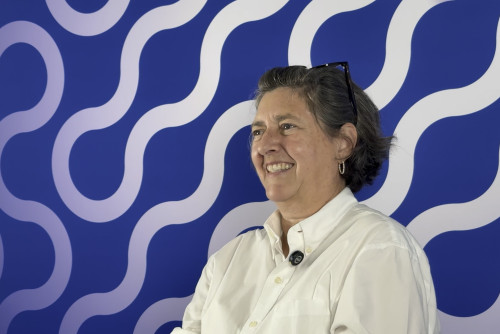
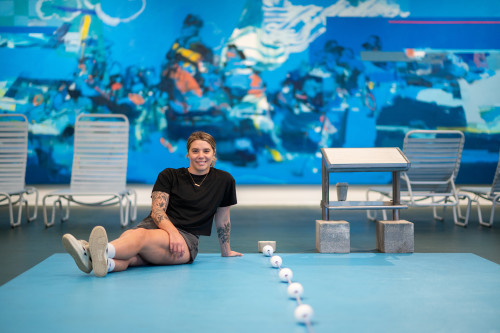
When Andrea Dixon arrived in Baltimore in the mid-1980s, she wasn’t just choosing a college—she was stepping into a community that would shape her future in ways she couldn’t yet imagine. Today, as Director of MICA’s Office of Exhibitions, she continues to channel the lessons she learned as a student into the way she nurtures new generations of artists. Her story exemplifies what makes MICA like no other: a place where students find both creative freedom and a community that feels like home.
Planting the Seed
Dixon grew up in New York, but it was her mother who first planted the seed of Baltimore. “She kept clipping New York Times articles about the Inner Harbor,” Dixon recalls with a laugh. At the time, she was visiting schools in New York and Philadelphia, weighing her options. “When I finally came to Baltimore, I thought, it’s a great city.”
MICA’s location sealed the deal. Close enough to New York, Philadelphia, and Washington, D.C., it offered access to major art centers while providing the intimacy of a smaller city.
“It felt like a small town with a strong arts community. And the facilities—the repurposed buildings, the architecture—it all impressed me. Everything just clicked.”
By 1988, Dixon graduated with a BFA in Visual Communication, alongside her husband, Edward Milburn ’88 (General Fine Arts BFA), whom she first met at MICA. The roots they planted here continue to shape their lives decades later.
A Community of Balance and Surprise
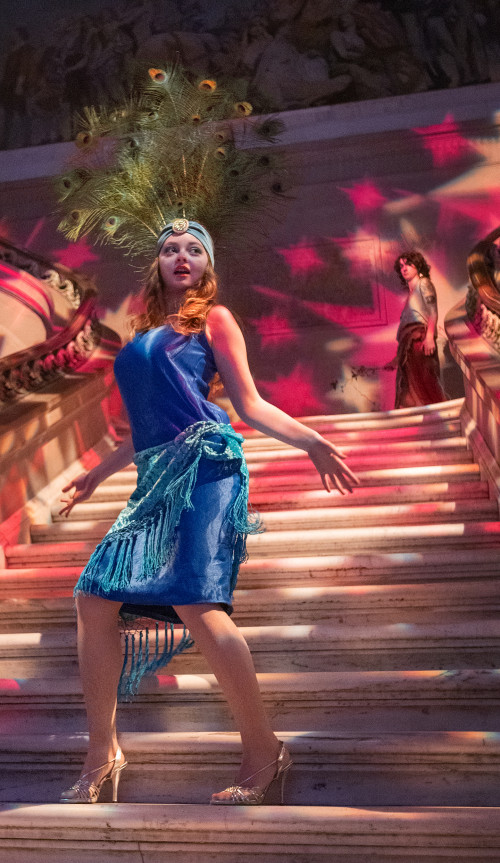
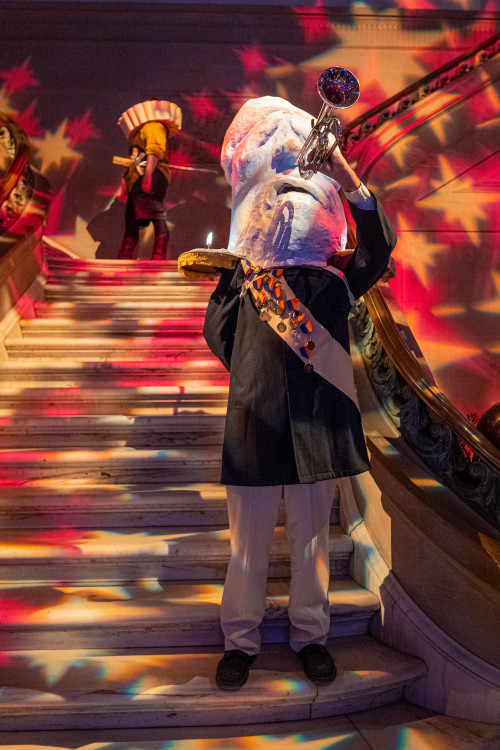
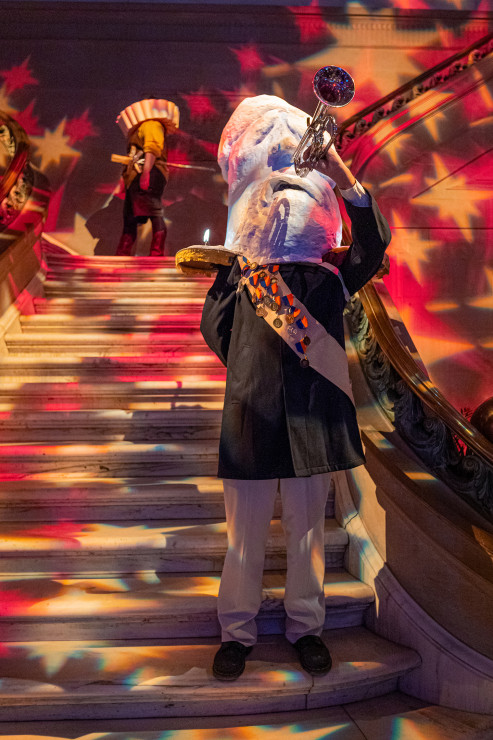
Looking back, Dixon sees MICA’s distinctiveness in its scale and sense of balance. That balance is evident in moments like ArtWalk, the annual exhibition that transforms MICA’s campus into a living museum of student work. “The all-inclusiveness is what makes it special. Students’ ideas are always fresh and surprising; you never know what you’ll see. It could be a quirky animation or a massive inflatable hanging from the ceiling. Each year, we’re surprised again. That sense of experimentation and possibility is what makes MICA unique.”
For Dixon, these exhibitions are more than showcases. They are opportunities for community building, conversation, and risk-taking, values that resonate with MICA’s identity across two centuries.
Leading with Empathy
As director, Dixon leads with the same empathy that made her feel at home as a student. “With compassion and empathy,” she says simply, when asked how her student experience influences her leadership.
She remembers how safe and supported she felt both at MICA and in Baltimore. “Coming from New York, Baltimore felt comfortable and manageable, and MICA felt like I had found my place. That’s what I want for today’s students: to feel safe, supported, and guided in their practice as well as their lives.”
That commitment extends to how exhibitions are managed. Because many staff members in the Office of Exhibitions are also alumni, they understand the vulnerability students feel when showing work. “Critiques can be incredibly rough,” she explains. “Students put themselves on the line. So, we take great care in how their work is shown. They should be given the same respect as a professional artist. We want their work to shine.”
The Openness of Collage
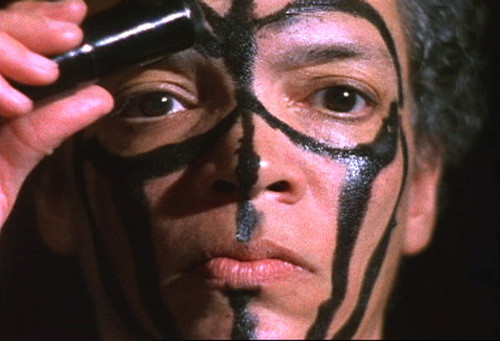
Her approach echoes the democratic ethos of collage, a medium Dixon has celebrated in past curatorial work. “I always say collage is like soccer, you just need a ball, and anyone can play. With collage, you can pick up a magazine, a piece of paper, a pencil, and make something. At MICA, we strive for that same openness, pulling in diverse perspectives from faculty, staff, and students. That’s how we keep from getting stuck in our own view.”
Looking Ahead
As MICA celebrates its 200th anniversary, Dixon is mindful of how exhibitions must evolve for the next century. “We’re navigating how exhibitions fit into the community post-pandemic, when people aren’t coming out in the same way. And with technology—especially AI—things are changing fast.” She envisions exhibitions as an extension of critique: the classroom expands into the gallery, where discourse continues beyond grading. “You stand in front of a piece, and people exchange ideas. Technology will shape how those conversations happen, but our role is to stay true to what makes exhibitions meaningful while keeping pace with change.”
Baltimore, too, remains central to her vision. “Our student body is more diverse now than when I graduated, and we want exhibitions to reflect that. Students need to see themselves not just in the work, but in the artist’s story. That connection matters.”
Always Looking Forward
Dixon’s journey—from student to alumna to director—mirrors MICA’s enduring ability to make artists feel seen, supported, and inspired. The same qualities that drew her to Baltimore in the 1980s—the intimacy of scale, the inclusiveness of community, and the energy of fresh ideas—continue to shape her work today. As she looks ahead, Dixon’s hope is clear: that MICA exhibitions will continue to be spaces of experimentation and dialogue, places where every student can shine.
“Each year, we’re surprised again,” she says. “That’s the spirit of MICA, it never stays still. It’s always looking forward.”