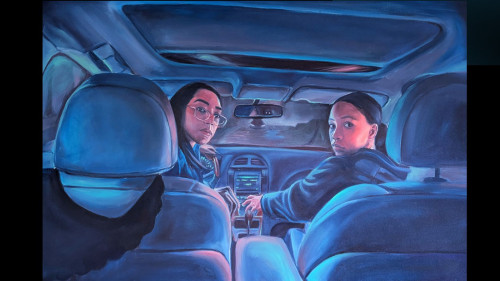
Turning Creativity Into New Possibilities
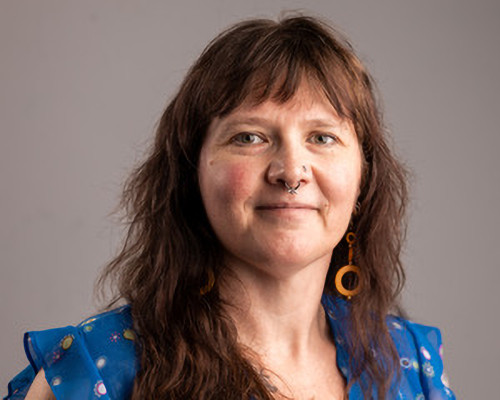
SCPS Dean Douglas Barkey, PhD, and Katie Kelley, Director of Professional Programs
Katie Kelley, Director of Professional Programs
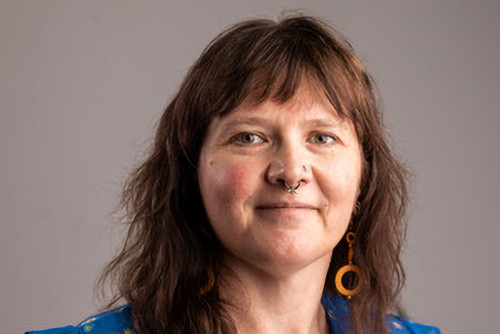
For Katie Kelly, MICA has always been part of the landscape of Baltimore — familiar, important, and just a little mysterious.
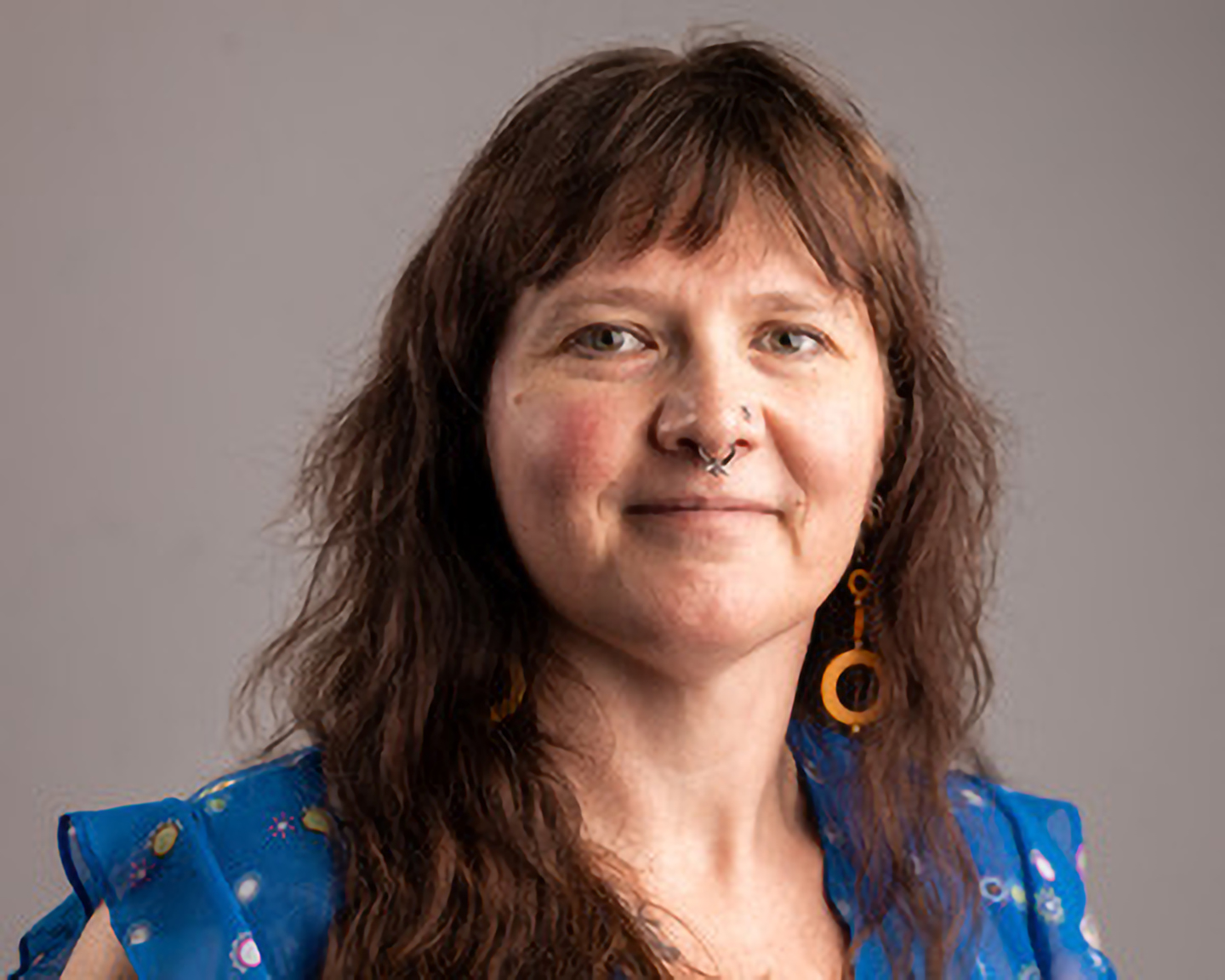
“I’ve always known that it was here, and it’s always been almost mythological,” she says. “‘Oh, that’s MICA. What do they do there? It’s magical. They make art.’”
A lifelong Baltimorean, Kelly was born just two miles from MICA and grew up in Charles Village and Roland Park. Her father lived in Mount Vernon, and her family went to Artscape every year. Her grandmother, with whom Kelly was extremely close, studied art at MICA in the 1940s, although she left before graduating to get married.
Today, Kelly’s connection to MICA is both personal and professional. As director of professional programs in MICA’s School of Creative and Professional Studies (SCPS), she helps create educational pathways for students whose lives and careers often look very different from those of traditional undergraduates.
That work reflects a principle Kelly has carried throughout her career: Education works best when institutions remember the human beings inside their systems.
Kelly didn’t plan a career in higher education administration. After earning a bachelor’s degree in history and a master’s degree in legal and ethical studies from the University of Baltimore, she expected to teach history, ethics, and law. But faculty positions were scarce when she graduated around 2011. Her department offered her a coordinator position, and Kelly decided administration might provide a way into higher education.
Five years later, she questioned whether it was really the life she wanted. She stepped away from higher education but eventually found herself drawn back. She spent nearly six years at Johns Hopkins University’s Carey Business School before joining MICA in 2022. More recently, she completed a master’s degree in higher education leadership from Oklahoma State University, focusing much of her study on students who historically have faced barriers to higher education.
In SCPS, Kelly works primarily with graduate and professional students, many of whom are balancing education with careers, children, aging parents, and other responsibilities. Their circumstances have reinforced her conviction that policies and expectations must leave room for empathy.
A student might fall behind because a parent entered a nursing home, a child became seriously ill, or work and family responsibilities suddenly collided. The answer, Kelly says, cannot always be to apply the same rule in the same way.
“Yes, we have expectations for students because we want our students to be held to a high standard,” she says. “But there has to be a level of empathy.”
Sometimes that means extending a deadline or granting an incomplete. Sometimes it means helping a student recognize that stepping away temporarily may offer the best chance of eventually succeeding. The question is not whether a student belongs, Kelly says, but “How can we help you be successful in this program?”
That philosophy extends to the systems Kelly builds. Since coming to MICA, she has helped move faculty hiring and course planning months earlier, giving instructors more preparation time and students more predictability. She has also worked with colleagues to establish a more consistent course-development process across SCPS programs. The result is structure designed not for its own sake but to make learning easier. When students enter an online course, they can recognize its organization, find what they need, and concentrate on the content.
“It gives that structure and that calmness that allows the students to really thrive,” Kelly says.
Coming to an art and design college also changed Kelly’s understanding of creativity. At MICA, she discovered that creative thinking doesn’t stop with making an artwork or designing an object. It influences how people build curricula, solve problems, run meetings, and imagine alternatives.
“There are ways that we just kind of function in higher education, and these people don’t function that way,” she says. “They think creatively about everything.”
That spirit also creates community. Colleagues share knitting projects, talk about exhibitions and plays, compare Artscape experiences, and bring their own creative pursuits into their relationships with one another. Kelly sees that same combination of creativity and connection in SCPS faculty. The school works with adjunct instructors who are active professionals in their fields, often holding senior positions while teaching at MICA.
For students, that means learning from people actively doing the work they are teaching. For Kelly, it represents one of professional education’s greatest strengths: connecting what happens in a MICA classroom directly to what students can do beyond it.
As MICA enters its third century, Kelly believes graduate and professional education can play an increasingly important role in helping students connect creative lives with sustainable careers.
“We want you to be creative. We want you to design things. We want you to be weird. Keep being weird,” she says. “But we also want you to have a job, and we also want you to be able to support your family.”
Programs in fields such as UX design, data visualization, and business for creatives can carry MICA’s creative perspective into industries not traditionally associated with art and design. A UX graduate might design apps, work in education, or bring design thinking into a large corporation. Creative professionals can take their skills into health care, banking, technology, and other fields that need new ways of thinking.
“We’re bringing our creativity, our weirdness, our design spark” to those spaces, Kelly says.
For her, employability and education for its own sake aren’t opposing ideas. Students should develop professional skills, but they should also immerse themselves in learning — reading, thinking, questioning, and discovering something they did not know before.
MICA’s bicentennial has special resonance for someone who has watched the College’s presence ripple through Baltimore for most of her life. She sees that relationship in Station North, in Artscape, and in the artists she encounters throughout the city, including a next-door neighbor who attended MICA. The boundaries between MICA’s creative community and Baltimore’s, she says, have always overlapped.
For an institution celebrating two centuries while imagining what comes next, Kelly believes those relationships are more than a pleasant part of the experience. They are essential.
“I think connection and relationships are how we save ourselves,” she says. “That’s how we go into the next 200 years.”

Join the festivities as MICA honors its 200-year history, recognizes its present success, and looks forward to a bright future. Throughout 2026, the College will be sharing community stories and announcing one-of-a-kind events on campus, in Baltimore, and beyond.