Keeping Globe’s Story Alive
Bold colors. Legendary music. A Baltimore legacy that lives on.
Bob Cicero, Adjunct faculty, MFA Graphic Design
For decades, the streets of Baltimore and cities across the country were electrified by posters announcing the biggest names in music. Fluorescent pinks, blazing oranges, vivid greens, and bold black lettering advertised performances by artists such as Smokey Robinson, Gladys Knight and the Pips, and Parliament-Funkadelic. The posters were impossible to ignore, and that was precisely the point.
“I really didn’t care if you liked my design,” says Bob Cicero, longtime printer at Globe Poster Printing Corporation and now an adjunct faculty member in MICA’s MFA in Graphic Design program. “[The posters were] meant to grab your attention.”
That philosophy helped establish Globe Poster Printing Corporation as an iconic name in American poster design. Today, Cicero is ensuring that the techniques, creativity, and cultural history behind those unmistakable posters continue to inspire new generations of artists and designers.
Cicero’s relationship with Globe Poster began long before he became one of its principal caretakers. Founded in Baltimore in 1929, Globe Poster initially produced advertising for carnivals and circuses, offering affordable promotion during the Great Depression. By the 1930s and 1940s, the company was printing posters for big-band performers, including Glenn Miller and Cab Calloway. In the 1950s, rhythm and blues became a major part of its business.
Cicero’s father joined Globe Poster in 1934 and eventually became its foreman. In 1965, shortly after graduating from high school, Cicero began working there while attending night classes at the University of Baltimore. The job helped pay for his education while introducing him to the printing trade.
After serving in the military and working as an engineering technician at Black & Decker, Cicero returned to the family business when his father decided to purchase Globe Poster. Alongside his brothers, Frank and Joe, he helped sustain the company through decades of technological and cultural change.
What began as a job became a lifelong commitment, not simply to printing, but to the people, music, and history represented by Globe Poster’s work.
Globe Poster’s signature aesthetic emerged from a practical challenge: How could a poster capture someone’s attention in seconds?
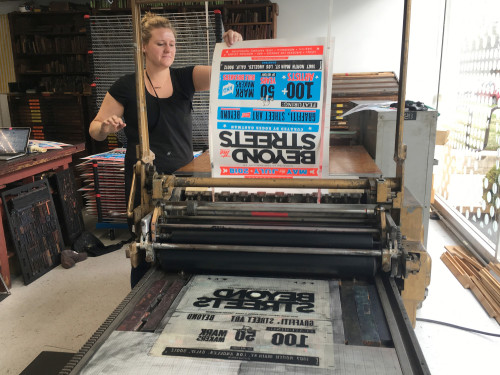
For concert promoters, posters offered an affordable alternative to radio and other advertising. Cicero recalls that 100 posters could cost approximately $150 to $200, including typesetting, screen-printed backgrounds, and letterpress printing. A single poster on a busy Baltimore street might be seen by thousands of passing motorists. The challenge was making those impressions count.
Early posters often featured black lettering over solid-colored backgrounds. Later, Globe Poster experimented with rainbow effects, blending colors across the page. Although visually appealing, those designs could make performers’ names difficult to distinguish at a distance. The solution was to separate the names into distinct areas of color, using screen printing and paper stencils to create bold, readable compositions.
Fluorescent inks became another essential ingredient. Unlike the familiar colors of the surrounding environment, fluorescent colors demanded attention. The resulting posters became recognizable for their striking combinations of color, typography, and visual energy. But behind their exuberance was a carefully considered approach to communication.
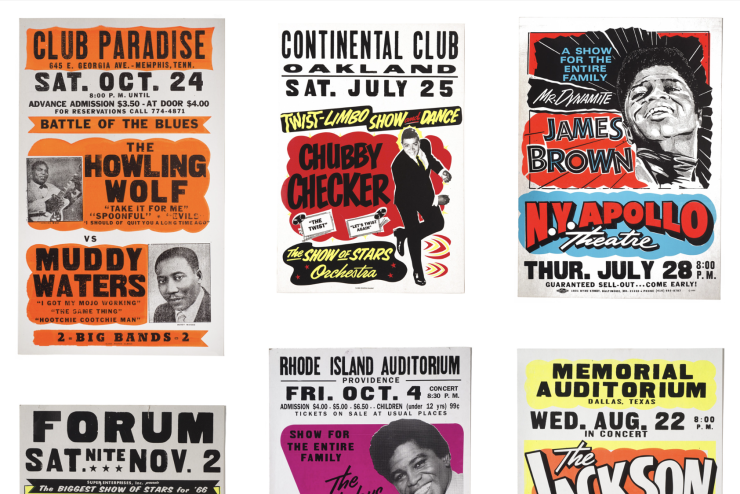
Globe Poster’s creations also became an extraordinary visual record of American popular music. Cicero remembers producing work for countless performers, from established stars to musicians whose careers were just beginning. One of his favorite projects was a Parliament-Funkadelic poster featuring an exuberant combination of screen-printed colors. He also treasures the hand-lettering and the gradual changes in the company’s work as hip-hop emerged alongside earlier musical styles.
Even the placement of performers’ names tells a story. Cicero remembers a poster featuring Gene Pitney as the headliner, with Sonny and Cher listed below. Years later, his son was surprised by that billing, a reminder of how quickly musical fame and cultural influence can shift.
As the printing industry evolved, Globe Poster adapted. In 1988, facing the retirement of experienced compositors, the company invested in computer technology and expanded its offset-printing capabilities. Yet the hands-on traditions of letterpress and screen printing remained central to its identity.
By 2010–2011, changing advertising practices and restrictions on street posters had made Globe Poster’s business increasingly difficult to sustain. The company closed, leaving Cicero uncertain about the future of the work his family had devoted so much of their lives to creating. When his father died in 2008, the loss of the business weighed heavily on him.
The transfer of Globe Poster’s collection to MICA in 2011 offered a new chapter. The historic materials could remain in Baltimore, while the knowledge behind them could be passed on through teaching. To add to the program’s effectiveness, MICA invited Cicero to share his expertise with students. Fifteen years later, what began as an opportunity to share his expertise has evolved into one of the most meaningful and rewarding aspects of Cicero’s life.
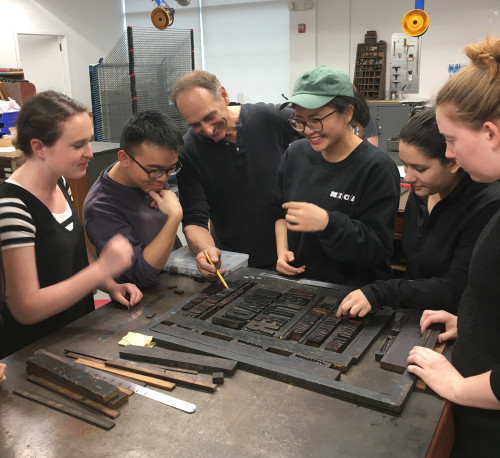
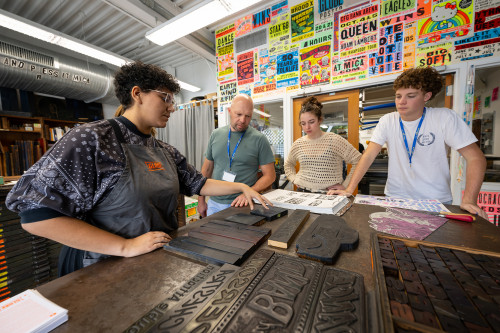
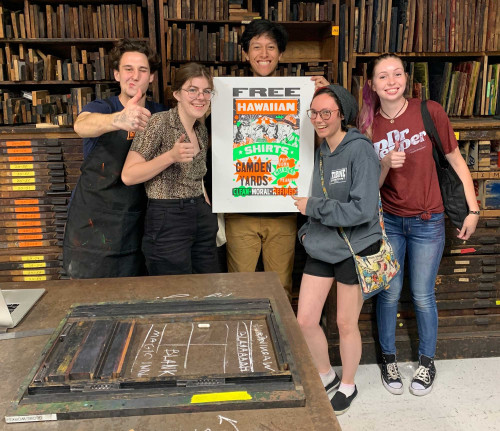
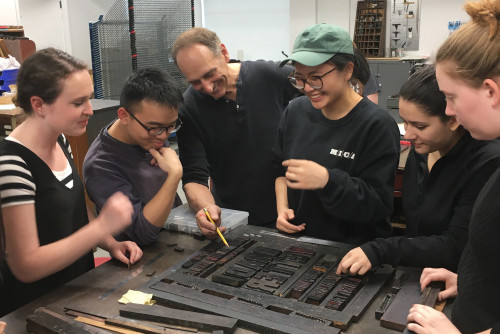
In his courses, students learn traditional letterpress typesetting and screen printing. They create posters exploring color and typography, develop designs inspired by Globe Poster’s distinctive style, and study the work of Hatch Show Print, another historic American poster-printing company. Students discover the smell of ink, the texture of wood type, and the satisfaction of completing something tangible. Some students have even told Cicero they chose MICA specifically because of Globe, drawn by the hands-on experience and tactile connection that Cicero believes digital tools can never fully replicate.
Globe Poster’s story is also reaching new audiences through a documentary initiated by writer John Lewis and photographer Ray Perry. Beginning around 2004, the pair documented the company and interviewed Cicero, his father, and his brothers. The project grew into a decades-long effort to preserve the people and stories behind Globe Poster.
When Cicero finally saw the film at Baltimore’s Charles Theatre, he was deeply moved. For him, the documentary and MICA’s stewardship of the collection represent something larger than recognition. They are ways of honoring his family and preserving a distinctive chapter of Baltimore’s cultural history.
With his father and brothers now gone, Cicero feels a particular responsibility to tell their story, calling himself an ambassador and representative of his family’s legacy. He sees that same sense of continuity in his students, whose enthusiasm gives him confidence that the craft will endure.
For Cicero, preserving Globe Poster is not simply about protecting historic posters or teaching traditional techniques. It is about keeping alive the spirit of creativity, craftsmanship, and family dedication that shaped the company for generations. And in MICA’s studios, where students continue to work with ink, type, and color, that legacy is still making an impression.

Join the festivities as MICA honors its 200-year history, recognizes its present success, and looks forward to a bright future. Throughout 2026, the College will be sharing community stories and announcing one-of-a-kind events on campus, in Baltimore, and beyond.