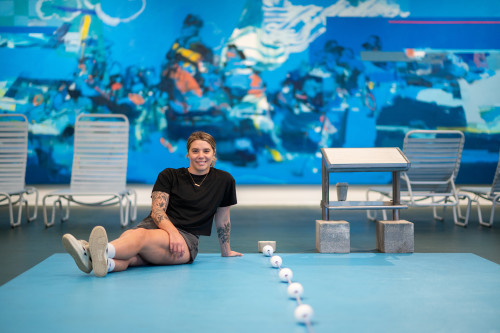
One autumn evening, gallerygoers found themselves drawn not to a painting on the wall, but to an unexpected centerpiece: a food cart piled with deep-fried crickets, roasted beets and sweet potatoes, and bowls of guacamole. The spread didn’t “match” the artwork on display, at least not in any obvious way. Still, in a space designed for looking, the food became something to study before it was something to eat. People hovered, dipped, and tasted as if they were stepping into an installation, taking in color, arrangement, and texture in the same breath as flavor.
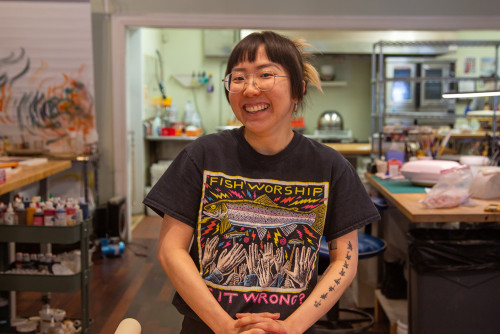
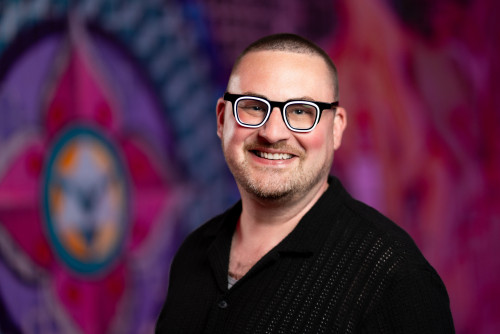
The cart was curated by Cherry Lau, and it captured something essential about their practice: food is not separate from art. It is art.
For Lau, that conviction took root at MICA, and in many ways, MICA gave it room to grow.
Magical
Lau immigrated from Hong Kong to New York City at age seven. One of their earliest creative memories is not in a studio but in a kitchen. At their first Thanksgiving in the United States, an aunt handed them a Pillsbury® chocolate chip cake mix. In Hong Kong, bakeries line every street; baking at home was unfamiliar. The idea that something could be made, transformed from powder and eggs into a cake, felt magical.
“I remember sobbing because my mom and my brother tried to help me,” Lau recalls. “I was like, ‘No, I want to do it myself.’ That was my thing.”
That moment of creating something from nothing became a throughline. Lau drew constantly as a child, attended specialized art programs in middle and high school, and ultimately chose MICA. Financial aid played a practical role in the decision, but the impact was far greater than a scholarship package.
Edible Art
At MICA, Lau majored in Interdisciplinary Sculpture, with concentrations in Ceramics and Sustainability and Social Practice. The choice of sculpture reflected a worldview that extends beyond traditional materials.
In high school and early college years, Lau experimented with food as sculptural material, not for nourishment, but for aesthetics. One art study documented scanned cross-sections of black-and-white marble cake. Another featured a stack of syrup-drenched pancakes on a mirrored table, a square of butter poised above them in a hand emerging from a bunch of kale. The sculptures were ephemeral, made to be photographed rather than preserved.
These early works echoed a lineage of artists who blurred boundaries between domestic labor and performance. Lau recognized that acts often dismissed as “everyday” or “domestic” could carry artistic weight.
“There is a huge blur between art and life. My cooking is always an art form for me,” they explain.
MICA’s interdisciplinary framework made that blur possible. Instead of forcing a choice between fine art and culinary practice, the program encouraged exploration. Lau’s urban farming course, taught under the Sustainability and Social Practice concentration, took students into Baltimore’s neighborhoods and farms. There, food production became a creative and communal act. The problem-solving required to grow food mirrored the problem-solving of sculpture.
Street Studios
If MICA shaped Lau’s philosophy, Baltimore shaped their life.
After graduating, Lau remained in the city at a time when its DIY art scene was flourishing. Warehouse shows, pop-ups, and informal exhibitions created a culture where experimentation was welcome. Unlike New York’s relentless pace, Baltimore offered genuine connection and belief in community. That sense of belonging ultimately anchored Lau in Baltimore and led to an unexpected opportunity.
A Social Post That Changed Everything
After graduation, Lau worked in kitchens, knowing they wanted to pursue something food-related. An acquaintance mentioned a Craigslist listing for Charm City Cakes in Baltimore. The suggestion felt serendipitous. As a child in New York, Lau had watched Ace of Cakes, the reality show that featured the Baltimore bakery. Scenes of the city had flickered across their television long before they attended MICA.
Lau showed up. An interview led to a working interview, and that led to eight years — and counting — at Charm City Cakes.
What once felt “childish,” now feels like a full-circle realization. “My last couple years at MICA, I was like, ‘Oh, I’m not going to do anything with sculpture, let alone cake.’ But here I am. I get to do that all the time.”
Material Intelligence
In Charm City Cakes’ studio, Lau’s sculptural training is evident. The process begins with materials. Unlike marble or steel, cake is soft, biodegradable, and unstable. It demands negotiation.
“When your material is squishy and soft, you have limitations,” Lau explains. “Sometimes those limitations inform the final design.”
Cake, in this sense, becomes a collaborator. It resists overextension. It “tells” you when you’ve pushed too far. Mastery comes not from domination but from listening, an approach reminiscent of ceramic practice, where clay’s properties dictate form.
The bakery’s methods lean traditional: hand-painting over printing, structural ingenuity over shortcuts. Large installations may use internal supports, but the emphasis remains on craft. The bakery team’s longevity fosters a culture of mutual respect and shared learning. That ethos resonates with MICA’s studio culture, where critique and collaboration matter as much as output.
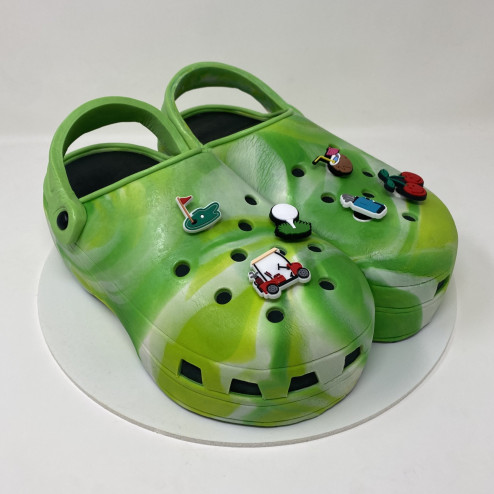
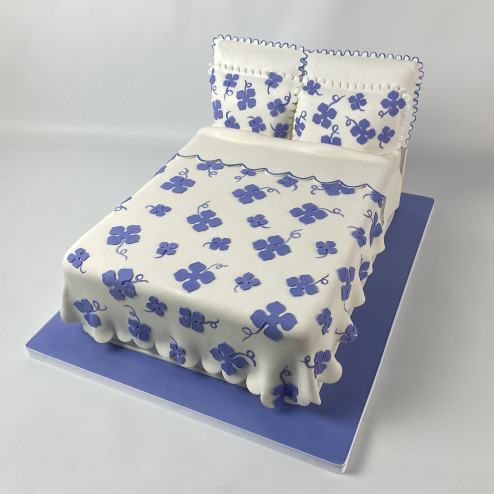
At MICA, the challenge to create something wholly original ultimately deepened Lau’s commitment to noticing and honoring what already exists. Their cakes echo everyday objects or transform them through scale, precision, and painstaking detail. In doing so, they shift from dessert to sculpture, from display to performance. For Lau, the rituals of daily life become aesthetic encounters, and unexpected materials become a medium that feels instinctive.