Perna Krick (1909–1991) was an accomplished American sculptor, painter, and educator whose artistic practice and community leadership left a lasting imprint on Baltimore and beyond.
Born in Greenville, Ohio, Krick studied at the Dayton Art Institute before arriving in Baltimore in 1927 to attend MICA’s Rinehart School of Sculpture. There, she distinguished herself early, earning two traveling fellowships that enabled her to study extensively in Europe.
A Sculptor of Distinction
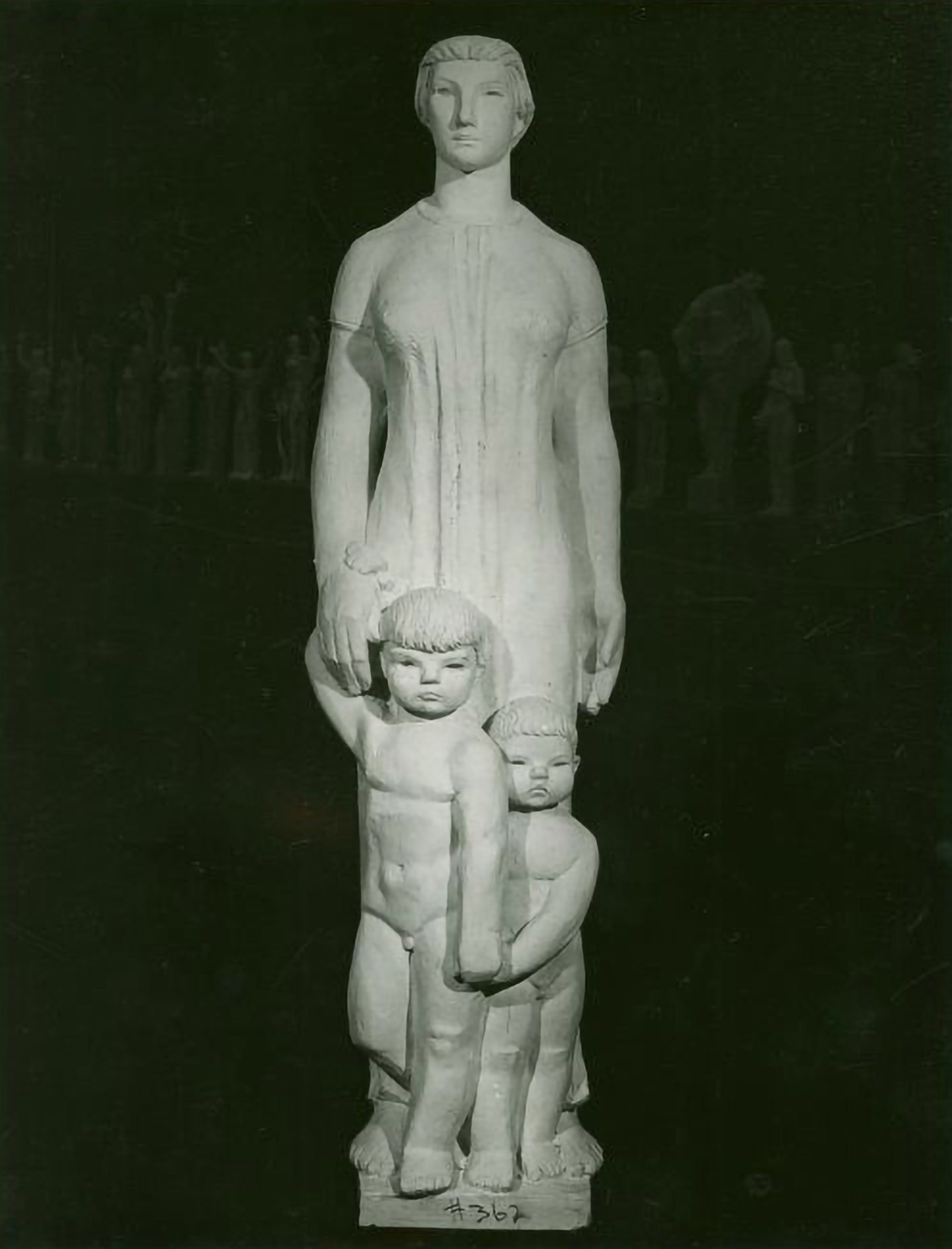 Krick’s early career was devoted to sculpture. Her work received national recognition, including:
-
Young Siren (1937), a fountain figure of a young girl riding a fish, exhibited at the Pennsylvania Academy of the Fine Arts and later at the National Sculpture Society exhibition at the Whitney Museum of American Art. The sculpture is now installed in the children’s room at Baltimore’s Enoch Pratt Free Library.
-
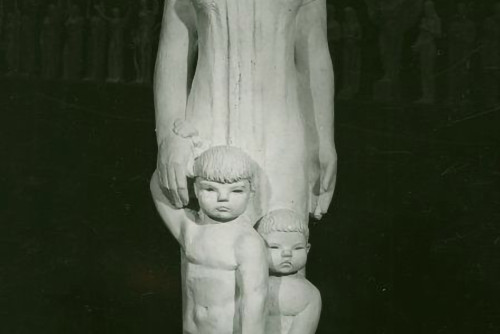
Serenity (1939), pictured here, which earned an honorable mention at the 1939 New York World’s Fair.
-
The Power of Communication (1939–40), a wood relief mural commissioned under the New Deal’s Section of Painting and Sculpture for the U.S. Post Office in Pocomoke, Maryland.
Her sculpture was exhibited widely, including at the Baltimore Museum of Art, the Pennsylvania Academy of the Fine Arts, the Architectural League of New York, and the Corcoran Gallery of Art in Washington, DC.
A Turn to Painting
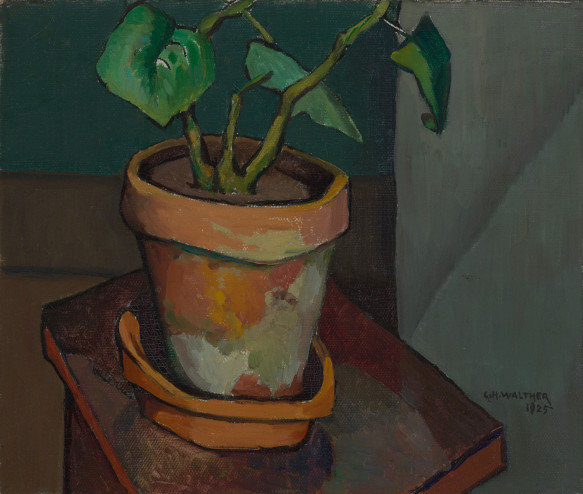
In the 1940s, Krick shifted her artistic focus from sculpture to painting. Signing her work with her maiden name, she became especially known for her luminous depictions of animals, birds, and flowers, subjects that reflected her deep love of nature. Her paintings were shown at the Baltimore Museum of Art, the Peale Museum, the Corcoran Gallery of Art (where she won a painting award in a 1957 regional exhibition), and in numerous local venues.
Her affection for animals extended beyond her studio. A devoted supporter of the Baltimore Zoo, she was affectionately known in her Bolton Hill neighborhood as “the bird doctor,” nursing injured birds brought to her by neighborhood children and sheltering many cats in her home.
Educator and Advocate
In 1944, Krick married fellow Rinehart School sculptor Reuben Kramer (1909–1999). Together, they founded what became the first licensed, desegregated art school in Maryland, known variously as Fellowship House, Pioneer House, and later the Baltimore Art Center for Children. At a time when segregation defined much of public life, their school created an inclusive space for artistic instruction and community building.
Krick taught art to children there and later instructed students at MICA, helping to shape the next generation of artists. Her commitment to equity and access in the arts remains an important part of her legacy.
Legacy
Following her death in 1991, her husband established the Perna Krick & Reuben Kramer Fellowship, an annual scholarship awarded to a student at the Rinehart School of Sculpture. In 1999, Kramer bequeathed their home and studio to MICA; today it serves as a residence for visiting artists.
Krick’s life bridged artistic excellence, compassionate community engagement, and educational leadership. Through her sculpture, her paintings, and her advocacy for integrated arts education, she helped shape Baltimore’s cultural landscape and left a legacy that continues to inspire.