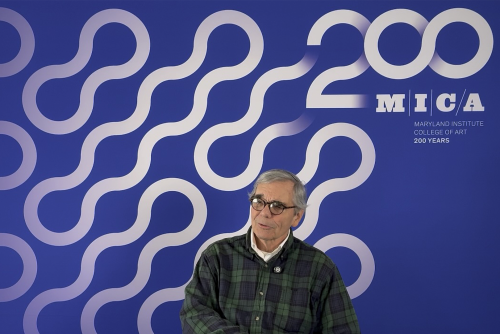
When Lee Tawney introduces himself—“I’m the president of the Bolton Hill Community Association”—he is really offering the opening line of a neighborhood biography. Tawney grew up in Baltimore, left for a season to live and work with a theater company in India, and returned in 1980 to settle permanently in Bolton Hill. He raised a family there; now his grandchildren visit the same tree-lined blocks where students haul portfolios and neighbors greet one another on stoops. His professional tenure spans political service with two mayors and decades of civic leadership, but the through-line, he’ll tell you, is the arts—and, by extension, MICA.
For Tawney, the college is not a neighbor across a boundary; it is part of the family album. “The relationship with MICA has been long-term, since the turn of the previous century, and it’s been integral to the neighborhood for a long time,” he says. Bolton Hill’s identity, he argues, is inseparable from MICA’s presence—its people, its buildings, its public face. The neighborhood has weathered urban renewal, the 1968 uprisings, the trauma surrounding Freddie Gray, and the daily, quieter churn of demographic and economic change. Through all of that, the college has remained a steady pulse. “Bolton Hill continues to be a unique place in Baltimore, primarily because of MICA,” he notes, pointing to a community that is now strikingly mixed, with significant Black residency and a civic life shaped as much by block captains as by studio critiques.
Art Belongs Here
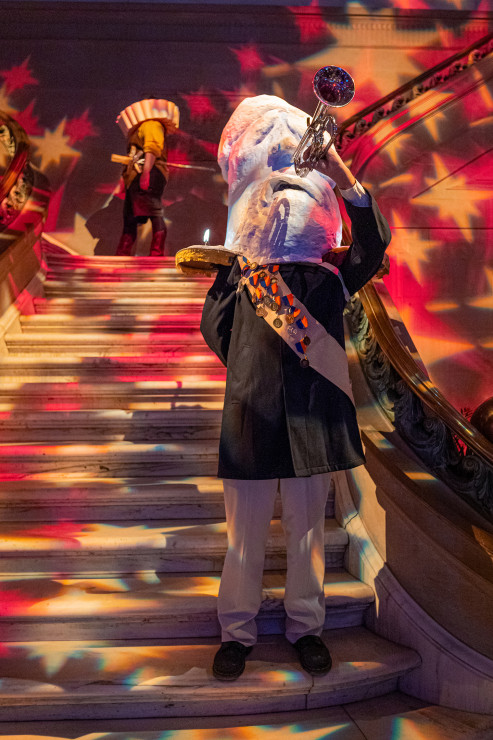
Each fall and spring, the neighborhood’s soundtrack changes: the rumble of moving bins, the lift of laughter, the sudden appearance of chalk sketches on a sidewalk. Students live next door, not just in dorms or across a locked quad. “You’re reminded every fall and spring that MICA is part of our community,” he says. That porousness—the easy, everyday proximity between artists and residents—recasts the college from an enclave into a commons.
According to Tawney, the campus buildings amplify that ethos. MICA’s Main Building set a civic standard for architecture; later, the college rescued and repurposed the old Women’s Hospital as a residence hall, safeguarded Mount Royal Station as a hub for making and performance, and gave modern counterpoint to the historic streetscape with the Brown Center’s gleaming planes. Even the AAA building across Mount Royal found new life. “These structures make a statement,” Tawney says. “MICA is committed, MICA is invested, MICA is part of us.” In Baltimore, a city where vacancy can carry as much symbolism as presence, the college’s habit of adaptive reuse reads like a pledge: art belongs here and so does MICA.
At the level of leadership, the difference is personal. Tawney points to former president Fred Lazarus’s deep civic engagement and to current president Cecilia McCormick’s choice to live in Bolton Hill as acts that align institutional mission with neighborhood life. “Institutions are people,” he says. “When the head of a college chooses a local address, it signals that the success of the school and city are braided together.”
A Creative Artery
Tawney’s public life has been shaped by understanding Baltimore as “a tale of two cities,” a history he sees not as artifact but as living context. His response has been to harness the resource that drew him home—the arts—through initiatives like Arts in the Parks, where performances, sculpture, and community gatherings invite trust across divides. That work has deepened through MICA’s involvement, with students designing children’s programs, volunteering at the Festival on the Hill, and joining neighborhood projects from tree planting to arts events. With sculptures now installed on campus and in local parks, and with small gestures of welcome exchanged each fall, the college and the community together have built a civic studio where creativity and reciprocity shape a more connected future.
The impact shows up in routines as well as in revivals. The Bolton Hill Community Association now includes a MICA representative (currently Sara Warren, MICA’s Associate Vice President of Advancement and Leadership Gifts) on its board, making it easier to surface concerns, align calendars, and co-sponsor events. This fall, the partners are testing the return of Monday Nights at the Station, an old, pre-Artscape concert series once championed by Lazarus. The resurrection is not nostalgia so much as continuity: a way to keep a creative artery open between campus and community.
Carrying the Difference Forward
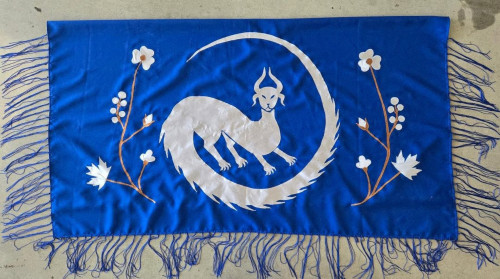
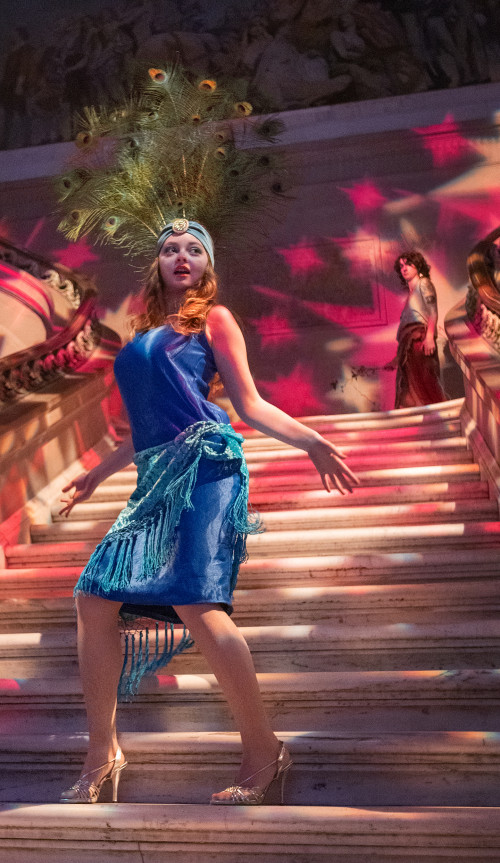
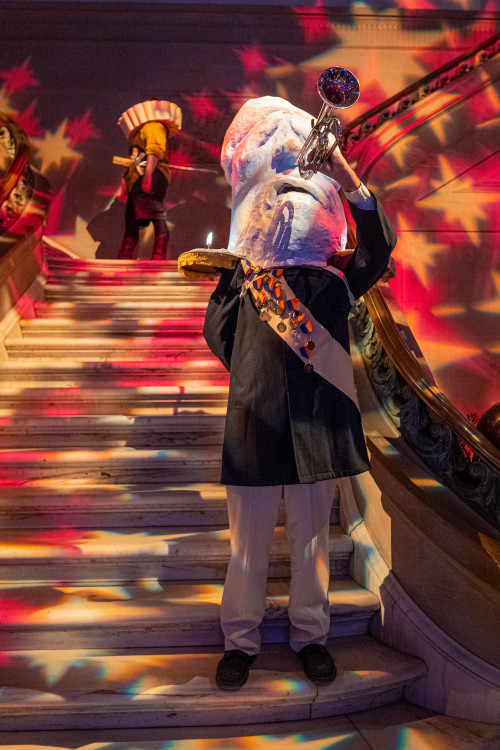
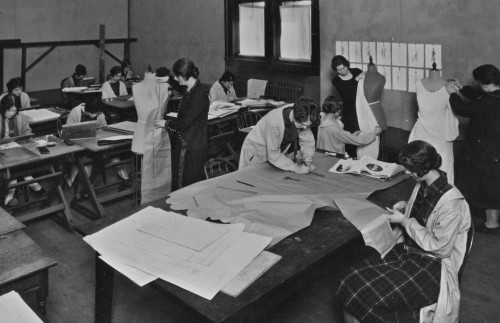
MICA’s bicentennial invites Baltimore to look backward and forward at once. Tawney brings receipts for both. On the “then” side, he points to journalist E. R. Schott Kelly’s trove of archival photographs: MICA students in the 1920s, dressed in suits, painting outdoors near Corpus Christi Church; the Main Building rising from scaffolds; Depression-era scenes of work and perseverance. On the “now” side, he gestures to a MICA fashion show, founded years ago by an African American woman, that he and his wife recently attended. It was “off the charts,” he says, a joyous proof of what creativity can still do in public. The images rhyme across a century: students learning by making, community members gathering to watch, the city as both backdrop and co-author.
Tawney’s message to those who will carry that story into the next century is straightforward: build on the richness already here and keep widening the circle. Cooperation, participation, and communication are not bureaucratic words in his telling; they are the mechanics of care. The college’s choice to preserve and inhabit historic buildings signals one kind of stewardship; the neighborhood’s choice to welcome students as neighbors and co-makers signals another. When those choices align, a red line becomes a meeting place.
United by Art
Tawney feels what makes MICA unique is its culture of presence: students living among residents, leaders living locally, and a campus that restores and reimagines the built environment rather than walling itself off. That difference has shaped his path by enabling real bridge-building. Through Arts in the Parks, shared festivals, board representation, and revived traditions like Monday Nights at the Station, art becomes a practical tool for healing historic divides.
“MICA and the community are inextricably linked,” Tawney states. The phrase could serve as the bicentennial’s thesis statement and as a promise. For Tawney, MICA and the neighborhood have spent a century practicing the same discipline: making a place together. “If MICA is like no other school,” he says, “it is because its studios extend into streets and parks, its galleries outlast temporary walls, and its graduates leave behind not only portfolios but public squares where strangers meet as neighbors. When art is part of the neighborhood’s daily vocabulary, the city learns to speak to itself with more honesty, more beauty, and more hope.”