Photography at MICA: A Legacy of Innovation and Vision

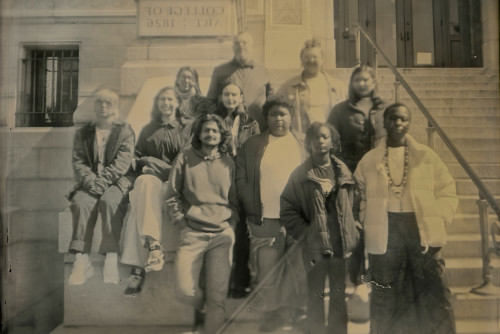
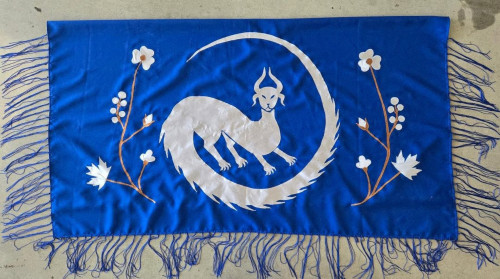
MICA Photography BFA Class of 2025. Tintype by Marie Jane Machin.

From its earliest days, the Maryland Institute College of Art (MICA) has stood at the forefront of visual education—embracing photography not simply as a technical skill, but as a powerful tool for storytelling, inquiry, and transformation.

Capturing a Moment in MICA’s History

MICA’s reputation as a leader in visual instruction owes much to William Minifie and David A. Woodward, who guided the School of Design from the early 1850s through the late 1870s. Their influence extended far beyond Baltimore, shaping the evolution of art education and photography on both sides of the Atlantic.

Woodward, in particular, was a pioneer. In 1857, he patented the first successful solar camera, a groundbreaking device that used direct sunlight to enlarge photographic images. This innovation transformed both photography and portrait painting, allowing artists to scale images with unprecedented accuracy. To demonstrate its potential, Woodward traveled to Europe, where his invention impressed leading figures in the field, including Antoine Claudet, a student of Louis Daguerre, who called it “one of the most important improvements introduced into the art of photography.”

Woodward’s contributions earned international recognition, including a medal at the Centennial Exposition of 1876 in Philadelphia. Under his leadership, MICA developed one of the earliest formal photography programs in the United States—offering instruction in cameras, photographic apparatus, and emerging techniques at a time when such education was exceedingly rare.

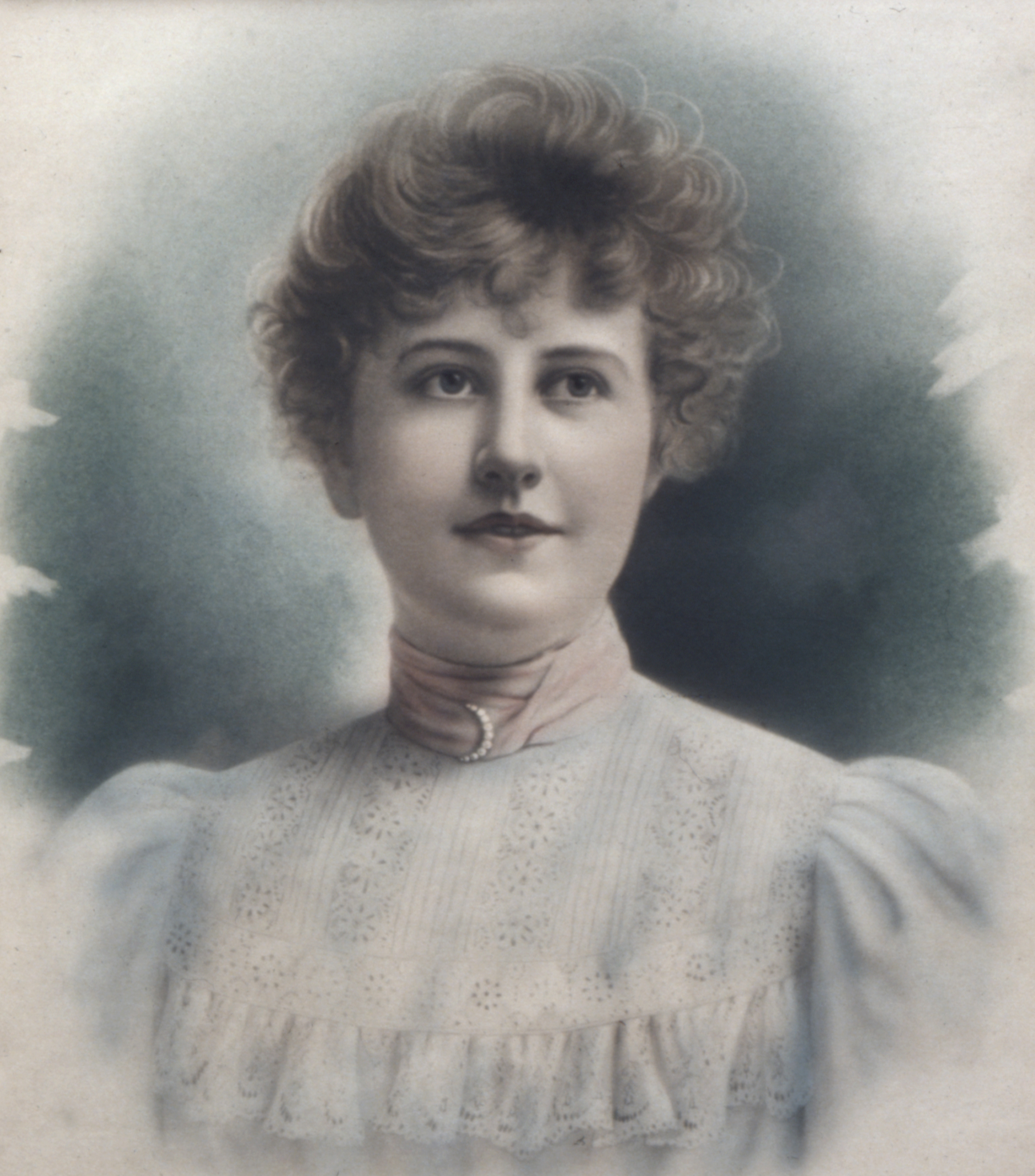
Photography also found early expression through MICA’s Female Department, where students learned the delicate craft of hand-coloring photographs, applying watercolor and ink to bring life to black-and-white images before color photography existed. This work, often led by women artists, represents an important and frequently overlooked chapter in photographic history.

After Woodward’s tenure ended in 1879, photography would temporarily recede from the curriculum, only to reemerge in the late 1930s. Yet its early roots at MICA established a lasting foundation: photography as both innovation and expression, technology and art.

Pictured above: Painted Solar Enlargement from a photographer's sampler. Courtesy of the Wilgus Collection.


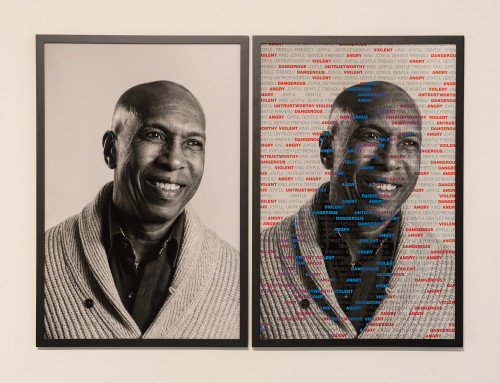
Bee, 2021. Digital Photography, 17 x 22 in. + Enlarge
Reann, 2021. Digital Photography, 17 x 22 in. + Enlarge

Bee

Artist
Lia J. Latty ’22 (Photography BFA)
Date
2021
Medium
Digital Photography
Dimensions
17 x 22 in
Credit

See more of Lia’s work from the 2022 Retrospective Exhibition here.

Reann

Artist
Lia J. Latty ’22 (Photography BFA)
Date
2021
Medium
Digital Photography
Dimensions
17 x 22 in
Credit

See more of Lia’s work from the 2022 Retrospective Exhibition here.

1 of 2

Seeing What Others Don’t See

Lia J. Latty ’22 (Photography BFA)

A community that amplifies new voices, sharpens creative inquiry, and empowers graduates to transform their fields.

When Lia J. Latty first searched “top ten photography programs” as a high school student in Miami, she was simply looking for the best. What she found was MICA and a path that would reshape not only her work, but her sense of self.

Arriving with a Nikon D90 and an instinctive curiosity, Latty initially gravitated toward photographing architecture and street scenes—spaces where she could observe without being seen. But MICA asked more of her. Through critique, mentorship, and a culture of inquiry, she was pushed to confront deeper questions: Who are you? What do you see? What needs to be seen?

That shift led to her breakthrough project, “Oreo,” a deeply personal exploration of identity shaped by a childhood experience. Through portraiture, handwritten narratives, and symbolic color, Latty began to interrogate stereotypes and reclaim her own story. It marked the beginning of a practice rooted not just in image-making, but in truth-telling.

At MICA, Latty found both challenge and care—a space where difficult conversations could unfold, and where artists were encouraged to engage critically with the world around them. Visiting artists, endowed chairs, and a curriculum grounded in both history and experimentation reinforced a powerful message: you belong here, and your voice matters.

That ethos carried into her most ambitious project: Black Is Magazine, an interview-based platform spotlighting Black image-makers across the globe. What began as a classroom assignment grew into an international publication—connecting artists from Hawaii to Kenya and beyond.

Today, Latty continues to expand the magazine while pursuing graduate studies in Arts Management, bridging creative practice with entrepreneurial vision. Her work reflects a defining MICA principle: photography is not just about capturing what is visible but revealing what has been overlooked.


Jim Burger ’82 (Photography BFA), “Sharon Lynn Martin and Tina Milio at Phyllis’ Hair Design, Highlandtown”, 2003. + Enlarge
Jim Burger ’82 (Photography BFA), “The Sea Urchin”, 2005. + Enlarge

Sharon Lynn Martin and Tina Milio at Phyllis’ Hair Design, Highlandtown

Artist
Jim Burger ’82 (Photography BFA)
Date
2003
Medium
Photograph

The Sea Urchin

Artist
Jim Burger ’82 (Photography BFA)
Date
2005
Medium
Photograph
1 of 2

A Charmed Life

Jim Burger ’82 (Photography BFA)

MICA’s spirit of independence, curiosity, and problem-solving transforms artists into lifelong storytellers.

For Jim Burger, MICA began as a leap into the unknown. Growing up in Uniontown, Pennsylvania, he was “the art kid”—but it was his teachers who helped him imagine a future at an art school he hadn’t known existed.

When he arrived in Baltimore in 1978, there were no dorms, no prescribed path—just a city and a challenge. For Burger, that independence became essential. “That’s what I needed,” he reflects. “To make my own way.”

Originally an illustration major, he soon found his way into the darkroom, drawn by photography’s immediacy and freedom. With a camera in hand, the city became his classroom.

For his senior thesis, Burger fully immersed himself in that environment—embedding with the Baltimore City Fire Department to document life inside the firehouse. The result, In Service, was more than a project; it was a defining body of work that launched his career in photojournalism.

That thesis led to assignments with the Baltimore City Paper and eventually the Baltimore Sun, where he spent a decade capturing the evolving life of the city. His work chronicled moments both ordinary and extraordinary—revealing the humanity behind headlines.

Decades later, his connection to MICA remains deeply personal. One of the firehouses he once documented has since been acquired by the college, now housing a permanent display of his photographs—a powerful full-circle moment linking student work to institutional history.

Burger’s career, including his retrospective A Charmed Life, reflects a lifelong commitment to storytelling. Through it all, he credits MICA with instilling a mindset that continues to shape his work: the ability to solve problems, take risks, and follow curiosity wherever it leads.

Today, he gives back through the Jim Burger ’82 Photography Thesis Award, supporting students as they embark on their own ambitious projects—just as he once did.


A Living Tradition

From solar cameras to contemporary portraiture, from hand-colored photographs to global digital platforms, photography at MICA has always been about more than images. It is about seeing differently, asking questions, and expanding what is possible.

Across generations — from Woodward’s innovations to Latty’s global storytelling to Burger’s documentary legacy — MICA photographers share a common thread: a commitment to capturing not just moments but meaning.

And in that act, they continue to shape how we see the world and ourselves.


MICA's Bicentennial: Celebrating Two Centuries

Join the festivities as MICA honors its 200-year history, recognizes its present success, and looks forward to a bright future. Throughout 2026, the College will be sharing community stories and announcing one-of-a-kind events on campus, in Baltimore, and beyond.

LEARN MORE


Related MICA Bicentennial

Search for anything and everything at MICA: