Transcript provided by The Truth in This Art’s website.
Rob Lee: Welcome to The Truth in This Art, your source of conversations connecting arts, culture, and community. These are stories that matter, and I am your host, Rob Lee, except no substitutes. Today I am thrilled to welcome my next guest on to the program, the president of the Maryland Institute College of Art, MICA, the oldest continuously degree granting college of art and design in the United States. We'll be discussing MICA's bicentennial, creating ideas that create impact, and a bold plan to take MICA into its next 200 years. So please welcome to the program Cecilia M. McCormick. Welcome to the Truth in His Art.
Cecilia M. McCormick: Well, it's nice to meet you, Rob.
Rob Lee: It's nice to meet you as well. I'm glad we're able to start off as we were talking earlier. This is the first time I'm in the Hallowed Halls here at the College of MICA. So thank you for the invite, and I'm glad that we're able to do this conversation in person.
Cecilia M. McCormick: Thanks so much, and I work in a museum every day. As soon as you walk in, the Hallowed Halls, as you put it, are just right there, and it's a great example of art in motion.
Rob Lee: Absolutely. So, in starting off, one of the things with this podcast that I really like to do is share those sort of authentic stories, and I think the start of an authentic story is really laying the groundwork and the foundation, introducing who the cast of characters are, and you're the character here, you're the subject here. So if you will, could you introduce who you are in that sort of conversation, and could you share a formative memory around art and creativity?
Cecilia M. McCormick: Sure. So I'm somebody who has been in higher education for 33 years now, and I've gotten to work at six amazing colleges and universities in our country, and I worked at Johns Hopkins at one time, and I found out about MICA. So when I got the call about MICA, and they said, do you know of this school? I said, I sure do, and that was thanks to Fred Lazarus, who was a president here for 26 years.
And Fred, I mean, he was just a great ambassador, and he made sure that he told the story of MICA, and it made us come down here to see this great place. But the thing that I think back to around art is, first of all, I am a collector of art, I'm an appreciator of art, but growing up as a child, I was always around art, and it might not be paintings all the time, although I have a sister who paints, but it was around music and performing arts and all of that. So I was kind of that little kid who sang in the school plays, and I learned to play the guitar, and music has always been a part of my life, and as an extension of that, I want to do crafts. And so I can remember doing Des Coupages when I was a kid. It was this big thing. We were just kind of elevating these pictures to make them 3D. We thought it was really exciting. Then when I was a mom and sitting home having my first child, I used to carve decoy ducks.
Really? And it was just something that I really enjoyed to do, and my father was a master carpenter. And so as a result, he would teach us how to work with wood and things like that. So like I said, it's always been a part of my life, even though I'm not trained as an artist and you wouldn't want to watch me draw, because I'm not that good at it. But I did grow three boys, and all of them are in the art and design world. That's great to hear. Yeah, so I really love art.
Rob Lee: That's really important. If we're having these conversations around Baltimore and the community within art, just kind of really getting that attention, that sort of Baltimore Renaissance and all of that attention there, it's just really great to hear. Artists at the forefront is appreciated, and obviously being here at MICA is very important. So going to this second question, so when you entered higher education compared to today, what was missing from the college experience compared to working in the field and working here at MICA now?
Cecilia M. McCormick: Yeah. So I think what was always there was kind of the student-centeredness. We need to be very focused on the student experience and what their needs are. But in the world today, what's happened is that the needs have exacerbated around our students and their needs for mental health services. So on our campuses, we have a really large focus on that. And the artist being who they are, the passionate people, the intensity by which they work, the extent by which they spend time in the studios, and it's a very insular thing. There's very much a need for that, and that's very different here than it has been in other schools.
With that said, we have a lot of accommodations as well as services here to help our artists along their way and their journey. And of course, the world outside, and not to be overly political, but just our country right now and the world as it is, it's created a lot of scary things for young people. They're not sure about their futures. So that is really a huge focus, and that's very, very different than what I would say it was 33 years ago.
Rob Lee: That makes sense. And hearing about the access to mental health services and those resources, I talk to a lot of different folks. This is one of, on my March 2000 episodes of this podcast, I didn't state where I was at it, and 920 episodes have been released so far. And it's these different things that come up in conversations, the isolation of being in the studio, really working at your task or the response of getting that rejection for that grant you knew you were issuing for. It's a lot of different components that are connected to the making of the art and the story around the art, but that can cause a bit of noise within that process of creating the art.
Cecilia M. McCormick: Yeah, and I just think the level of passion that people have, and to your point, I think it's part of the toolkit that we must give to artists. They need to understand life is about changing your pathway and changing your focus sometimes, and there are times when you need support from outside, and you have to know that time when you need to go get it.
And whether it's mental health or whether it's physical health, it's all about balance in life. And that's hard sometimes for the artist to come out of what they're doing because they're so into it. But yeah, so it's something that we're really working on and we're really trying to help our students and support our students in that process.
Rob Lee: That's wonderful to hear, and I'll add this one before I go into this next question. I relate to that part so much in terms of just, so in the six and a half years that I've done this podcast, 900 episodes in that time, 920 plus, and one of those years I did almost an episode a day.
Oh my goodness. And talking with artists, they were like, when are you taking a break just getting that feedback of we're doing these interviews? It's like, you're going to burn yourself out. And I was just like, I'm a workaholic, I'm fine, I can get through it, and then really taking a step back and listening and having someone show that air of concern and consideration.
It's like we need you to be around and you have to give yourself breaks in that time. That's right. It was really important to hear that.
Yeah. So, talking about MICA a bit, we're going to move into that portion of the conversation here. So, how do you see MICA's role in Baltimore and the larger art and design world as you lead it into its bicentennial and beyond? It's the first time I've had a conversation around a bicentennial, so we're
Cecilia M. McCormick: going to talk about that a bit. Yeah, there's not many schools that have reached that milestone. I think it's maybe 50 and all around the country, which is pretty significant. So, I guess the way that I look at it is, first of all, I think that what MICA has done well and done well for 200 years is to respond to the needs of the moment. And the needs of the moment depend upon what's happening in society and what the needs are of the city. I also think that we have this really wonderful positioning that we are an anchor institution here in Baltimore. And we need Baltimore just as much as Baltimore needs us. So, it's incumbent upon us to make sure that we are working on the things that Baltimore needs. And further, we're an art and design college, so we need to be contributing to the creative economy and actually driving that.
And so, that's how I'm trying to position MICA moving forward. Yeah, we're a place where students make beautiful pictures and lovely ceramics and, you know, designs with the most favorable font at a given time. But we also have a chance to really inspire people to work in a different way, to incorporate design thinking in the way that people do their work, take the creative process and make that part of the business process. So, I really think that we can be drivers in the creative economy, which spills over into the other economy of Maryland. So, I'm very focused on creating programs that are workforce-related, that are relevant in our world today, and that are responding to needs where we're meeting challenges. So, we're doing everything here from things related to public health, bio-design and bio-fabrication. We're doing beautiful paintings and portraitures, you know, Amy Sherrill, that's a BMA is a great example, but we're also doing things to solve some of life's challenges and we're into the field of human-centered design. So, there's all kinds of things that we're doing. Recently, we increased our work in film and video, and I think just storytelling in the city of Baltimore is such an important aspect of what we can offer and training our students to do that, and then to be archiving that information for future generations to see and understand. So, anyway, I mean, we're doing a lot of things, but that's what I would say is the basis of what we're doing. It's really important that we remain that anchor institution. That's wonderful.
Rob Lee: And as a storytelling podcast, I definitely keyed in on that part, and I've had conversations around what are the stories coming out of Baltimore and being around, whether it be film festivals or filmmakers, and seeing this desire to be authentic, but to share those stories that are there, but hearing this goal to be more involved in that and have that as a priority to kind of build up storytelling. Very exciting.
Cecilia M. McCormick: Yeah. Well, every student who comes here, they get their education in the fine arts. So we start with that aspect of learning. And then what we do is we add to it the liberal arts, and that's where the storytelling comes in. That's where they learn how to write and to critically think and to understand where they want to put their art and how they want to tell their own story and where they want to take their art. So it could be the political arena. It could be into art history.
It could be something to change the world. And then we give them the technical skills to actually build what you're doing, to make sure they learn the digital world and they understand how to do film and video. So that's that example. But in some, how do they create their first prototype? So that's the work that we're doing here.
Rob Lee: And I think the other thing, and thank you, I think the other thing that sticks out at the top is that it stops out for me again using hundreds of episodes, hundreds of conversations at this point, where just that sort of business and that way to integrate the creative approach and the creative process and that work to something that's more, it's not necessarily rigid, but it has certain parameters around it in doing business.
I've done it the sort of maybe the opposite way. So I think from a business and an analytical standpoint, so my degree was in like master's science. So, and, you know, when I was a kid, I was drawing all the time. I was hurry up and go through my tests and make sure I was wrapped up so I can draw. That was what it was.
I know I can get this B and I'm going to spend the other half of this class drawing. That's what I used to do. But my college experience and training was in sort of this data and so this buttoned up business world. And, you know, as I was sharing before we got started, sort of, yeah, 17 years ago, diving into something or revisiting something that was more creative. So taking the business background and applying it to a creative and letting those two things come together. I think that's a very interesting and sort of timely way to go about it. Often we hear about sort of the gig and so that everyone's an entrepreneur, but the skills aren't there. It's really cookie cutter. So making that a part of the focus and the curriculum here makes that really, really important and really useful.
Cecilia M. McCormick: Yeah, we're really lucky. We, I guess, 10 years ago started a program with the Ratcliffe Foundation and received funding there. And we created the Center for Creative Entrepreneurship. And that's where our students learn the toolkit. And everybody here, as they walk in the door, they learn how to be their own entrepreneur. And whether they decide to continue that as a solo artist and individual out there working or whether they decide to work for a company, just the company's in the area like Under Armour or McCormick or whatever, they learn the toolkit.
So we're embedding that in the learning that they have. So they know how to use their art. They know how to price their art.
They know how to prepare their art, exhibit it, curate it for the world. So all of these pieces and that thinking, it's not something that we want them to just have to pick up by doing. We want them to be able to get a great start by having that toolkit ready for when they leave. So it is about the business of art is what we're teaching them while they're here so that they don't have to do so much experience. And then we're taking that to another level and we're doing experiential learning around it.
And it's where they have examples of opportunities to do an internship. We had a student who worked with a blacksmith because he really wanted to learn how to work with metal and he went out and he was grant funded for a summer to do that work. And he came back and you know what he's building? He's building costumes to then using game design. And so he has character actors who come in, put on the armour and things like that. And then he can get the motion so he can build the animation in the right way to then create the game design. So think about how many different pieces of technology he's working with. And now he's producing games in the real world and he learned all of that here.
And including you know how to put your game into the world, find somebody who's willing to publish it, find somebody who's willing to work with you and all of that. So that all happened here for him. So it's really neat to see them grow and to see where they come in and what students become by the end of their time here.
Rob Lee: So you're describing a future guest on his podcast. That sounds amazing. I am. So I want to touch on this other piece around sort of the students that are coming here, the students that are really like who are the learners that you're looking for here at MICA like that, this sort of reimagining, this sort of building up this more bolder approach, I think. Who's the learner for this bolder approach here?
Cecilia M. McCormick: Yeah, I think it's very similar to who MICA has attracted in the past. But we want them to know that there's more avenues. So, you know, I mean, if you want to be a painter, if you want to be a sculptor, if you want to work in ceramics, you can still come here and get a really fine education. But while you're here, we want you to experiment and, you know, look and this is your chance to really figure out, you know, what can I do with that oil painting? I mean, maybe there's a part of data visualization that you'd like to do being a painter and putting that end of the world, you know, because people need to learn by visual in today's world, right? So, if you can learn that as a painter, you might do something like that on the side to then be able to keep your painting practice going, right?
So, that's just one example. But we are also looking for the student who wants to come here and be a part of a community and we have a very important part of our mission called Thrive with Baltimore. So, we also want people to come here and we want them to be a part of the community. We want them to work along with the community to create that vibrancy in arts here in Baltimore and then maybe stay here.
And the good news for us is 40% of our students who come here stay here for 10 years past graduation or more. So, that's a really important figure and again, when I talked about Baltimore being important to us, that's one of the reasons why I want to make sure that people who come here understand how amazing Baltimore is and just what Baltimore can give them as well as what they can give back. So, that is a really important part of who we try to attract. We want them to make sure that they know what Baltimore is when they come here. So, it is the typical art and designer and then, like I said, this ability to think bigger, to maybe add things that they didn't even contemplate before and to be open to that. But also, somebody who really wants to be a part of the community here in Baltimore. It's great.
Rob Lee: It's this conversation that I remember in this book from William DeResowitz, Death of the Artist, and he was talking about the importance of being in the centers and being around the artist to just see who's making work, whether it be the comparative thing, whether it be the competitive thing, but just being around it. They're great conversations in the community and really with that investment in that focus and sort of the byproduct of folks staying here after they've completed their time academically at MICA and staying in Baltimore for a decade plus, it's like, oh, yeah, the artist per capita number. You can't even throw a ball without hitting an artist. That's right. They're everywhere.
Cecilia M. McCormick: It's really great. I mean, what a neat place to be. I don't think a lot of cities can claim that, but we truly can here. And I really think, I don't want to say that we can cure all the ills of every city in America with artists, but I do think it's a great start. I think arts and culture and the entertainment industry, all of them working together can really create a wonderful base to support a city and to help the city to thrive. And that's why we're so serious about it.
Rob Lee: I always talk about art adding the seasoning that's there if you just have like, oh, this is great. That's just great. There's no color. Where's the art? Where's the street art?
Where are the people who are making art and helping to boost that and retain that is so important. So I want to move a bit into sort of the history now, since we're going to dive a bit deeper into the bicentennial, 200 years. So Michael has a full year of programming planned to honor his origins and community driven force in education, creative life and civic engagement. I think I saw maybe the first, because we're in the midst of it, so the first piece of programming was January 21st.
Yes. Today after my birthday, by the way. Happy birthday. Thank you. What are two to three signature moments or themes of the bicentennial year and why those like when you look at sort of the four year.
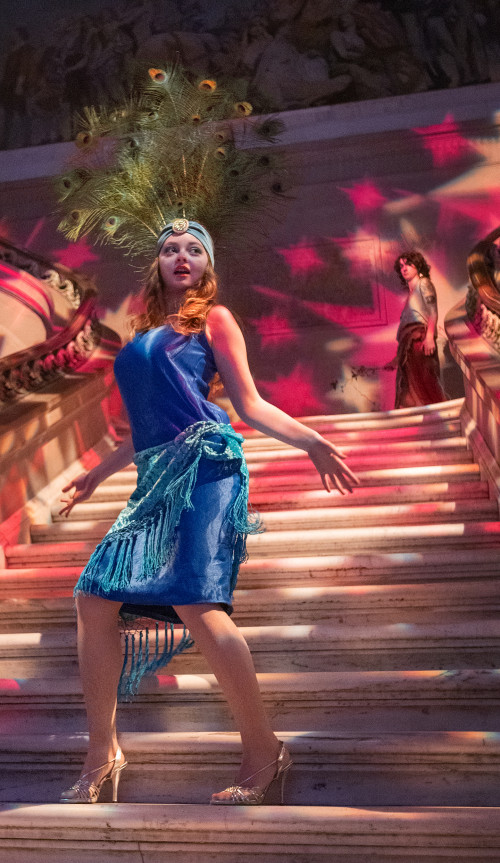
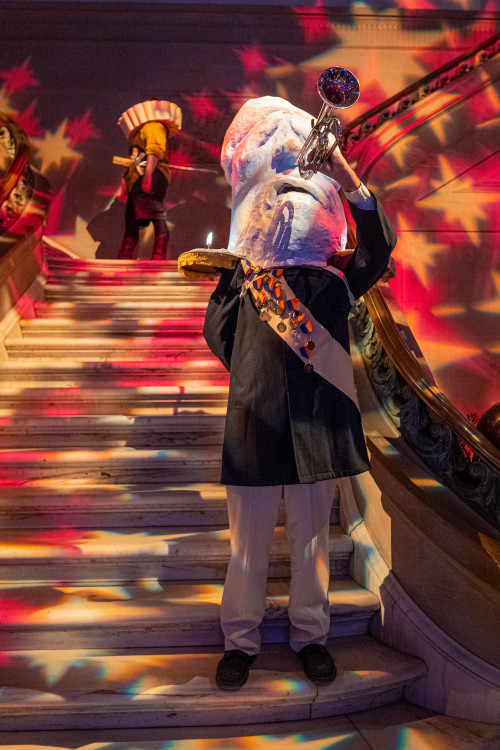
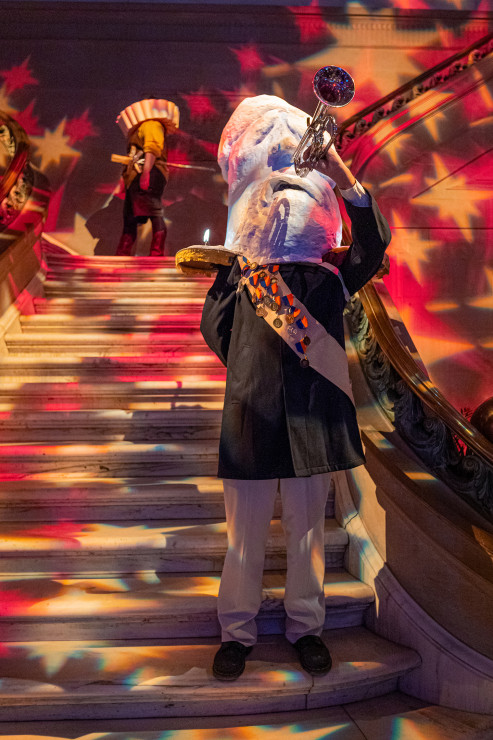
Cecilia M. McCormick: Yeah. So the 21st was actually the kickoff and that was the chance to talk about, okay, this was MICA and our history and here's what we're looking forward to. So that's what that would have been. And that was about, but on February 21st, just a month later, we decided to do a Fete of Lights. And it was an illumination event.
And when I use the word illumination, yes, there were lights everywhere. Everybody came in costume. You know, it was really a wonderful event, lots of food, fun, but the most exciting part was the theme, illumination. And we chose that theme Fete of Lights and illumination because we wanted to illuminate the world to who MICA is.
Right. We wanted to reclaim our position in Baltimore as that art and design institution who is here to work along with the city. So we invited, you know, all our friends from the outside. And really what we're excited about there is we're saying, well, you know, if we can show a little bit more showcase who we are and have people understand the work that's happening. So the students, they did this wonderful array of costumes, fashion for that evening, all related to light.
So everything from a lantern to a colonial soldier, a candlelight soldier is really neat. There's a painting at the top of the stairs in our main building. And it shows what life was like in colonial times.
Well, our students recreated that in what life is like here today at MICA. And they did that through this array of costumes. It was really tremendous.
I mean, they did such a great job, but everybody who participated really, really went all out for the evening. The second thing that we're looking at though is innovation and, you know, this idea of lifelong learning. So again, being innovative and announcing, you know, a design plus innovation hub that we're running this center for creative entrepreneurship and what we're doing with artists. But we're also doing things as simple as a fashion week here on campus. So that's another big event coming up April 17th through April the 25th. And it promises to have, you know, your typical fashion show. And then we have a multimedia fashion show.
So two of those. And then artist talks and other things throughout the week that are focused on our fiber department on the fashion and textile industry. So, you know, that proves to be neat. And then this whole theme of entrepreneurship, like, you know, we did get recent funding from the Radcliffe another $4 million to continue. And, you know, the idea that creative entrepreneurship is so important for the education of our students, but it's also important to bring alums and other artists back to give them opportunities to continue to fuel their toolkit. And so we, in addition to the entrepreneurship, we also have relaunched our school of Open Studies. It's now called the School of Creative and Professional Studies.
And there we're teaching things like sigma. We have culinary arts photography programs come back and everybody seems like to take pictures of their food. So why not do it for magazines, etc. We have, we have some things around, you know, if you want to create a game, then come and learn how to do that. But there's all kinds of things.
And you just have to go to our website to see what the array of opportunities are. And also the emergent technologies like AI. So, you know, people have been out of school a while.
You know, if they want to refresh or learn these type of things, we want them to be able to stop and sample and take these courses the way that they want, not having to commit to long term programs and things as such. So the three themes I think are illumination. They are innovation and entrepreneurship that are happening, happening right here in our bicentennial year. Great.
Rob Lee: and definitely we're going to explore a little bit deeper when it comes to AI and some of the new degree programs. But one of the takeaways I got there, I'm going to be seeing some better food photography soon because sometimes these pictures people toast because they like to take their food pictures like you can improve the lighting. It's not like a cheeseburger. What is it? Yeah and I think going back to one of the things I've heard or what I took out of that, I was sort of really showing the work that's happening and showing sort of MICA's position and what that contribution and impact around the city in these various areas is. I think often we like to do our work in a silo almost quiet and let the work speak for itself but sometimes you have to really show it and that's what it sounds like some of the programming around and even the kickoff was around for the Bicentennial. It's like we're doing this. This is the direction we're going and you know I'm very I'm very caught on that where I know it's very important and as you were touching on sort of the visual component like when people see it like in there there and they're experiencing it it feels I guess realer I suppose.
I can touch it and see I'm around it. Wow you guys are doing all of this. Right. And yeah I think I get that sort of same response I suppose when I do these audio podcasts it's digital and so on but if I go to an event or if I'm there like hey I'm doing a live podcast at a comedy club or I'm doing some collaborative thing the turnout is a little different the turnout and the energy is a little different so it's just something about being there and being in a community and connecting with people in real life is super important.
Cecilia M. McCormick: It is and I we really needed awareness a lot of people just really didn't know what MICA was doing and again I guess it's the insular focus of you know the artists and designers and you know and now you know now we want to kind of shout from the mountain top like what we're doing but I agree with you the more you do in the community it feels different it really does have a different effect and let's face it we live in a visual world.
Rob Lee: This is true. On an audio centric podcast.
Cecilia M. McCormick: Yeah but we do. I know people can see us right now.
Rob Lee: It is it is it's the other mind. It is one of those things that's also there where before I move to this next question in those instances where if I give someone like a card or doing something that's a bit bolder and bit out of the box will have you I have the business cards that most recently got they're a tap card and they're they almost have the the thickness and the texture of a credit card but they're a tap card and I reached out to someone trying to solve a problem as a data analyst showing that connection right and I had it designed by local artists as I always work with the local artists if I can you illustrate this and I took that to multiple places events in different cities and so on they're like what are these how did you get these oh yeah my whole thing is in there you can just go through it so having something that you can touch put your hands on and something that really shows the I guess the creative and the sort of character around it it does some of the work for you so when folks see that card and they tap it they don't have to say hey let me find you on Instagram or YouTube it's right
Cecilia M. McCormick: there it's already done truly it's brilliant Rob really really smart it's it's something
Rob Lee: it's a great card though so moving into this next question might I announce several new degrees including the Bachelor of Design and interior design and the Bachelor of Fine Arts and Film & Video and game design could you tell us a bit more about those I know we were touching on those a bit and sort of what prompted a creation and what's the response been like
Cecilia M. McCormick: yeah so so it's three different degrees bachelor of design in interior design and that one this that was a program that we had many years ago and then I think just the focus of the school and the focus of the faculty changed a little bit so it more or less sunsetted for a while but when we're looking at what's feasible in our society today where is the market going what are the needs of Maryland and which is what we base a lot of our programs on we found that interior design really rose to the top and there was only one other school Morgan State University that was running the program and the way an art and design program would do it would be very different than the way Morgan State so I felt with the number of possible people who might want to take that program it was like 1600 jobs available um on a yearly basis we thought well you know what this is a good program for us to run so so we put that into the market it's going very well as we it took us a while to design it but then once it was created probably in a matter of four months we got it out there and launched and we're already seeing really great interest at our open houses and we already have 10 people signed up in our online version of it we're also running it in the residence college so you know two different ways to learn interior design and I think it's going to go well we're we're also using that in the design plus innovation hub that we're creating so there'll be a chance for them to actually prototype products there a chance for them to to do some true practical learning in in that space using fabrication labs and everything like that so I think that one's going extremely well for how long we've had it in the water the same way with um Film & Video so we are in partnership with Johns Hopkins on uh JHU-MICA Film Centre right over on North Avenue and we wanted to reactivate our programs over there so again it seemed like we needed to create a new direction and where we were going to take film and video and while you get a general degree we think that we can involve students in documentaries and storytelling and short films and you know so the world is their oyster if they can come here and learn and then with um you know investment by both Johns Hopkins and us in the facilities it's really a great place to learn and to work so so that's all getting relaunched we just hired a new director and probably one of the greatest areas of interest is film and video when we reach out to students so we're again just answering a marked need there and uh we're very excited about where that will go and then the final one is in game design and we've had a professor here sam um chef field and Sam is just a terrific member of our faculty and he was doing that as a minor and we thought that we would give him a chance to have a major in there because he was able to show us through a feasibility study how many people are interested in that and we also think that there's different entry points in the workforce for game design and also film and video as well and somebody can come from high school and actually learn it but you know you can stop in stop out get certain certificates and certain levels of learning and then go out and practice it in the world so that's what we're trying to do with game design but we have a lot of students who are interested we just built a brand new facility within the Film Centre for game and game design and we've co-located interactive arts game design Film & Video together so that people will go across and we've also created one other new program called creative media production which is how do you learn all the aspects of what goes into a production whether it's a live production or whether it's on video or whatever so you need to learn sound art you need to learn visual arts you need to learn some communication tools photography right you need animation so this is something that wraps everything into a nice bundle so that students will know each aspect before they graduate so yeah it's really it's really neat stuff it
Rob Lee: is it sounds amazing and it fills in some of those gaps that you know again I hear in these conversations it's just like man I wish I knew more about that you need to get over to America
Cecilia M. McCormick: what are you doing what are you doing well you're welcome anytime Rob
Rob Lee: um one of these quotes I saw um yeah I believe it is a tribute to you so I want to make sure it is it is yours because that's one of those things sometimes in a world of AI and conversation I don't know who's anymore um say creativity is a commodity that cannot be automated outsourced or depleted and a call for investing in it is um involve a call for investing in it to turn ideas um into impact now and I think that's why it speaks to sort of real threats and shifts of like AI is important as a part of our day-to-day but some people use it weirdly and um it kind of devalues some of creative work and I know there are some conventions I've gone to um with let's say small press expo for instance I've seen folks say absolutely no AI no AI art and so on and we're gonna tar and fev you if you have AI art and there are other folks that are using it perhaps to do part of the work but not the creative component like I've used it in writing questions or writing grant proposals and then wait maybe to edit not necessarily write it so could you speak on sort of AI as it relates to you know policy curriculum sort of what tools are being embraced practices that are being restricted or where maybe there's a doubling down that happens like relationship with AI
Cecilia M. McCormick: right right it's a process so you know AI has just been thrust upon the world right and I have my artists sitting here and they're saying they're taking away our jobs we don't want to learn AI and I said well you know when the internet came out we were afraid of that when email came out we were afraid of that you know like with each new technology you have to either become a student of it and decide how you want to use it or not at all so we started in a very safe place we started with the policies like when are you permitted to use AI and when are you not permitted and you know we talked about that in our faculty you know set some guidelines for students and things like that but but now in our school of continuing and professional studies we're teaching these emergent technologies and one of them is AI but in addition to that I guess you can't argue with the fact that there's speed there's you know vast accumulation that can happen from using cat gpt or something like that so you can aggregate data very quickly there's pattern recognition that happens through AI right but it's never going to take the place of certain things so that's why we want to teach our students to utilize the tools but then we want to impress upon them the importance of the human mark and that's what we call it here nobody can take away the ties of art to emotions the level of creativity the context in which it was created and its adaptability in our world right that is the way we think and until now I'm not sure that there's a machine that can do that yet who knows what will happen but my point is is that they have to believe in who they are they utilize this to get to where they need to go faster and then they they put their own human mark on the work it will take away some jobs it will but there are plenty other jobs and maybe even turning into an AI engineer is where you know where somebody that has the interest can go but our artists you know they're they're taken back by it they're concerned by it but we're trying to impress upon them that they can still be who they want to be
Rob Lee: I like that you you said that is you know I sit in sort of the spot where I'm having conversations with creative folks artists and so on and then have to log in every day to that old chat gpt tool to to do sort of what's pace of those right and you know at a point when you know I was very very busy and building out questions and all and I noticed that sort of changed and I was going through and I was like hey I have this guest coming on help me come up with some questions and I noticed that I was losing the human component my own voice in it and I had to pull that that plug and I thought about it like I can't completely restrict it because I am using it in the day today yeah so how do I apply it and it was a quote I remember from an interview with Ben Affleck and which I was not expecting to get this wisdom from him but he said something that AI and the use of AI is in essence it's maybe it's not a craftsman it can help you it's not a poet it's more something that can kind of shape what you're doing but it's not the original thought it's not the source and once I heard that I started thinking about it I was like there's an ethical way to go about it while still keeping the human element involved so I think when it comes to the same culinary arts for instance I don't want an AI I don't think a computer can make a meal for me I don't know if that's a thing but maybe compiling my recipe maybe giving me suggestions and so on using it in that way the same as any tool as you were touching on earlier with email and and so on those are all just tools and the last thing before I move into sort of the last two questions that I have here it's even early on in this process of doing this the sort of truth and hazard you know having interviews folks it was very much me back and forth telephone tag email tag what have you and I got to a stage where I was like let's find a tool where I can just send them a booking link they book in their leisure that I'm out of it because there's only one me so same sort of
Cecilia M. McCormick: idea it's important to utilize tools but I I understand I understand the fear you know you have to
Rob Lee: so um I want to get a bit about as you kind of look at your your career like I want to talk about maybe lessons that were learned like throughout your career I'm sure you've had lessons that you learned that help you grow and the creative process is all about iteration for the college of art so great a process right um what is the best lesson that you've learned that you've applied to your work here at MICA yeah
Cecilia M. McCormick: I think the best lesson I've learned throughout my career is to know when to pivot and I think that fits well into the creative process sure you know I think that you have to be open in your life to new opportunities you know so as you're going along you may be you may be sure of your past or you may be unsure of your past but when an opportunity comes along you've got to know to take it yeah and that's the pivot and sometimes you may not get where you're going and that makes cause you to pivot and I think that happens in the creative process in a regular way in a regular sort of way um when I've talked with artists and they they talk about the fact that you know they don't have a linear path in their career so that's that's why you always have to be open to these things and you have to know what to do and you may start out thinking you're going to do one thing and then an opportunity comes along and you take it and then that will lead to something else or it may lead to the end of that and you turn around and you go back to what you were doing so I think I think that's that's kind of how my like you know when I started out I wanted to be a singer and then I became a business person and then I became a lawyer it sounds like I didn't know how to keep a job but instead it was just about taking advantages and I end up a college president pretty great opportunity right and the best news is I get to work with young people every day and it keeps me young you know like it's I get to see the world I know the latest music I know what's happening in the art world I mean what could be better right so pivot is my answer for that
Rob Lee: good answer good answer um but I was um when I was younger I wanted to be you talked about drawing earlier I wanted to be an illustrator that was the first sort of and I didn't get into the Baltimore school for the arts but in doing this podcast I was able to teach there for a year in podcasting which I was just like I had myself in the back but I will say that the drawing thing has always still been a big thing for me so in doing so this podcast I've had all these great conversations with folks you know I was sort of like struck with that maybe I should go back to art maybe I should go back to illustration and so on so I didn't know if I had the sort of wherewithal or the the background even the confidence to draw again but I started writing a comic and I would hire the artist and I was able to revisit this thing that I thought I would never do so I returned back to it and I was a kid podcasting wasn't the thing it didn't exist so it's like made a new lane for myself so I'll tell it all of that but then able to use that as a way to parlay back into something that was very into as a kid yeah so creativity doesn't go away
Cecilia M. McCormick: I hope I hope you do it one day there we'll talk
Rob Lee: so here's the last real question that I got and I do have even president of universities get the rapid fire question so those are coming soon but um so MICA at 200 rather than ask you to map out a full century that would be really unprofessional to me that's for four years um if you could only deliver on like maybe three outcomes in the next decade or so what would they be yeah
Cecilia M. McCormick: so first you know again being very student focused I think I would focus on their experiential learning I think that an experience each year while they're here to get them prepared for life and their career is very important to me so you know right now I know they're getting I they have the chance for one or two but I think something in each year and where they build on each other to really set them up for you know what's next that's a very important thing for me um I think it would be very relevant for a career path so so that's number one number two I think would be just overall strengthening uh independent art and design education so you know there's a lot of art schools out there but independent art and design we're one of the top 10 institutions in the country um but we're at risk right now because of funding and everything like that um letting people know the effect that these students have on the world uh making sure that people you know value and art and design degree is very important for me and then augmenting the profile of MICA here in Baltimore so that's that's number two number three is MICA as a leader in the creative economy in Baltimore and beyond and that you know I had alluded and talked about that before but again that's about us measuring the effects of what we're actually doing so what I see us doing is is to become the purveyor of you know an economic model that shows the impact of what we're doing in the creative economy and therefore what are artists doing in the creative economy and I think that we contribute artists contribute something that's less tangible in the business world but it's just so different you know than than what anybody else does I it's it's hard it's hard to um I guess ascertain what that value is but it's a value that is so much more important than other things that happen so in any case I those are the three things I really want to accomplish and it you know some of it has to do with our reputation but it it is always about where we sit and so all three of those things so like I said students first and then the other two things will help our students certainly but but it will also help the greater design world
Rob Lee: thank you it's good good if um it gets about for us to end on the real
Cecilia M. McCormick: question okay
Rob Lee: no it's time for the rapid fire questions you know I always say this don't overthink these these are whatever the first thing that it's almost like an icebreaker but at the end since I've gained this sort of trust of these scholarly asked questions I can be just weird with it um so here here's the first one um what is your Starbucks Dunkin or insert local coffee shop order what's your standard order
Cecilia M. McCormick: I love the local coffee shops but I'll give you my Starbucks it's a Caramel Macchiato skinny grande sauce hot
Rob Lee: that's very specific you will get real specific about
Cecilia M. McCormick: it I know because coffee for me is a coffee milkshake basically
Rob Lee: I get two triple quartados before oh jeffiel essentially very good um here's the next one this this one I put it in I did not write this question so you mentioned music earlier and you mentioned maybe a different arc of what a career could have been so let's say in this scenario you're up for karaoke next what song are you singing oh boy
Cecilia M. McCormick: probably isn't I'm showing my age here I'm I like singer songwriter so I'm thinking like uh far away or these are songs like by um Carol King I love Carol King and Joni Mitchell and Linda Ronstadt but but my kids do too by the way and they're a lot younger than me
Rob Lee: passive I love I love that I don't have a career so I'm just like I
Cecilia M. McCormick: usually don't sing karaoke
Rob Lee: so this is the one I'm always very very very curious about it's like when folks do the introductions there's always another thing that they leave out so what is a lesser known talent that you have that not too many people know about right
Cecilia M. McCormick: well so in high school and college I threw the javelin which is something that nobody would ever expect I'm five foot three on the small frame and it was something that I did I really enjoyed being a track athlete and uh kept running for many years I I walk and ride um a bicycle now but you know for many many years I I ran and really enjoyed it and not a lot of people don't know that about me
Rob Lee: yeah I'm always calling out these new details these new these new notes yeah well that's kind of it for the podcast thank you for being on the hot seat and indulging me with the rapid fire portion
Cecilia M. McCormick: Robin has been a delight and I cannot believe 920 plus of these and keep going keep going I got to see a few by the way really
Rob Lee: good thank you um so yeah um it was there like any final things you want to say um as we close out um here whether it be check out the website or anything along those lines
Cecilia M. McCormick: I would say come down and visit us ArtWalk is coming up it's May 15th through the 18th and that's when our students showcase all of their art and it's a chance if you want to purchase some really nice art for your home you can and it's created by a student here at MICA but it really is a beautiful time on campus and hopefully the weather will cooperate and there's you know lots of food and drink and all of that as well as the wonderful art to experience so I'd say come out and visit MICA I think it's the best way to see what we're all about
Rob Lee: and there you have it folks I want to again thank Cecilia and McCormick for coming on to the truth in this art and sharing some insight on her work MICA's Bicentennial creating ideas that create impact and the whole plan to take MICA into its next 200 years and for Cecilia I am Rob Lee saying that there's art culture and community and in a round your neck of the woods you just have to look forward