Finding Creativity Together
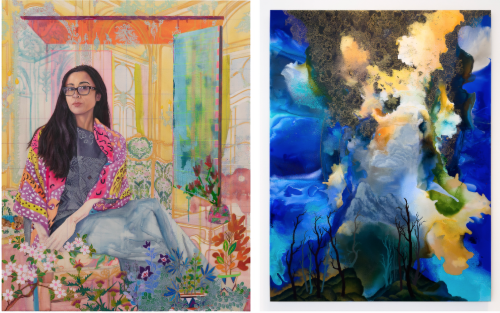
Becky Bochatey ’98 and Jeremie Talbot ’98
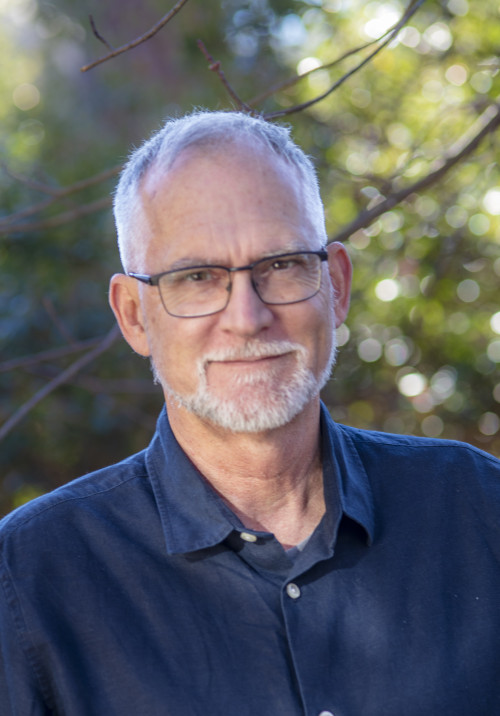
John Angelos, President and COO, Mid-Atlantic Sports Network; MICA Board of Trustees member
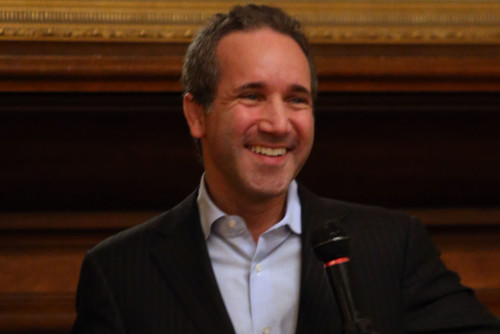
 John Angelos’s first memories of MICA don’t involve board meetings, strategy sessions, or major partnerships. Instead, they begin with the weight of student projects in his arms.
As a young man in his early twenties, Angelos was dating a MICA student in the interior design and architecture program, then a new offering at the college. He recalls hauling her art assignments into the old building on Mount Royal Avenue and catching glimpses of the energy and ambition buzzing inside.
That was his introduction to MICA: not as an institution on paper, but as a living, breathing hub where students came from across the country—and even the world—to immerse themselves in creativity. “It was probably when I first became aware of what a unique institution it was,” he remembers. “People came from around the country, maybe even the world, to see what it had to offer.”
Decades later, those early impressions would echo back in new ways, connecting Angelos more deeply to the school’s mission and its role in Baltimore.
Angelos describes MICA with the same kind of awe that he often reserves for baseball legends. “Five and a half billion people have never heard of the New York Yankees,” he points out. “So just because we think baseball is the be-all and end-all doesn’t mean the rest of the world does. It’s the same with MICA. Far fewer people may know about it, but once you do, you understand how distinctive it is.”
That distinctiveness, he argues, comes from both history and presence. “It’s not simply another art school,” Angelos explains. “MICA is a beacon that reinforces the idea that the arts are an existential part of the community. They matter. And that’s why institutions like MICA were created hundreds of years ago, why they’re invested in, and why they survive and thrive.”
For Angelos, MICA’s difference lies not only in its academic prestige but in the way it proves—again and again—that the arts are essential, not optional.
When Angelos returned to Baltimore after several years in Nashville, he reconnected with MICA at a pivotal moment. His wife, a musician and songwriter, had pursued her career in Tennessee, while he envisioned new ways the Orioles could engage with their community.
“I always saw the Orioles as a platform for partnerships—citywide, statewide—including around the arts,” he says. The timing was right. As he joined MICA’s board of trustees, he began exploring ways to merge his professional life with his commitment to the arts.
That vision took shape in unexpected places. Orioles games became backdrops for student-designed visuals. Female musicians performed at Camden Yards during the centennial of the women’s suffragette movement. Murals filled concourses with color and meaning, drawing national figures to witness their impact firsthand.
“We were always trying to fuse sports, music, and the visual arts,” Angelos reflects. “To make statements about what the community could focus on, or what a community could be like.”
This belief that arts and athletics belong together remains central to his thinking. “Some people go to a ballpark, some go to a church, some go to an art museum,” he says. “They’re not different at all. They’re all ways people find meaning in their lives.”
As MICA marks its 200th anniversary, Angelos sees limitless potential for the college to shape Baltimore’s next century.
“What you do with the arts often surprises people when matched with things they don’t expect,” he says. He points to events like Athletes and Artists Play for Kids, a Sarasota fundraiser that combined sports and art to support children’s initiatives. “People would ask, what’s the connection? And I’d say, why not? They’re just different forms of therapy. They belong together.”
For Angelos, the lesson is clear: MICA’s role is to bring the arts into unexpected places. Whether that’s a ballpark, a classroom, or a public square, art belongs where people gather. “The opportunities are great,” he insists, “and the need may be greater than ever.”
Looking ahead, he believes MICA can continue to surprise and challenge the culture by pushing art into new spaces, making it visible where it might not otherwise be found.
If Angelos were speaking directly to future MICA students, his advice would be both practical and daring them to push boundaries. “Not to be rebellious for its own sake, but because it matters,” he says. “The arts challenge culture, ask new questions, and push society to see differently, even at the margins.”
For Angelos, the questions artists raise—Where do the arts fit into people’s lives? What role do they play in culture?—are more than academic. They are essential to shaping the future.
“If graduates are ready to answer those questions,” Angelos believes, “they can make a significant impact. And MICA gives graduates the tools to do more than respond—it equips them to rewrite the cultural script.”

Join the festivities as MICA honors its 200-year history, recognizes its present success, and looks forward to a bright future. Throughout 2026, the College will be sharing community stories and announcing one-of-a-kind events on campus, in Baltimore, and beyond.