Refuse
Artist
Haven DeAnglis
Date
2020
Haven DeAnglis ’20 (Fiber BFA)

When Haven DeAnglis arrived at MICA as a Fiber major, she was already thinking about materials, where they came from, how they were used, and what happened when they were discarded. Drawn equally to experimental fashion, sustainability, and social practice, DeAnglis found in fiber a language expansive enough to hold artistic expression, environmental responsibility, and cultural identity all at once.
Today, that language lives and breathes through STITCH AND DESTROY, a Philadelphia-based clothing brand and studio DeAnglis founded in 2019. Rooted in punk’s do-it-yourself ethos and driven by a commitment to reducing textile waste, the venture transforms rescued fabrics, pre-loved garments, and reclaimed materials into handmade clothing designed to last, each piece carrying both aesthetic edge and ethical intention.
DeAnglis’s path toward sustainable fashion was shaped early by hands-on learning. Summer internships during their first two years at MICA proved especially formative. At TerraCycle in Trenton, New Jersey, DeAnglis worked with post-consumer waste, materials like toothpaste tubes and chip bags, turning them into functional sewn products. The experience sharpened her technical sewing skills on industrial machines while revealing the scale of global waste and the possibilities embedded within it.
A second internship at MamerSass Reinvented Fashions in Chincoteague, Virginia, offered a different lesson: how a small, mission-driven fashion business could thrive through creativity, community, and reuse. There, DeAnglis helped design and construct garments from textile remnants while also assisting with storefront operations. The intimacy of that environment— equal parts studio, shop, and collaborative space — sparked the realization that art practice and entrepreneurship could coexist.
By senior year at MICA, those influences converged. Coursework in business planning helped DeAnglis imagine a sustainable fashion venture, while a thesis collection rooted in punk history and constructed entirely from textile waste became the first true expression of STITCH AND DESTROY. Recognition soon followed. DeAnglis received the competitive Lenore G. Tawney Scholarship from Fiber faculty and later won funding through MICA’s UP/Start program, seed support that helped transform a student idea into a working enterprise.

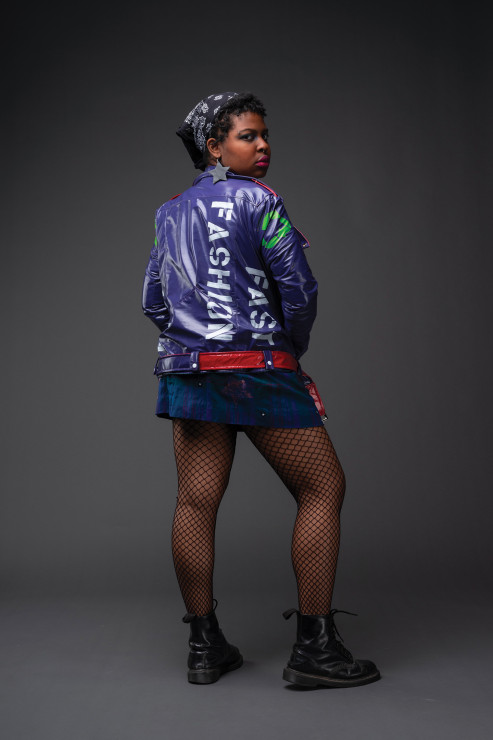
For DeAnglis, punk is more than a visual reference; it is a framework for living and making. Long inspired by the music, politics, and collaborative spirit of punk communities, she saw parallels between punk’s resistance to mainstream systems and the urgent need to challenge fast fashion’s environmental harm.
DeAngelis underscores that the global garment industry is among the world’s most polluting, fueled by cheaply made clothing produced at high speed and discarded just as quickly. STITCH AND DESTROY responds with a radically different model: every garment constructed from recycled or upcycled materials, including donated clothing, deadstock fabric, plastic bags, soda tabs, metal bottle caps, and repurposed notions. Even zippers and buttons find second lives.
The result is fashion that refuses disposability. Each piece is handmade in Philadelphia, intentionally durable, and designed to express individuality without sacrificing responsibility. In this way, DeAnglis positions clothing not merely as style, but as a visible declaration of values.
What began as a passion project during college quickly expanded beyond markets and pop-ups. After moving to Philadelphia in 2020 with creative partner Corey Heffernan, an illustrator and fellow MICA graduate, DeAnglis spent several years selling at street fairs and festivals while sewing garments from a small apartment workspace.
Growth brought both opportunity and limitation. Pop-ups created visibility but demanded constant setup, travel, and competition for attention. Meanwhile, the material reality of an upcycled practice (storing donated clothing, fabric scraps, and equipment) required more space than temporary venues allowed.
In spring 2024, STITCH AND DESTROY reached a turning point: the opening of a brick-and-mortar storefront and studio on South Street in Philadelphia. The space now houses retail on the lower floors and an open sewing studio above, where visitors can watch garments come to life in real time. Transparency is intentional. By revealing the labor behind clothing, DeAnglis challenges the illusion of effortless mass production that defines fast fashion.
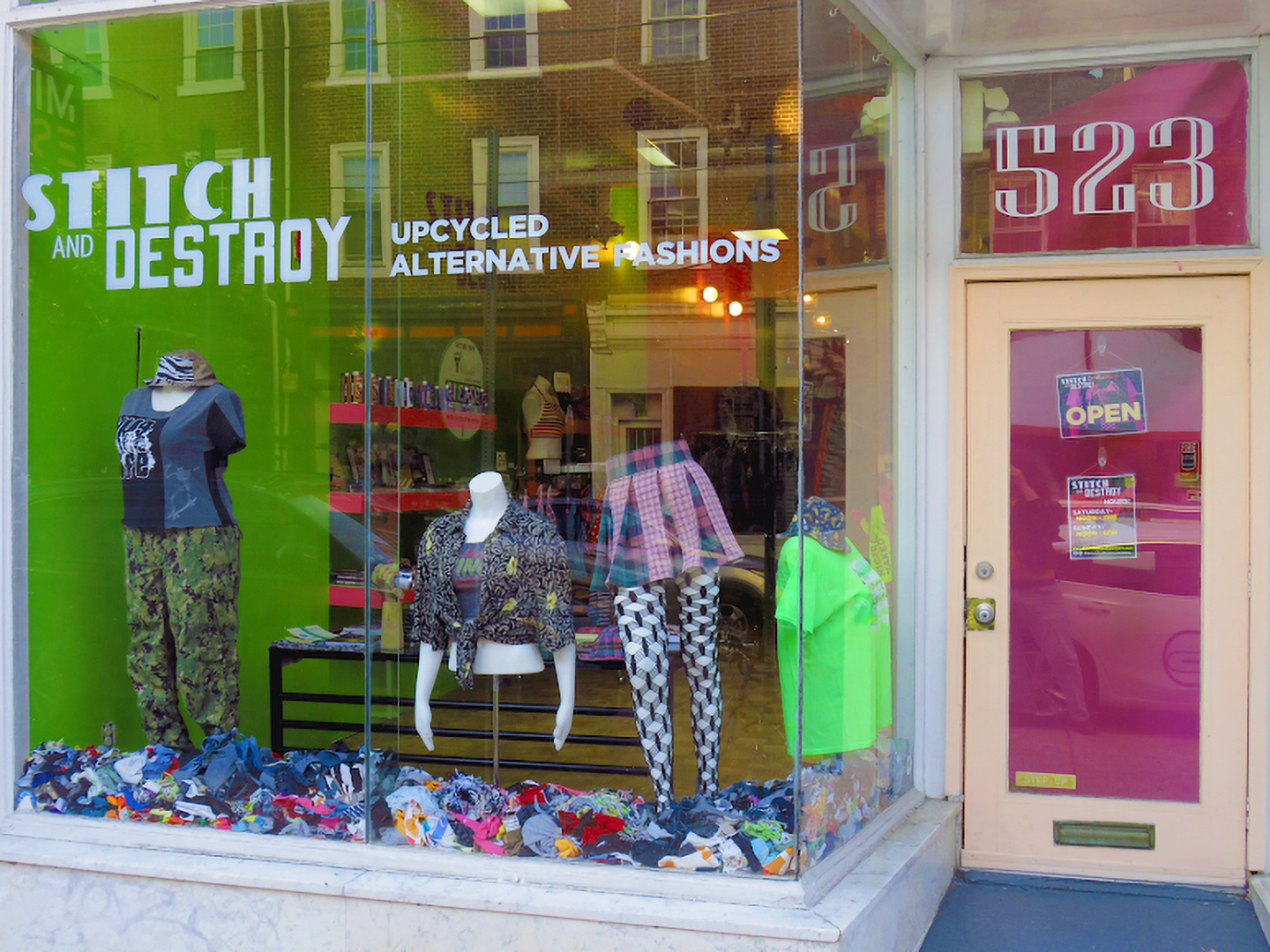
The store also extends beyond a single brand. Featuring work from dozens of artists who share commitments to reuse and sustainability, it functions as a collaborative hub—part boutique, part gallery, part community workshop.
Education plays a central role. Sewing classes and skill-sharing workshops invite participants of all ages to learn machine basics, mending techniques, and creative reuse. These intimate sessions, often limited to fewer than ten students, reflect DeAnglis’s belief that sustainability grows through shared knowledge. Teaching someone to repair a garment, they note, can keep clothing out of landfills for years.
STITCH AND DESTROY is also a story of partnership. DeAnglis met Corey Heffernan at MICA in 2016, bonding over art, punk music, and a shared creative drive. Their first date — at a campus performance of The Rocky Horror Picture Show — marked the beginning of a relationship that would become both personal and professional.
Heffernan designed the brand’s logo, contributed graphics and photography, and now works alongside DeAnglis in the storefront, assisting with production and customer experience. Their collaboration reflects a broader truth about sustainable creative work: it is rarely solitary. Instead, it grows through relationships, shared labor, and mutual belief in a vision.
Central to that vision is the sourcing of materials themselves. Much of STITCH AND DESTROY’s raw inventory comes directly from community clothing swaps hosted in the store, events where participants trade garments rather than discard them. Items left behind become the foundation for new designs, ensuring that even unwanted textiles continue circulating in useful form.

Join the festivities as MICA honors its 200-year history, recognizes its present success, and looks forward to a bright future. Throughout 2026, the College will be sharing community stories and announcing one-of-a-kind events on campus, in Baltimore, and beyond.

 + Enlarge