Artist
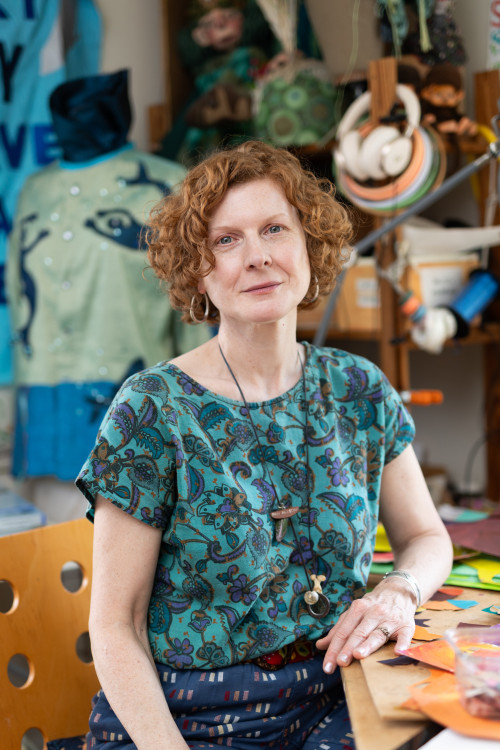
Valeska Maria Populoh ’07 (Art Education MAT), Fiber Faculty
Credit
Photo by Jen Strunge
Valeska Maria Populoh ’07 (MAT) / Fiber, Fashion, and Textile Faculty
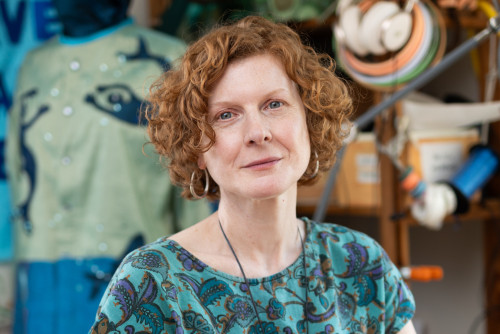
In Baltimore, a city shaped by layered histories, creative resilience, and deep community roots, Valeska Maria Populoh has built a life and practice grounded in connection. As an artist, educator, and cultural organizer, her work moves fluidly between the classroom, the street, and the stage, bridging disciplines and bringing people together through shared acts of making.
Populoh’s path to this work was anything but linear. Born in Germany, she did not initially imagine a future in art. “Part of the way that I grew up, it was not a pathway that I saw for myself,” she reflects. In her late twenties, she was working in environmental advocacy and public education, immersed in issues of social and ecological justice. It was a mentor who first suggested she consider art education, a turning point that would ultimately reshape her life.
When she visited MICA, she found something unexpected: a community that felt both welcoming and expansive. “I was so inspired by what I saw being made here,” she says. “People were really friendly, and I was looking for a program that would strengthen my studio skills but also give me a vocation.” She enrolled, earning a Master of Arts in Teaching in 2007. Her original goal was practical: to gain skills she could bring back to nonprofit or advocacy work. But Baltimore, and MICA, had other plans.
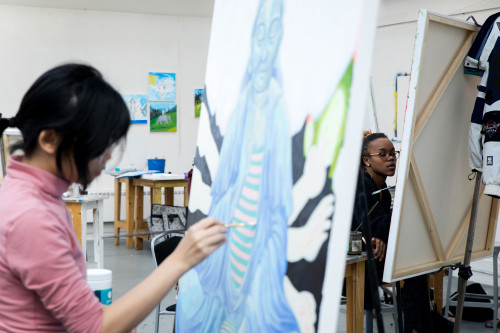
Nearly two decades later, Populoh is a MICA full-time faculty member who has been teaching since 2008 across Fiber, Fashion, and Textile, First-Year Experience, and the Ecosystems, Sustainability and Justice program. Her teaching and artistic practices have become deeply intertwined, each informing and enriching the other.
“I feel like teaching, community work, and art making are completely intertwined,” she explains. “So much of what I learn in the classroom I bring into my community work, and so much of what I learn in community I bring back to my students.”
At the heart of Populoh’s work is a commitment to healing and repair, concepts she came to gradually, shaped by both her early advocacy work and her experiences in Baltimore’s artistic communities. Before coming to MICA, she had worked in gardening, farming, and food justice, exploring how people relate to land and one another. It was through fiber and craft traditions, however, that these interests began to take on new meaning.
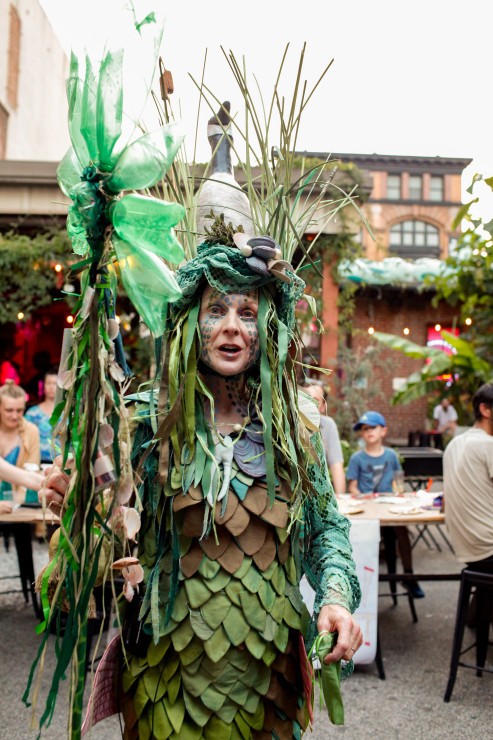
“What I discovered in fiber,” she says, “was the way craft connects to everyday life: ritual practice, community practice.” That realization expanded further when a faculty mentor encouraged her to apprentice with Bread and Puppet Theater, a politically engaged performance collective known for its large-scale puppetry and public pageantry.
That experience proved transformative. Upon returning to Baltimore, Populoh became involved in community-based performance, including the city’s long-running Great Baltimore Lantern Parade. Through these collaborations, she found what she describes as “the overlap of the Venn diagram” she had been searching for: art-making, teaching, and community engagement converging into a single, meaningful practice.
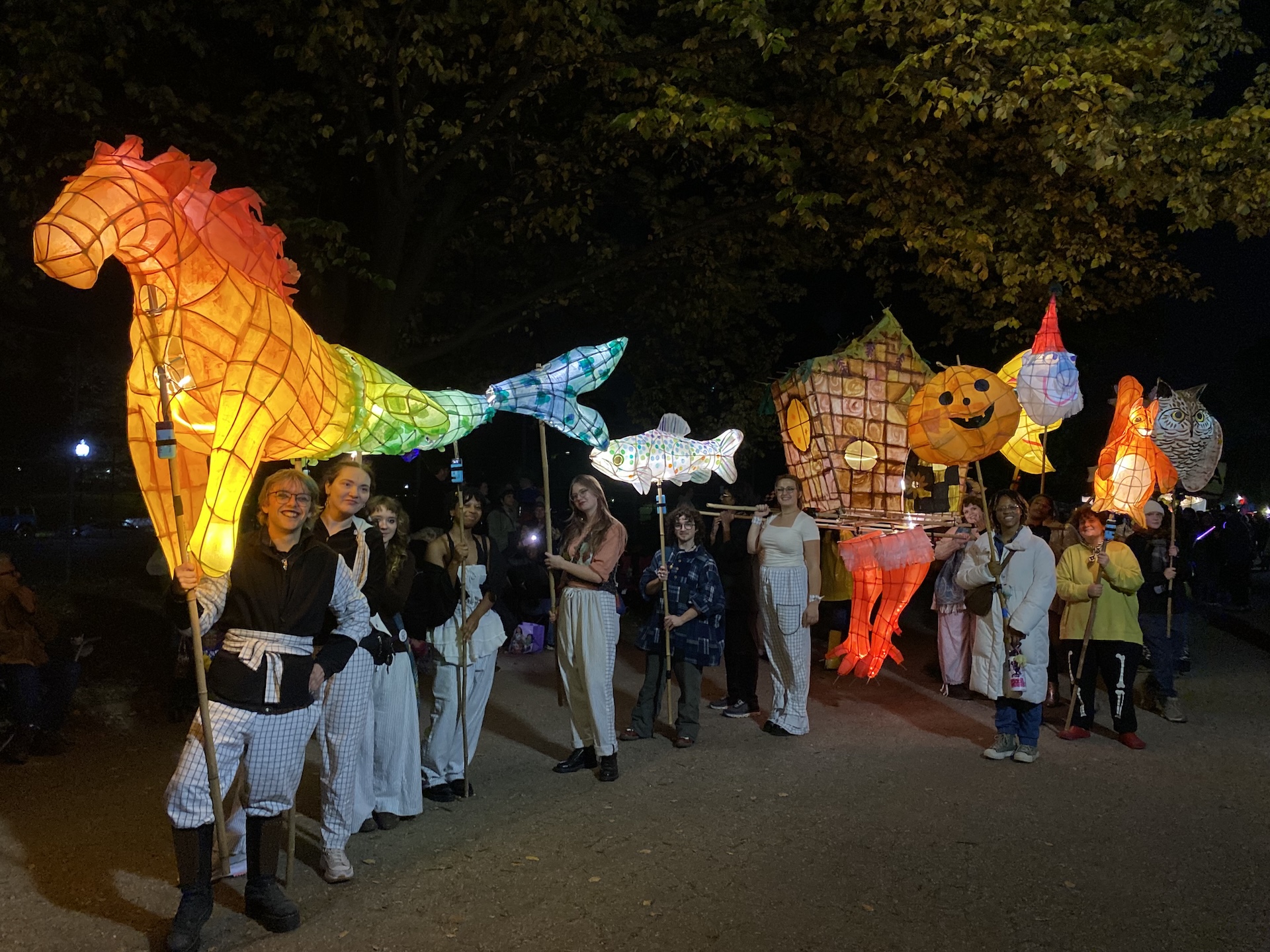
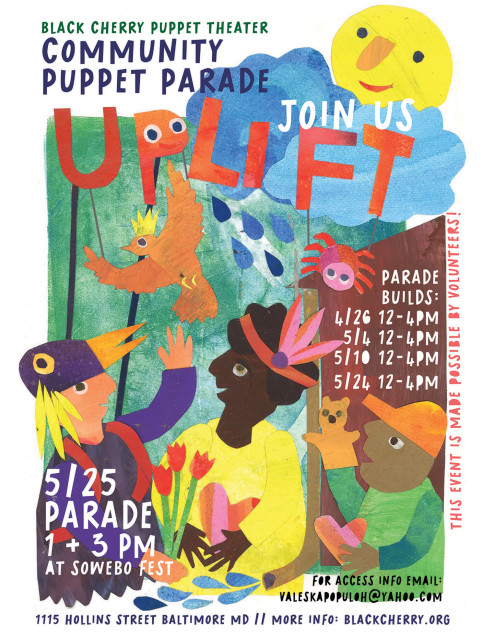
Puppetry, in particular, became a central medium. Having grown up with puppetry in Germany, she was already attuned to its expressive possibilities. At MICA, a work-study position at Black Cherry Puppet Theater deepened that connection.
“Puppetry elicits wonder,” she says. “It draws people in because it’s familiar; it’s connected to childhood and storytelling. There’s this moment where people suspend disbelief and imagine that what they’re seeing is real. That’s a powerful space to create.”
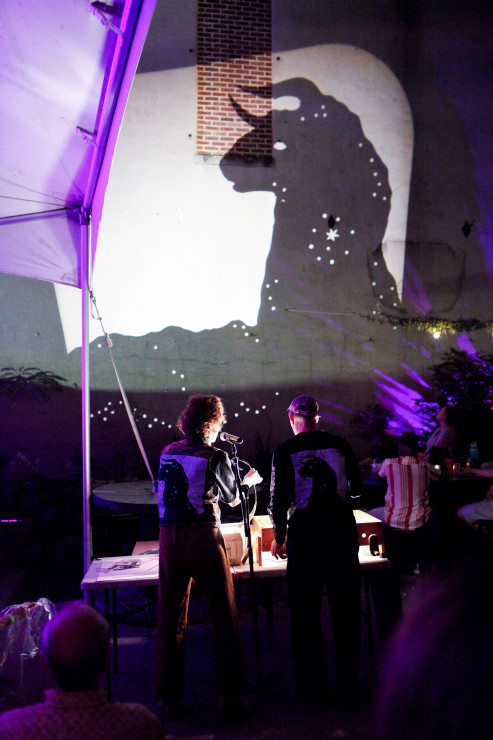
Populoh’s work now spans puppetry, participatory performance, printmaking, costume and garment design, and visual storytelling. These forms, she explains, allow her to create immersive, communal experiences, creating spaces where people can gather, witness, and reflect together. Whether through a parade, a performance, or a collaborative art build, her projects often center on environmental and social themes, inviting participants to consider their relationships to place, to each other, and to the more-than-human world.
That emphasis on connection is deeply rooted in her life in Baltimore, which she describes as profoundly formative. Over more than twenty years, she has built relationships with artists, organizers, and community groups whose work sustains the city’s cultural fabric.
“I’ve learned so much about resilience,” she says. “About what it takes to sustain a creative life and to be in service to others over time.”
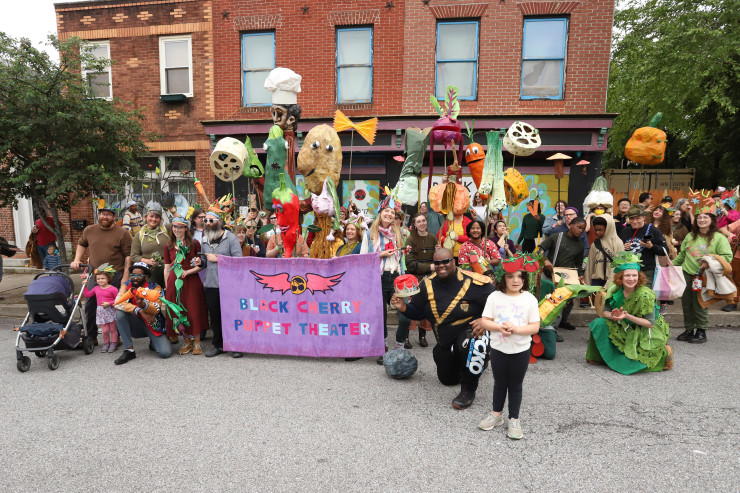
Living and working in Baltimore has also shaped her understanding of responsibility, particularly as someone connected to a well-resourced institution like MICA. “We have access to so many resources,” she notes. “And that’s a privilege. For me, it’s really important to build relationships outside the institution, to create exchange between those spaces.”
That commitment is reflected in her teaching, where she regularly connects students with local artists and community organizations, encouraging them to engage with the city as an active site of learning. She also emphasizes the importance of understanding social and political context, especially for students interested in working collaboratively or in community-based settings.
Her classroom, like her artistic practice, is a space of experimentation, curiosity, and shared discovery. She speaks with genuine enthusiasm about her students, their energy, their ideas, and the ways they continually challenge her to grow.
“It’s such a gift,” she says. “To walk into a classroom of people who are excited to be there, who want to share their ideas, who are experimenting and learning. It’s a blessing.”
Over the years, she has observed shifts in how students learn, particularly in response to digital culture and the impacts of the pandemic. Today’s students, she notes, are deeply shaped by fast-moving media environments, which can make sustained attention more challenging.
At the same time, she sees this as an opportunity for mutual learning. “I try to meet them where they’re at,” she says. “I have a lot to learn from them, and there’s an exchange that happens.”
In disciplines like fiber, where processes require patience and persistence, Populoh encourages students to embrace the slower, often uncomfortable process of learning. “You have to give yourself over to the process,” she says. “It’s not like watching a video and suddenly you know how to do something. It takes time, discipline, and practice.”
But she also sees the rewards of that commitment. “Two years later, they’re making something they once only imagined,” she says. “And they understand what it took to get there.”
This belief in transformation through labor, through collaboration, through sustained engagement runs through all of Populoh’s work. Whether she is guiding students, organizing a performance, or building a puppet for a community parade, she is creating spaces where people can come together, make meaning, and imagine new possibilities.
“I’ve been deeply transformed by living in Baltimore,” she reflects. “By the people I’ve learned from, been inspired by, and been in relationship with.”
In that spirit, her practice continues to evolve, not as a solitary pursuit, but as part of a larger, interconnected web. One that stretches from classroom to community, from fiber to performance, and from individual experience to collective care.
Through it all, Populoh remains committed to the simple yet profound act of bringing people together: to make, to reflect, and to repair.

Join the festivities as MICA honors its 200-year history, recognizes its present success, and looks forward to a bright future. Throughout 2026, the College will be sharing community stories and announcing one-of-a-kind events on campus, in Baltimore, and beyond.