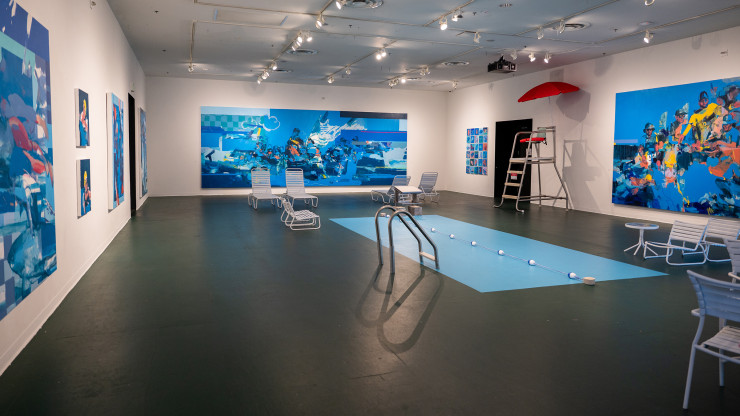
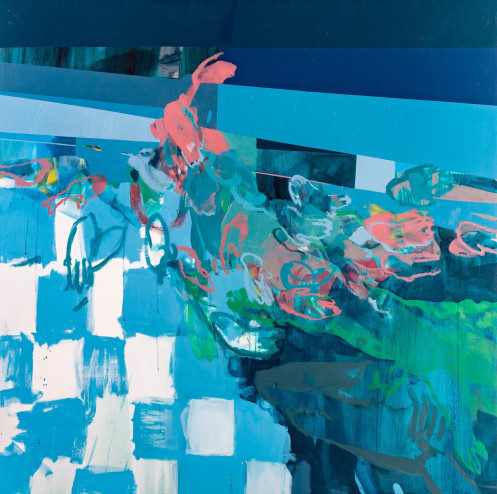
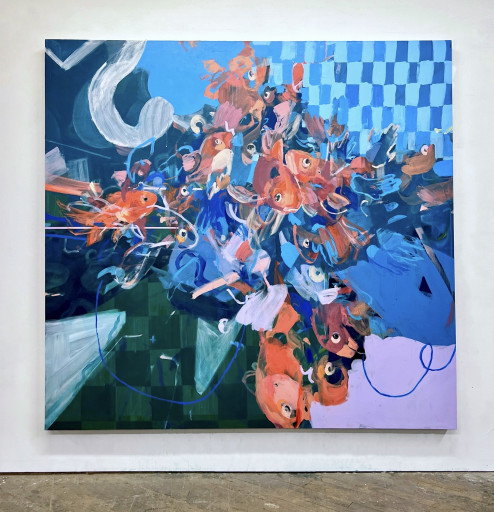
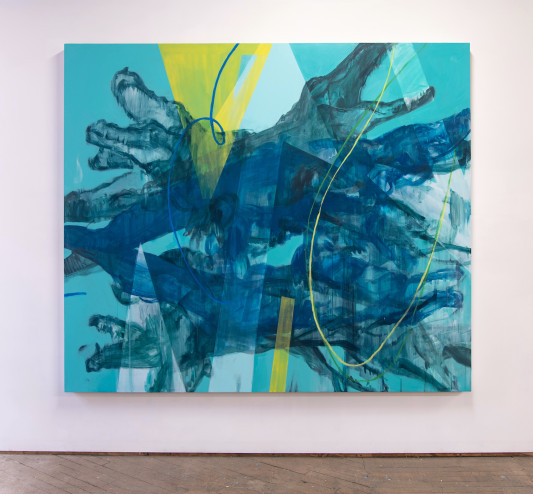
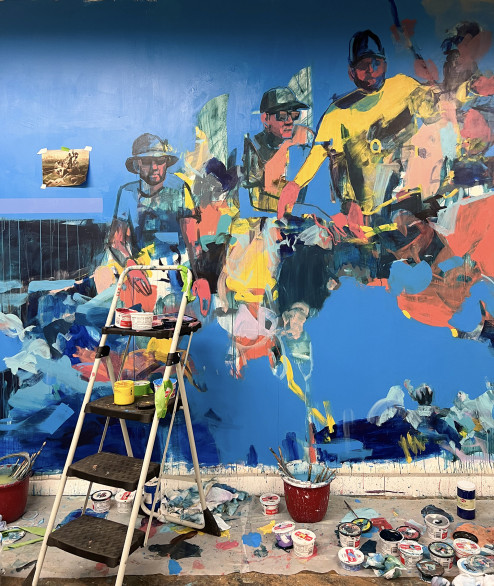
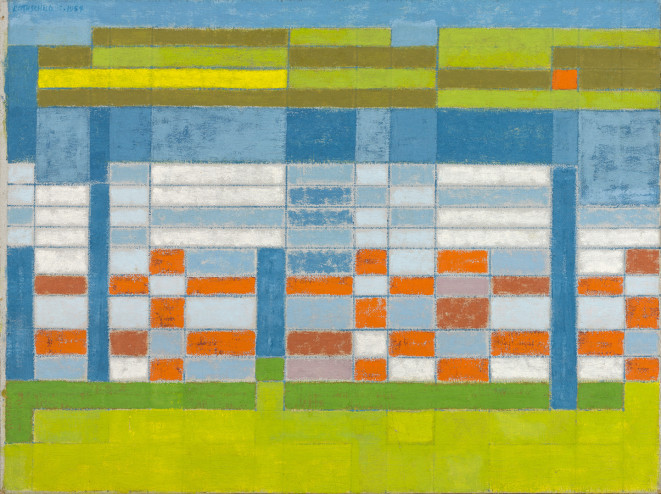
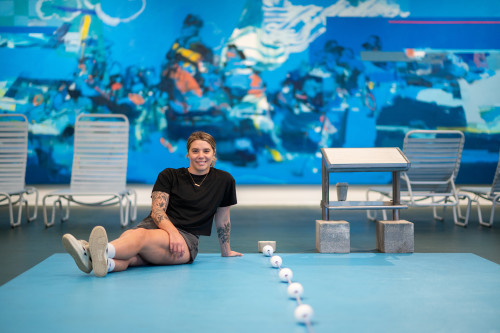
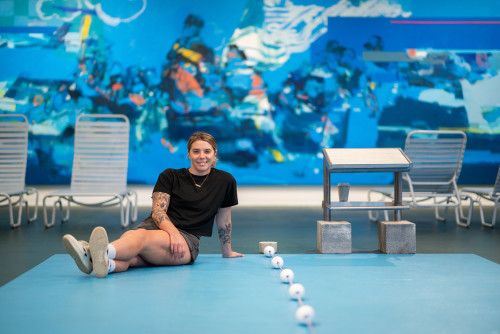
For her recent solo exhibition, Swimming Pool, Pumphrey resisted the traditional white-cube gallery experience. Instead, she painted an enormous swimming pool across the gallery floor, scattered pool furniture throughout the space, and watched as visitors claimed it as their own. People stopped by during lunch. They sat. They talked. They stayed. That, she says, is the point.
“I often say that being a contemporary artist means our job is to open a door and hopefully the viewer walks through it,” says Pumphrey.
Connection has become the thread running through everything she does. It explains why someone whose work often requires long hours alone in the studio has become equally committed to building communities outside of it.
Beyond the sport
After completing her historic Bay-to-Baltimore swim, Pumphrey discovered that the accomplishment opened unexpected opportunities. Schools invited her to speak. Businesses wanted to hear about perseverance. Environmental organizations sought her perspective on urban waterways. Soon she was representing Baltimore internationally, traveling to Rotterdam (the Netherlands) for the inaugural Swimmable Cities Summit, where leaders from around the world gathered to discuss how cities can reclaim rivers and harbors as places for recreation, health, and community. Pumphrey now serves as one of only two Swimmable Cities Sport Ambassadors.
No place like home
While she has become a global phenome, her focus remains remarkably local. Baltimore, the city she originally came to for college, has become home. That affection inspired her to found Baltimore Open Water Swimmers, a nonprofit dedicated to creating opportunities for people to safely enjoy the city’s waterways.
Recently, the organization hosted the inaugural Baltimore Harbor One-Mile Swim, bringing together 100 swimmers supported by more than 50 volunteers, kayakers, first responders, and community partners.
Yet, the event wasn’t simply about endurance or competition. Part of every registration fee is dedicated to fund Baltimore City Recreation and Parks’ Learn to Swim program, with the goal of providing swimming lessons to 1,000 children during the organization’s first three years.
Community Building, Family Focused
For Pumphrey, building community has become just as meaningful as swimming through it. That instinct may have deeper roots than she realized.
Long before she attended MICA, her grandmother, Dorothy Pumphrey, also studied at MICA, pursuing painting and fashion design before leaving school to marry and raise a family. Although she never completed her degree, she continued making art throughout her life, studying with MICA faculty and completing major commissions over several decades.
After Pumphrey graduated, she worked with MICA to award her grandmother an honorary degree, accepting it during commencement on Dorothy’s behalf. It remains one of the most meaningful moments of her connection to MICA.
Different yet the same
Today, Pumphrey’s life remains a careful balancing act. Most mornings begin in the water before continuing in her studio, where she is building new bodies of work while planning future exhibitions. She also has another English Channel crossing in her sights and hopes to exhibit artwork in England during the same trip.
It sounds exhausting, but to her, it simply feels like life. There are, as Pumphrey notes, remarkable similarities between artists and marathon swimmers: Both spend long hours alone. Both must make peace with rejection and failure. Both pursue goals that often appear irrational to everyone else. And both discover that the work becomes richer when it is ultimately shared with a community.
It is advice she has followed herself, from choosing painting over collegiate swimming, to swimming across some of the world’s most challenging waters, to building a career that refuses to separate art from athleticism, advocacy from creativity, or individual achievement from community. For her, creativity and movement have always been part of the same journey.
After all, whether crossing the English Channel, swimming through Baltimore Harbor, or facing a blank canvas, Pumphrey has learned that the only way forward is the same way she has always approached it: Stroke by stroke.

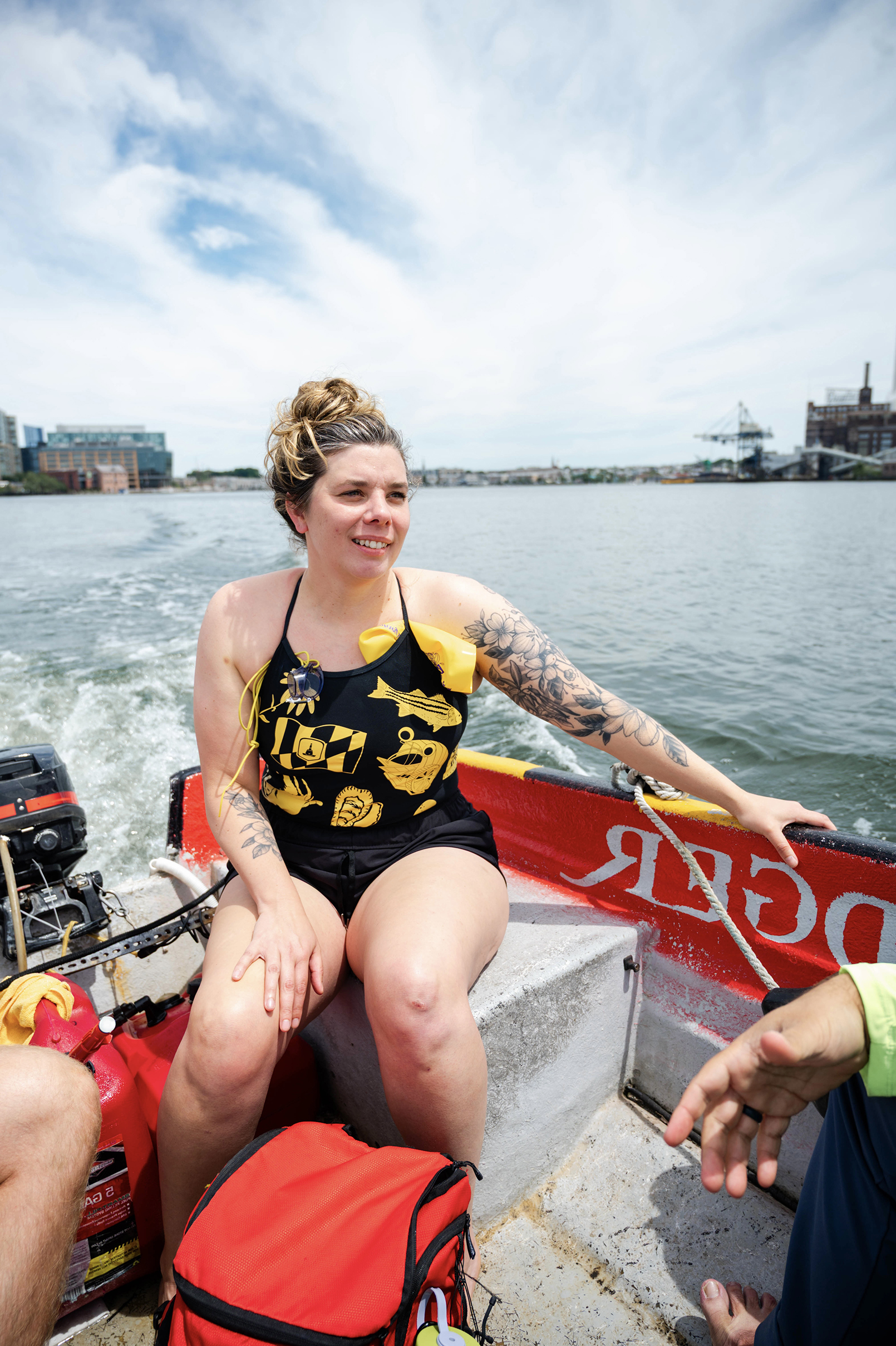 Without collegiate competition dictating her schedule, she discovered open-water swimming, a discipline that prizes patience over speed and resilience over medals. The sport would eventually carry her across the English Channel three times, through California’s Catalina Channel, and on a celebrated 24-mile swim from the Chesapeake Bay Bridge to Baltimore’s Inner Harbor. But before any of that happened, she learned how to solve impossible problems in the classroom.