
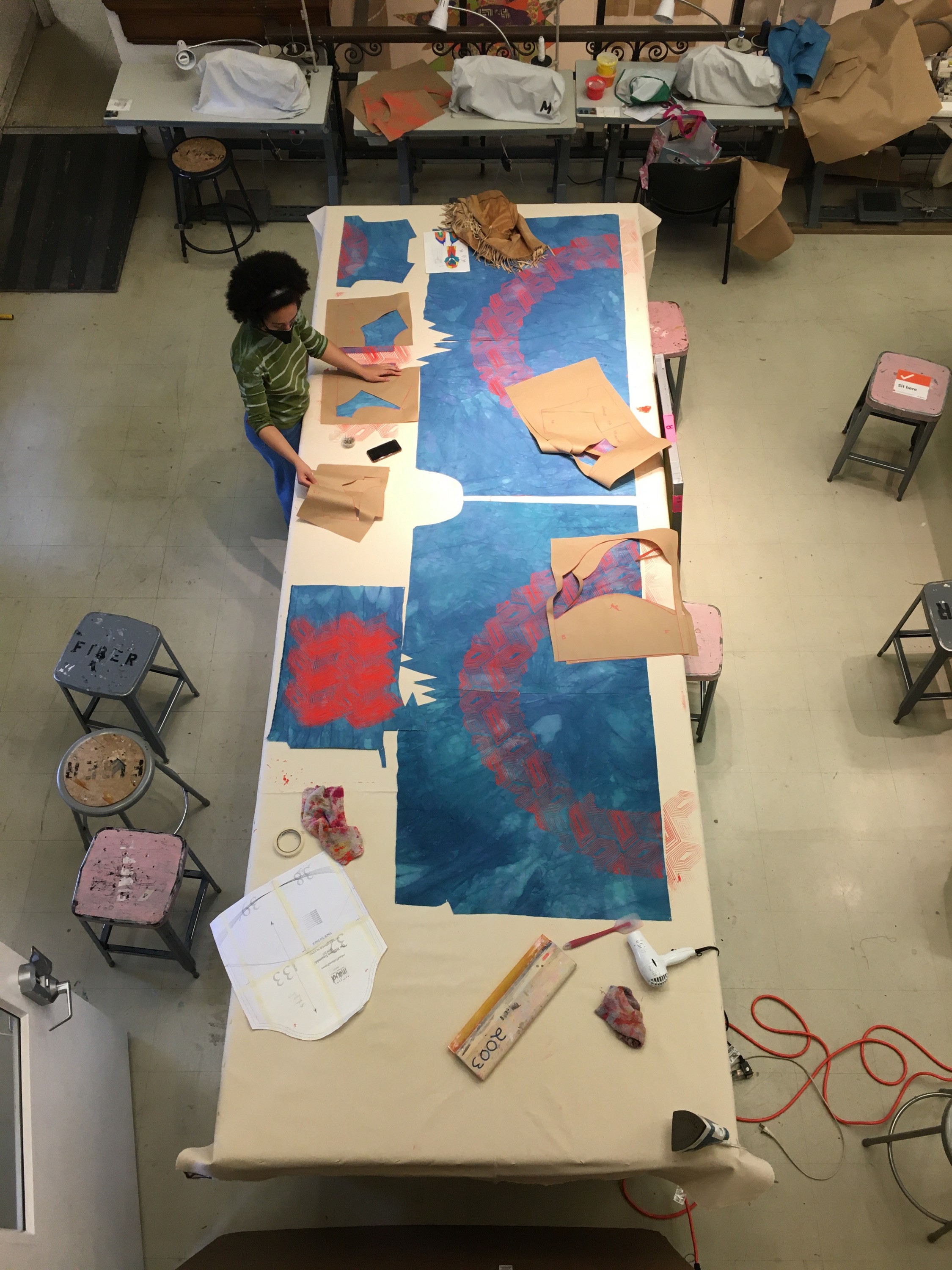
The studio is quiet, but not still.
Fabric pools at Kai Nunnally’s feet — stitched, pinned, and shaped into garments inspired by Baltimore’s buses and trains, the fleeting choreography of strangers in motion. In MICA’s fashion studios, observation becomes design, and everyday life becomes material.
“MICA taught me to see those moments as something worth capturing,” says Nunnally, a 2026 Fiber and Experimental Fashion student whose work explores identity, memory, and the city itself.
Down the hall, another kind of making unfolds. In a painting studio, Anna Rossi (’27 Painting, BFA) builds portraits layer by layer in charcoal and oil, drawing on close mentorship and the freedom to move across disciplines.
“When I first arrived, I immediately saw how different the approach was,” Rossi says. “Everyone was welcoming and approachable. If you ask for help, you’ll always find it.”
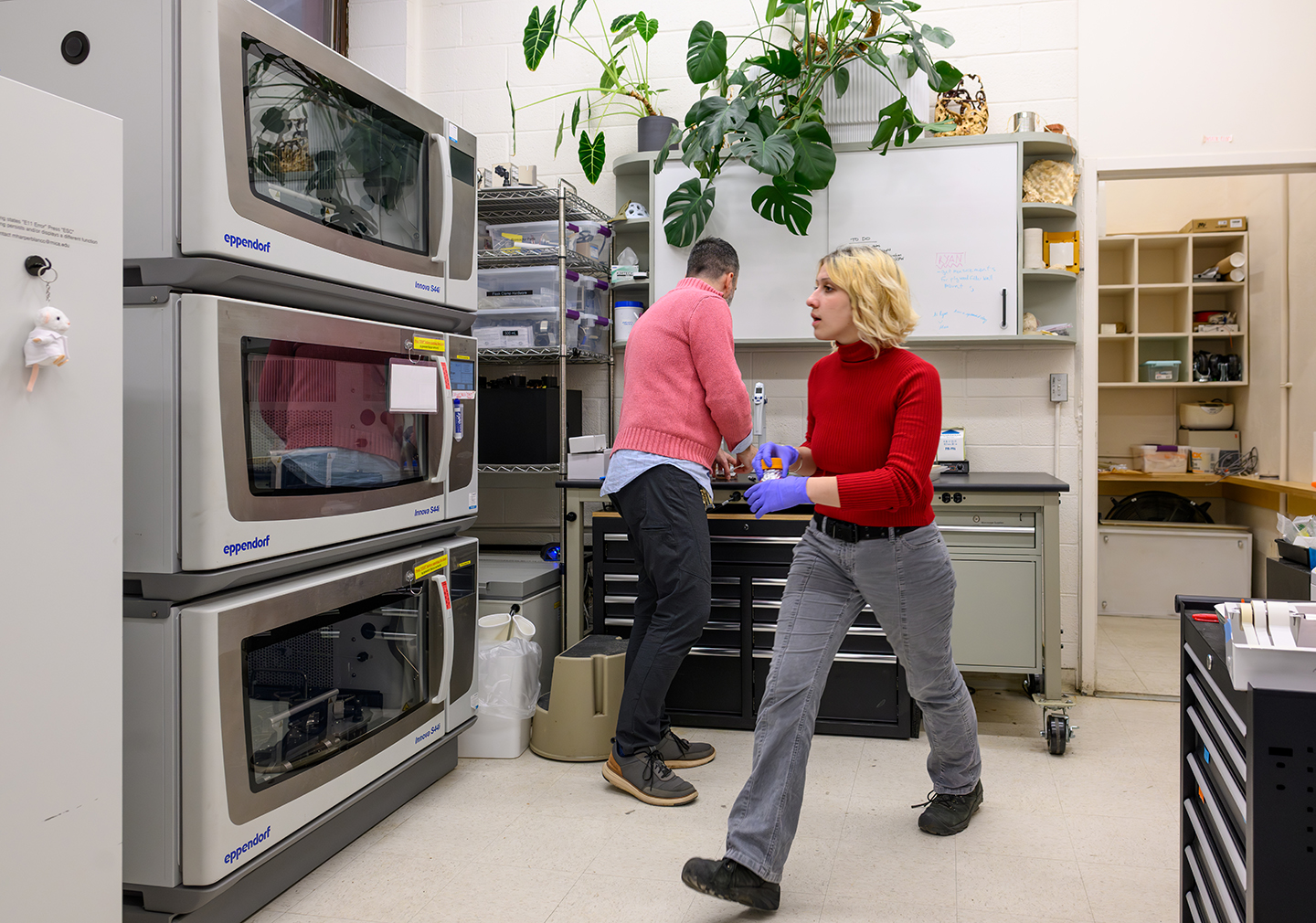 Across campus, the atmosphere shifts again. In MICA’s biodesign lab, students cultivate materials instead of manufacturing them. Sheets of bacterial cellulose dry in trays while mycelium spreads slowly across organic matter, blurring the boundaries between art, science, and sustainability.
“What’s unique here,” says biodesign professor Ryan Hoover, “is that the goal isn’t innovation for its own sake. It’s about making, questioning, and letting those two things guide you somewhere unexpected.”
Together, these spaces tell the story of MICA at 200: an institution where art is not confined to one medium, one discipline, or even one definition. For two centuries, MICA has asked what art can do. Today, the answers are unfolding everywhere.