 + Enlarge
On The Cover: Fall 2026
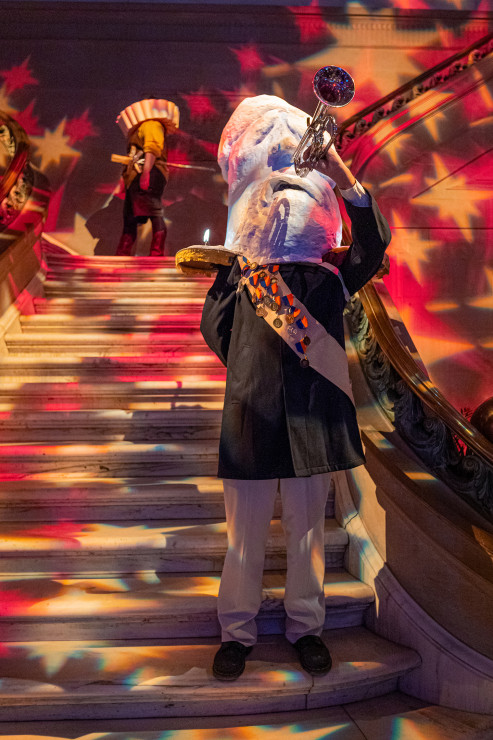
Five rising MICA alumni shaping the next generation of creatives.
Just a few years removed from graduation, these emerging artists, designers, and creative professionals are already building careers that reflect the ingenuity, curiosity, and ambition fostered at MICA. Whether launching businesses, shaping communities, exhibiting their work, or reimagining creative industries, they are proving that impact starts immediately.
To celebrate this rising generation of alumni, we’re spotlighting five graduates from the past five years whose work is already turning heads. Their paths are as varied as their disciplines, but they share a commitment to pushing boundaries and using creativity to make a difference. They represent the promise of MICA’s newest alumni and offer a glimpse of the exciting future they are helping to create.
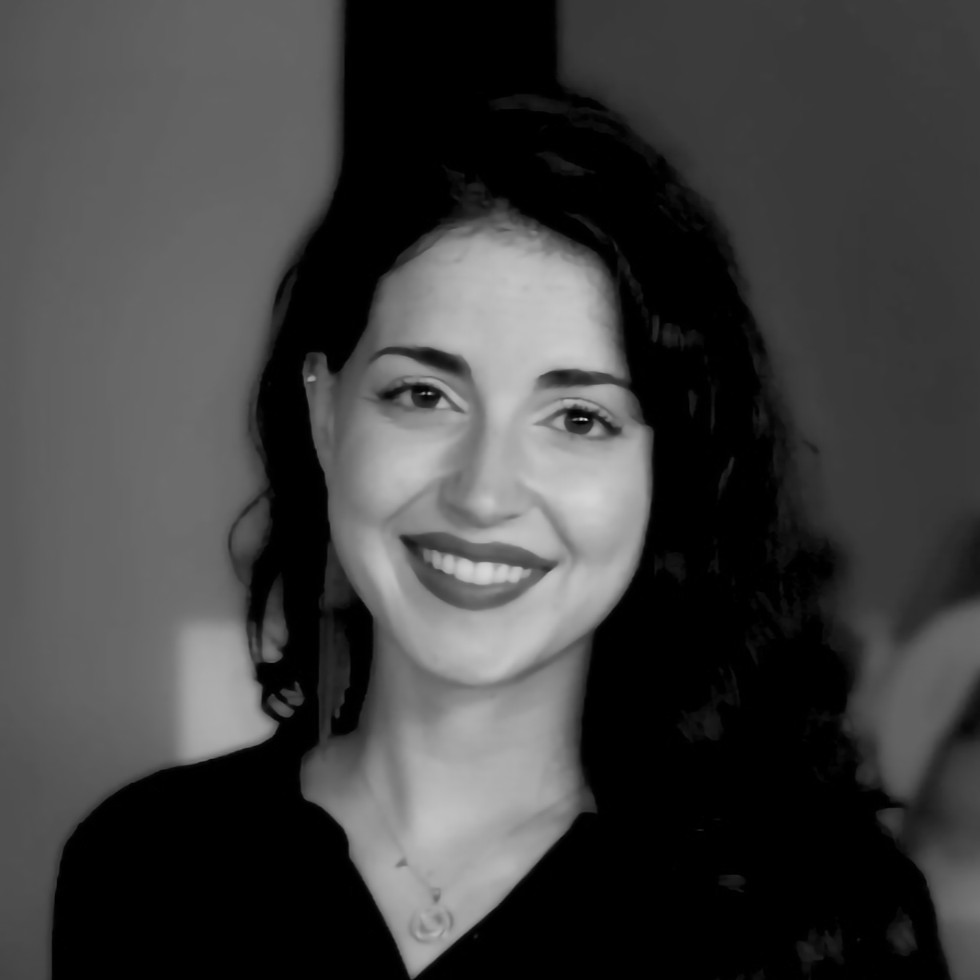
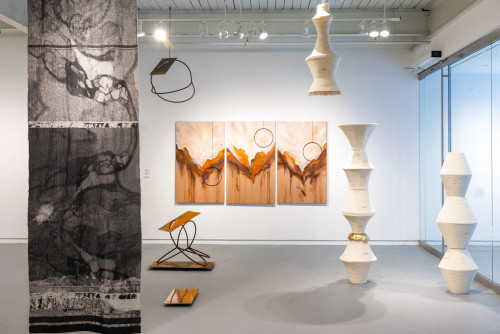
By the time many gallery visitors step into one of Hannah Atallah’s installations, they have already become part of the artwork. They remove their shoes, settle onto handwoven carpets, lean against sculptural forms, and begin talking with strangers. For Atallah, whose work spans sculpture, murals, textiles, mosaics, and installation, the art is never limited to the objects themselves. It lives in the conversations, memories, and relationships they create. Atallah is building a practice that transforms traditional artistic forms into contemporary spaces where history, community, and human connection converge.
Working across disciplines is less a stylistic choice than a conceptual one. The daughter of a Palestinian, Lebanese, and Irish family, Atallah draws on artistic traditions from across the Arab world, including weaving, carpet making, mosaics, calligraphy, and sculpture. Rather than beginning with a preferred material, she lets each concept dictate the process. Extensive research into archives, history, language, and traditional craft grounds work that explores identity, belonging, memory, and dignity.
That approach culminated in Unfortunately, It Was Paradise, an immersive installation inspired by the Arabic concept of the majlis, a place of gathering. Visitors sat together on handwoven carpets surrounded by sculptural forms, sharing stories and experiencing the space collectively. Workshops and community events extended the work beyond the gallery, reinforcing Atallah’s belief that sculpture is experienced through the body and shared human presence.
MICA helped sharpen that vision, expanding Atallah’s conceptual thinking and technical abilities in metalworking, woodworking, digital fabrication, fibers, and 3D modeling. Internships with curator Laila Abdul-Hadi Jadallah and the Baltimore Museum of Art further broadened her practice. At the museum, she designed its first portable tactile access kit, combining 3D printing, Braille, miniature sculptures, and material samples to make artwork more accessible to visitors with visual impairments.
Even before graduating, Atallah earned more than 20 grants and awards while building a public art practice. Most recently, she was selected as one of 48 artists for a major exhibition at The Phillips Collection in Washington, D.C., from more than 1,500 applicants.
Atallah credits persistence as much as talent, viewing every proposal, whether accepted or rejected, as an opportunity to learn. As her practice evolves, she remains committed to creating spaces where people encounter one another as much as the artwork itself. In a world often defined by division, her work offers an invitation to gather, listen, and connect.
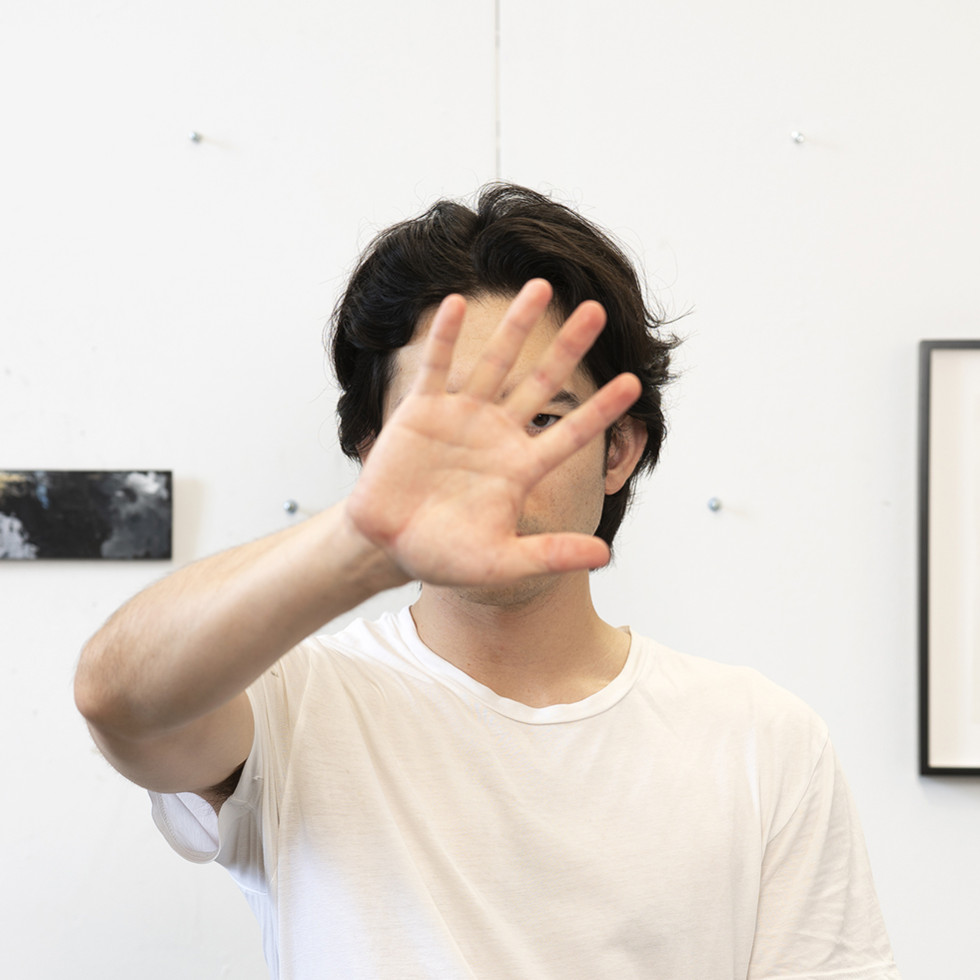
Ian Miyamura doesn’t want viewers to arrive at easy conclusions. Step into one of his exhibitions and you might encounter painstakingly realistic paintings of unpainted Warhammer miniatures, geometric abstractions, text-based works, or soaring seabirds suspended against luminous skies. At first glance, they can feel like the work of several different artists. Spend more time with them, though, and subtle connections begin to emerge, echoes of mirroring, doubling, perception, and taste that quietly bind the paintings together. That slow unfolding is exactly where Miyamura hopes viewers will linger.
His latest work began with an unlikely source: Thomas Pynchon’s novel V. Miyamura became fascinated by its elusive search for the mysterious “V,” discovering new meanings each time the letter appeared. It reminded him of the shifting dialogue he values between artist and viewer. “The artist and viewer,” he says, “are like two lines that converge and diverge.” That idea anchors a new Los Angeles exhibition, where visible and hidden “Vs” invite viewers into their own open-ended search.
That fascination with perception runs throughout Miyamura’s practice. Moving among abstraction, realism, text, and conceptual painting, he explores how people make meaning rather than settling into one recognizable style. Formal ideas migrate between bodies of work: A mirrored shape in a painting of seagulls might later appear in a geometric abstraction or fantasy miniature.
Those questions came into focus at MICA’s LeRoy E. Hoffberger School of Painting. Miyamura arrived with colorful, theatrical paintings but soon abandoned much of what he thought he knew. Challenged by faculty, visiting artists, and critics, he rebuilt his understanding of painting. “Grad school definitely is the reason I am the artist I am,” he says.
In the past two years, Miyamura has mounted solo exhibitions in New York and Los Angeles and was selected for Greater New York 2026. Yet recognition isn’t what sustains his work.
He continues working part time as a frame designer and production manager while maintaining a rigorous studio practice. His definition of success is having the flexibility to make ambitious work while preserving time for loved ones. “That is the prime success,” he says.
In an era of algorithms, AI, and digital distraction, Miyamura creates paintings that reward sustained attention. Recurring forms and conceptual echoes emerge gradually, encouraging viewers to see differently. For him, ambiguity isn’t a problem to solve but an invitation to look longer. Like Pynchon’s elusive “V,” meaning emerges through the act of searching itself.

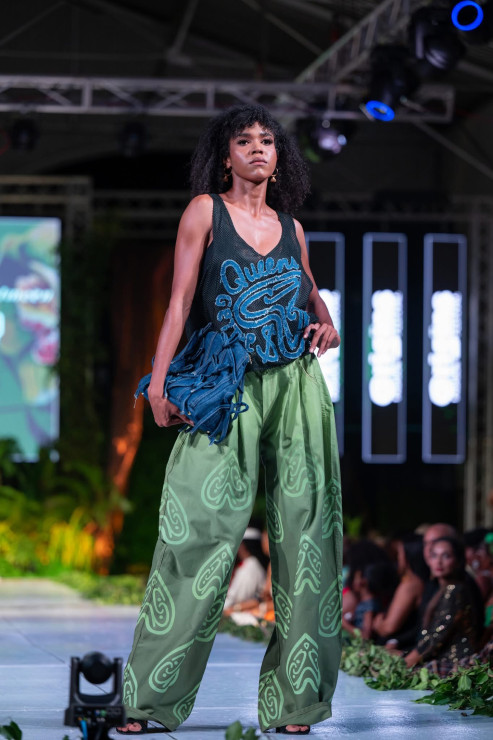
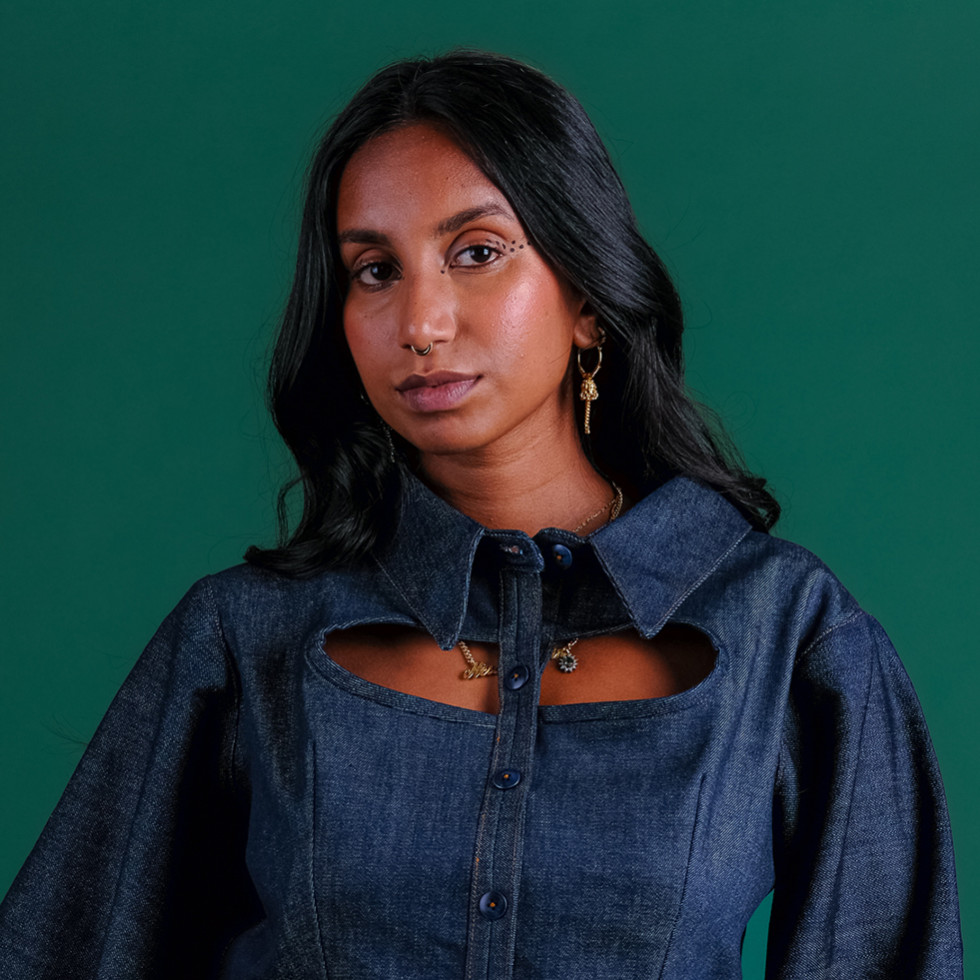
Long before the workday begins, Jasmin Nessa Ali has already spent hours sketching silhouettes, refining patterns, or sewing garments that bridge two worlds. In her Queens studio, bolts of denim sit beside richly colored textiles inspired by her Guyanese heritage. During the day, she helps develop sportswear collections for Donna Karan and BCBG. After work, she becomes NESSA, the founder, designer, marketer, patternmaker, and seamstress behind the fashion label she launched just months after graduating from MICA in 2022. Every collection is created almost entirely by her own hands, driven by the belief that clothing can carry culture, memory, and community as powerfully as any painting or sculpture.
Ali’s path to fashion wasn’t a straight line. Painting was her first creative language, but after years behind a canvas, she found herself craving something more demanding. She moved from General Fine Arts to Sculpture before discovering Fiber and adding an Experimental Fashion minor. Fashion, she realized, was the discipline that combined everything she loved: drawing, color, construction, storytelling, and problem-solving. More importantly, it challenged her. “When something starts to feel comfortable,” she says, “I want to do the harder thing.”
That mindset has shaped every step of her career. Her senior thesis collection, “Jumbee & Rum,” drew on stories of the women in her Guyanese family, exploring migration, spirituality, and identity through clothing. Since then, NESSA has continued that conversation, blending New York streetwear with Caribbean aesthetics while exploring cultural memory and belonging. Ali has presented work in Baltimore, Philadelphia, Brooklyn, and Guyana, including the country’s inaugural Origins Fashion Festival, while growing her made-to-order label.
Ali credits MICA with teaching her something even more valuable than technical skills: the discipline of maintaining a studio practice. During her senior-year Multimedia Event thesis, showing up every day became nonnegotiable. That routine continues today as she balances a demanding full-time design career with building her own business. The experience of working inside major fashion houses has also clarified her vision. Seeing fast fashion up close has reinforced her commitment to creating a slower, more ethical brand centered on craftsmanship rather than volume.
Looking ahead, Ali imagines NESSA becoming a New York atelier with a larger team, a brick-and-mortar space, and collections shown during New York Fashion Week. More than a fashion label, she hopes it becomes a gathering place for Caribbean artists, musicians, and designers, a catalyst for collaboration across disciplines and cultures. For Ali, fashion can do more than reflect identity. It can help shape it.
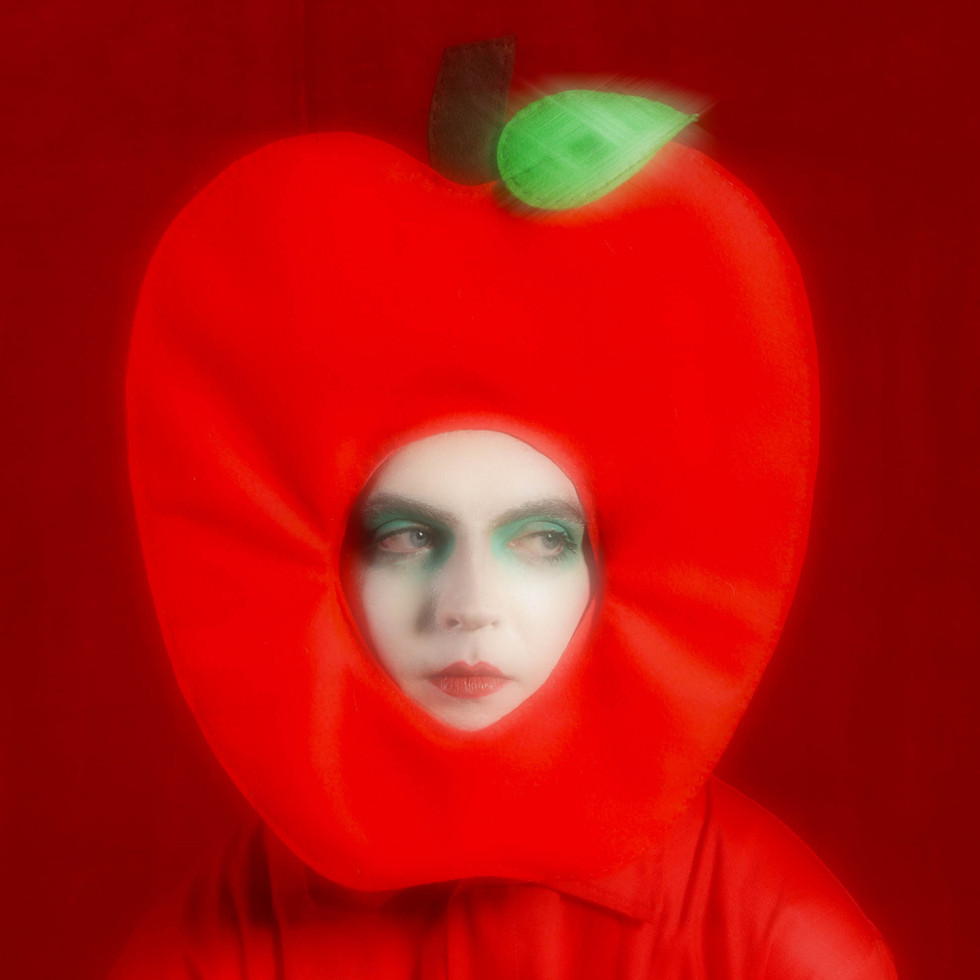
Justin Remo has a hard time saying no to an idea.
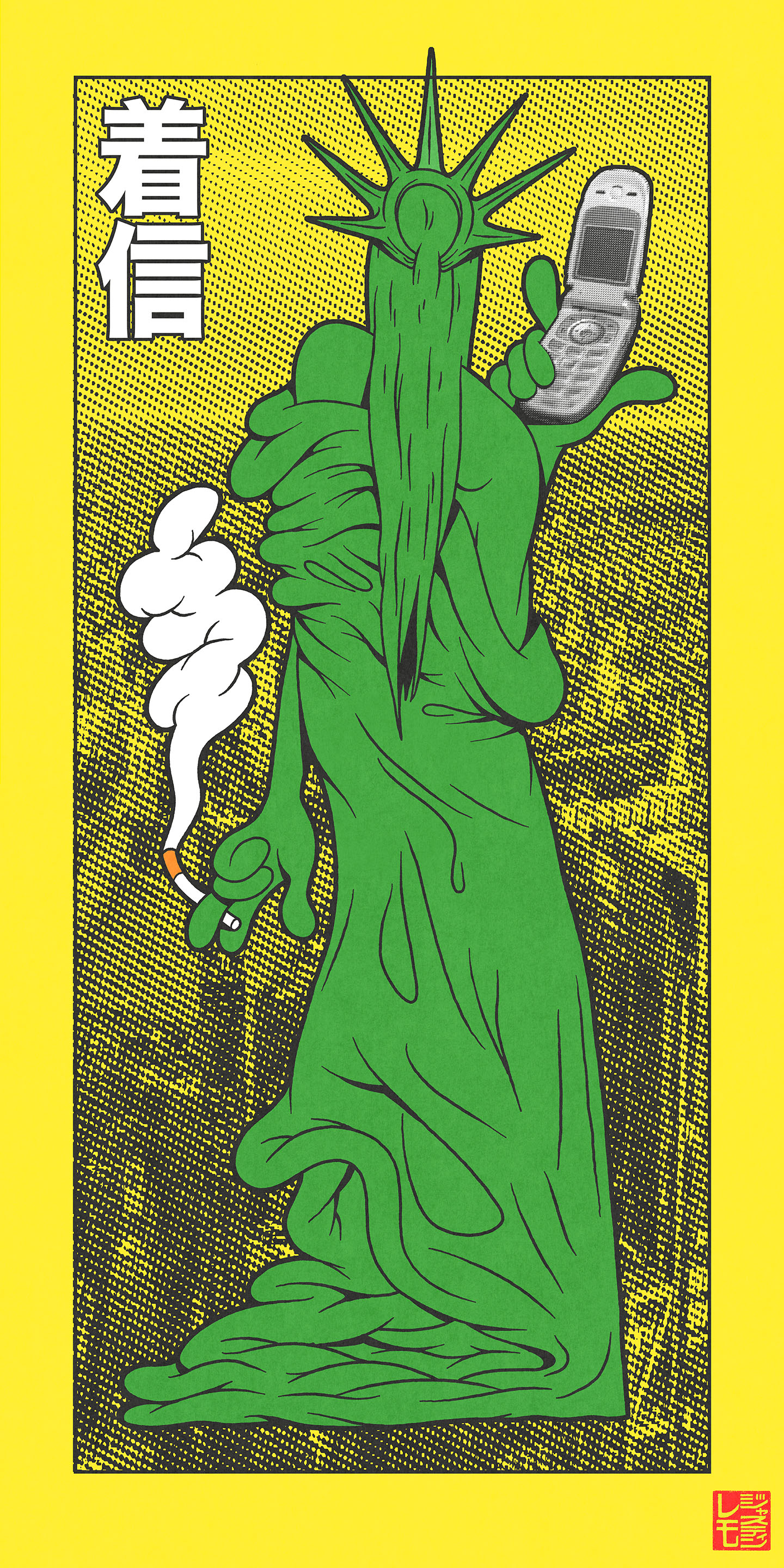
One project becomes another. A woodcut becomes a graphic novel. A graphic novel becomes a startup. A chance conversation becomes a documentary. Somewhere between working as a master printer at one of New York’s most respected print studios, serving as a public affairs specialist in the U.S. Coast Guard, and building creative organizations, he still carves plywood late into the night because making art is the one thing he refuses to live without.
“If my work ever prevented me from making art,” he says, “I’d know something needed to change.”
That relentless drive has defined Remo since before he graduated from MICA in 2024. He arrived planning to study animation, discovered printmaking almost by accident, and never looked back. The medium combined everything he loved — drawing, storytelling, craftsmanship, and experimentation — and became the foundation for a creative life that has never fit neatly into one title.
“I’ve collected a lot of different skills,” he says. “Some I intentionally pursued, and others kind of found me.”
That curiosity led him to enlist in the Coast Guard Reserve during college, where training in photography, filmmaking, journalism, and design expanded his artistic vocabulary. It led him to create Dust, a science-fiction graphic novel imagined in high school, and “The Last Times on Dogwater Beach,” his MICA thesis exploring environmental loss through monumental relief prints inspired by the New Jersey shore. And it continues to shape projects from exhibitions and documentaries to Foolproof, his production company celebrating fine artists.
For all of his accomplishments, including becoming one of the youngest exhibitors ever invited to the Brooklyn Fine Art Print Fair and landing his dream job as a master printer at Brand X Editions, Remo says one of the most valuable lessons he took from MICA was how to build a sustainable creative practice. Since graduating, he has learned to apply those lessons by setting his own pace, trusting his instincts, and developing a creative rhythm that continues to shape his work.
For Remo, every new role ultimately circles back to the same goal: making work that reminds people there’s still value in things created by human hands. Whether through a monumental woodcut, a comic book, a documentary, or a photograph, he hopes viewers recognize not only the craft behind the work but also the person behind its making.
“Life is like a comic book,” he says. “Good things happen. Bad things happen. It’s all part of your story.”

Growing up in South Korea, Sarah (Doyeon) Lee was always looking beyond the horizon. Fascinated by other cultures and eager to understand how people lived differently, she immersed herself in learning English, not simply as a school subject but as a gateway to new perspectives. When the opportunity arose to move to the United States, she embraced it, carrying with her an enduring curiosity that now shapes her career as an industrial designer.
After graduation, Lee quickly found herself working on projects that will ultimately touch the lives of millions of travelers. Based in Munich, Germany, she is a designer at N+P Innovation Design, helping shape the future of public transportation for clients including Hitachi Rail, Hyundai Rotem, and Siemens Mobility.
Her work spans high-speed rail, regional trains, metros, and airports, from passenger seating and train interiors to exterior liveries, wayfinding systems, and innovation touchpoints. While the projects vary, they share a common purpose: making travel more intuitive, comfortable, and enjoyable.
Lee says there was no single moment when she realized industrial design was the right path. Instead, the realization unfolded gradually as she became less interested in creating objects for admiration and more interested in creating practical products people could use. She began asking why people interacted with products in certain ways and how those experiences could be improved. That shift toward human-centered problem solving defined her approach to design.
The transition from MICA’s studios to an international consulting firm built naturally on her education. At MICA, Lee learned to experiment boldly, develop an individual creative voice, and trust her instincts. Professional practice challenged her to earn the confidence of clients, engineers, suppliers, and multidisciplinary teams and bring creative visions to life through collaboration.
The research habits she developed during her senior thesis also guide her work. Her thesis explored how smart-home technology could help people without overwhelming them, examining how trust, emotion, and everyday habits shape relationships with emerging technologies.
That mindset now informs her work designing mobility systems. Living in Germany has given Lee a new appreciation for public transportation as more than a means of getting from one place to another. Rail networks connect communities, support daily routines, and influence how people experience cities.
For Lee, the lesson she carries from MICA is one she applies every day: stay curious before trying to be certain. It is an approach that continues to guide her work and help shape the future of how people move through the world.
+ Enlarge
 + Enlarge